
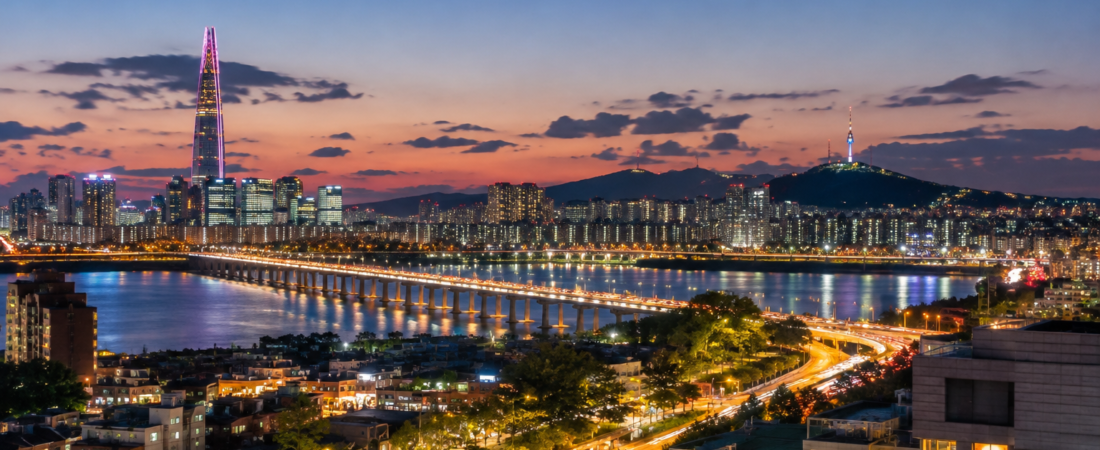
Seoul can feel overwhelming on a first visit. The city is enormous, attractions are spread across different districts, and two places that look close on a map can take much longer to travel between than expected.
The easiest way to enjoy Seoul is to plan each day around nearby neighborhoods rather than crossing the city repeatedly. Historic areas such as Gyeongbokgung, Bukchon, and Insadong work naturally together, while places like Hongdae, Yeonnam-dong, Gangnam, and the Han River are better grouped into separate parts of your itinerary.
This guide covers Seoul’s major attractions, food, neighborhoods, transportation, and a practical three-day itinerary, with tips to help first-time visitors spend less time in transit and more time actually exploring the city.
Best Things to Do in Seoul
1. Explore Gyeongbokgung Palace
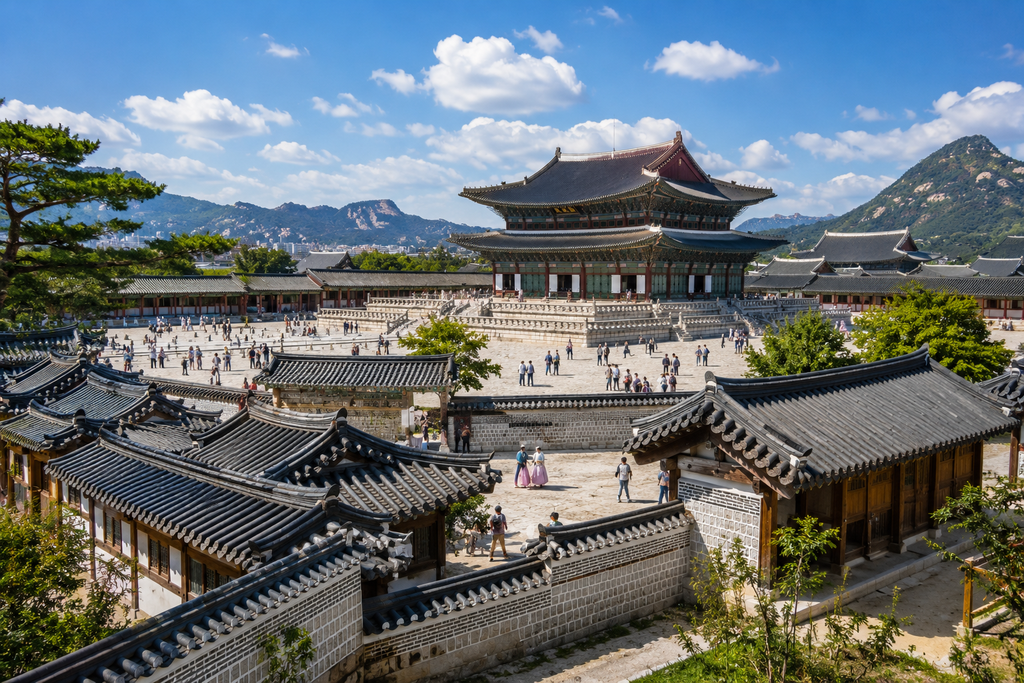
Gyeongbokgung Palace is a natural starting point for a first day in Seoul because several other major sights are nearby. After exploring the palace, you can continue toward Bukchon Hanok Village, Insadong, or Seochon instead of spending extra time crossing the city.
The palace grounds are large, so allow more time than you would for a quick photo stop. If you plan to rent a hanbok, do it before entering so you are not walking back and forth between the rental shop and the palace.
Local Tip: Do not plan Gyeongbokgung as an isolated attraction. Combining it with one or two nearby neighborhoods makes much better use of your day in central Seoul.
2. Wander Through Bukchon Hanok Village
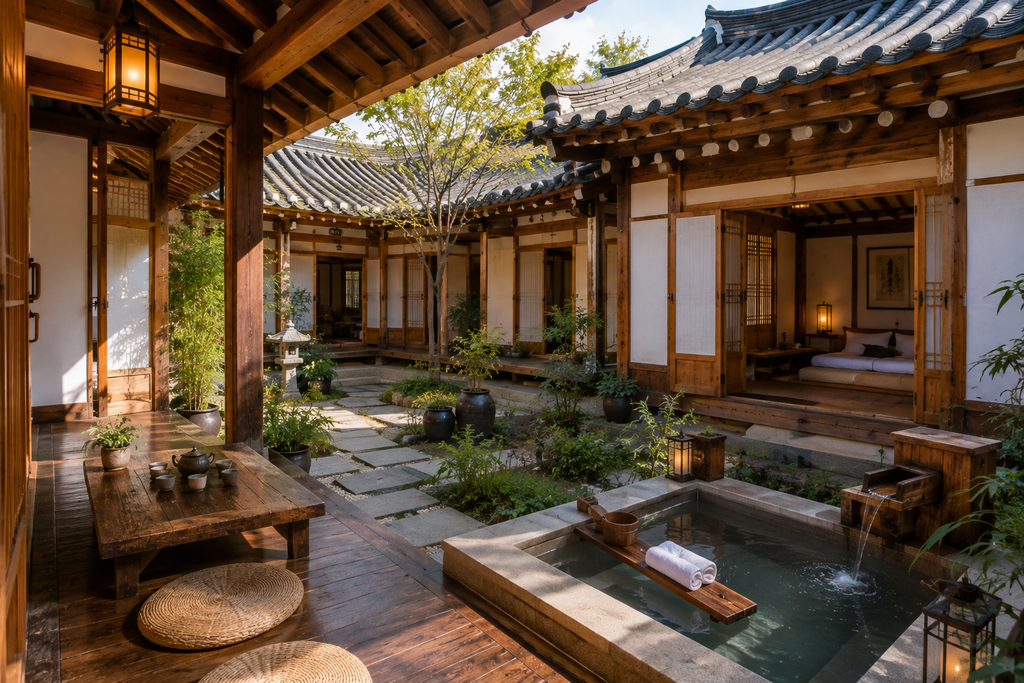
Bukchon Hanok Village is one of the best-known places in Seoul for walking among traditional hanok houses, but it is important to remember that this is a real residential neighborhood rather than an open-air museum.
Bukchon fits naturally into the same day as Gyeongbokgung Palace and Insadong, so there is usually no reason to make a separate trip across Seoul just to visit it. The neighborhood is hilly, so comfortable shoes are useful and walking can take longer than the distance on the map suggests.
Local Tip: Keep your voice down around residential alleys and follow any access signs or visitor restrictions posted in the neighborhood. After Bukchon, continue toward Insadong or nearby cafés rather than immediately taking the subway to another side of Seoul.
3. Visit N Seoul Tower
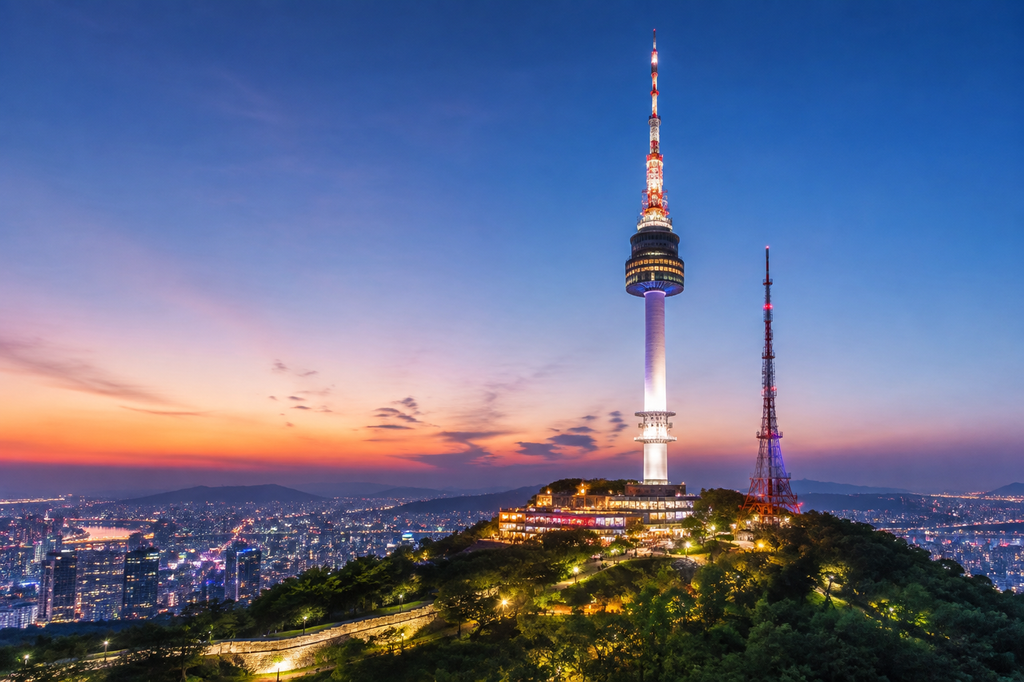
N Seoul Tower is one of Seoul’s classic viewpoints, but getting there takes more time than simply arriving at the nearest subway station. The tower sits on Namsan Mountain, so the final part of the trip involves a bus, cable car, or uphill walk.
Late afternoon is a practical time to visit if you want to see the city before sunset and stay as Seoul lights up after dark. If your schedule is tight, however, do not cross the entire city only for the tower—combine it with nearby areas such as Myeongdong or Itaewon.
Local Tip: Check the weather and visibility before going. On hazy or rainy days, the panoramic view can be limited, so this is one attraction worth moving to another day if your itinerary is flexible.
4. Shop and Eat in Myeongdong
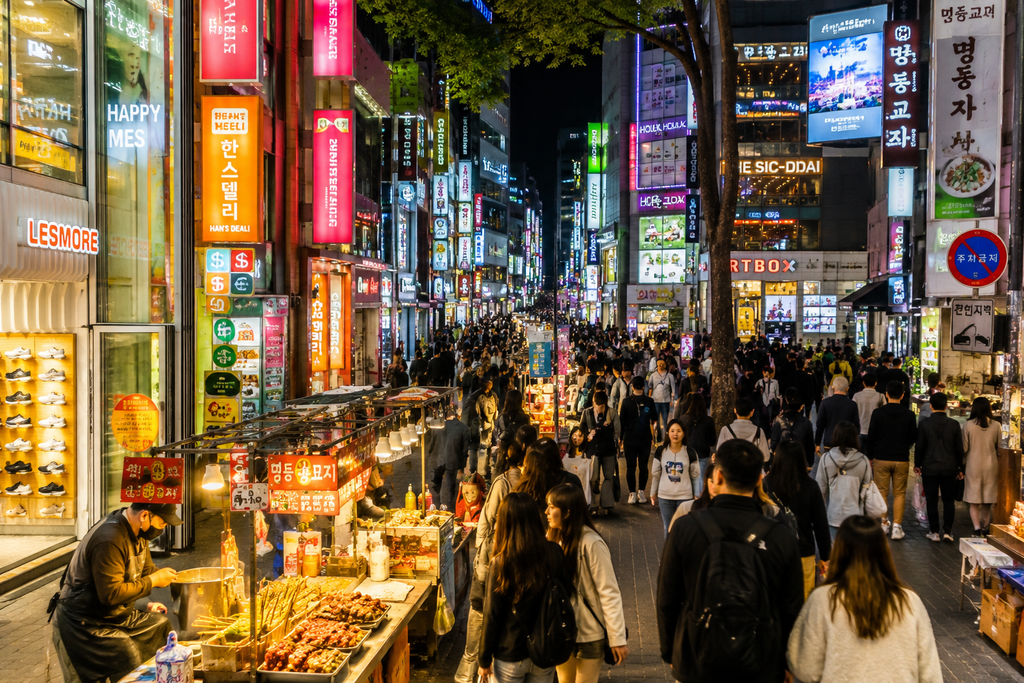
Myeongdong is one of Seoul’s easiest areas to combine shopping, food, and sightseeing in a single stop. Korean beauty stores, fashion shops, restaurants, cafés, and street-food stalls are concentrated within a relatively compact area, making it convenient when you do not want to spend more time moving across the city.
The neighborhood becomes livelier later in the day, so it works well after visiting central Seoul attractions such as Gyeongbokgung, Insadong, or Namsan. If shopping is your main goal, leave enough luggage space before arriving—beauty products and packaged snacks can add up surprisingly quickly.
Local Tip: Do not spend your entire Seoul food budget on Myeongdong street food. Try a few snacks for the experience, but explore restaurants and markets elsewhere in Seoul as well if you want a broader taste of how locals actually eat.
5. Experience Hongdae’s Youthful Energy
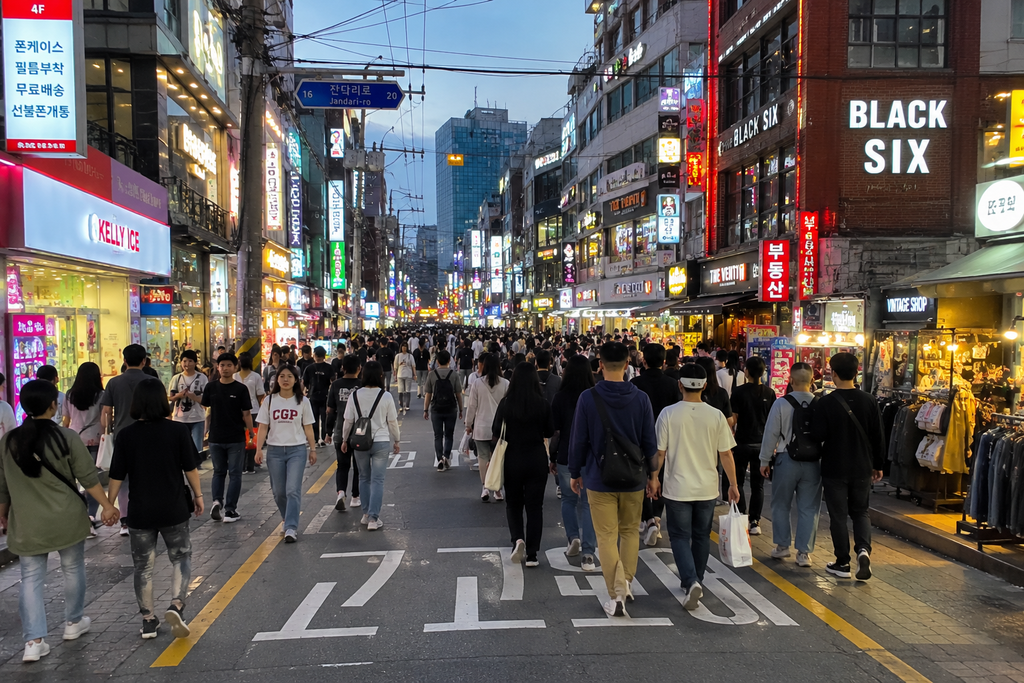
Hongdae is one of Seoul’s best areas for experiencing the city’s younger side, with cafés, fashion, restaurants, bars, clubs, and independent shops packed around the neighborhood.
Do not limit your visit to the busiest streets directly around Hongik University Station. Walk toward nearby Yeonnam-dong and the Gyeongui Line Forest Park for a more relaxed mix of cafés, restaurants, and neighborhood streets before returning to Hongdae later in the evening.
Local Tip: Hongdae works particularly well from late afternoon into the night. Instead of visiting briefly in the morning, arrive later, explore Yeonnam-dong first, have dinner nearby, and finish the evening around Hongdae when the area is at its liveliest.
6. Experience Itaewon’s International Vibe
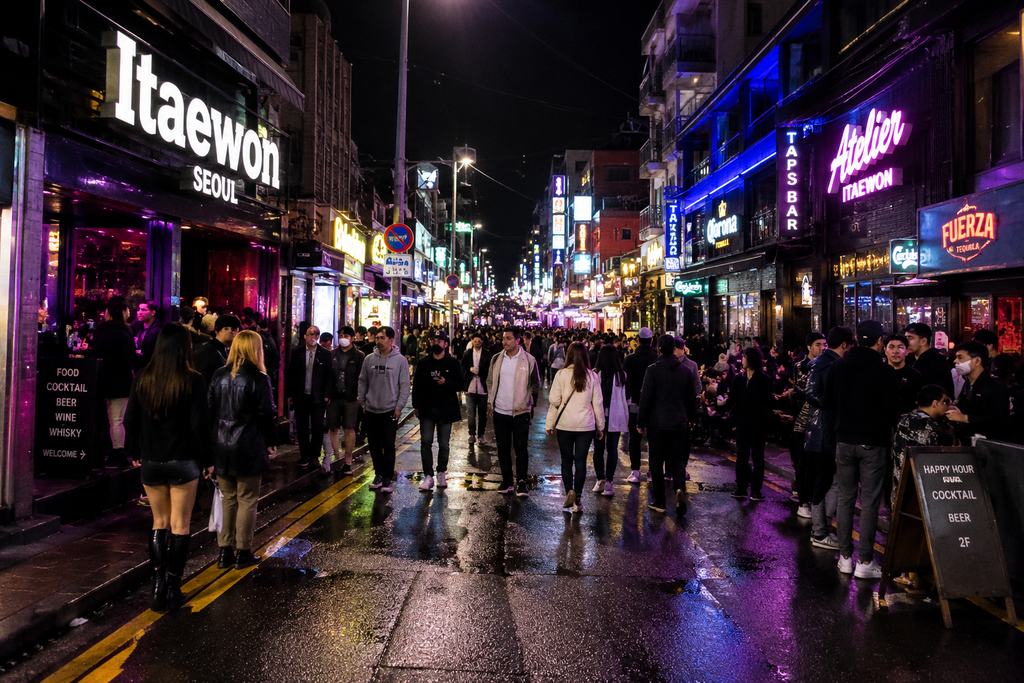
Itaewon is one of Seoul’s most international neighborhoods, with Korean and international restaurants, cafés, bars, and nightlife concentrated around the area. It is also a useful neighborhood for travelers looking for halal food or cuisines that can be harder to find elsewhere in the city.
The experience changes as you move away from the main road. Nearby streets toward Gyeongnidan-gil offer a different atmosphere from the busiest area around Itaewon Station, so it is worth exploring beyond the main nightlife strip.
Local Tip: Itaewon is better suited to late afternoon, dinner, and evening than an early-morning sightseeing stop. The neighborhood also has plenty of hills and slopes, so a destination that looks close on the map can involve more walking than expected.
What to Eat in Seoul
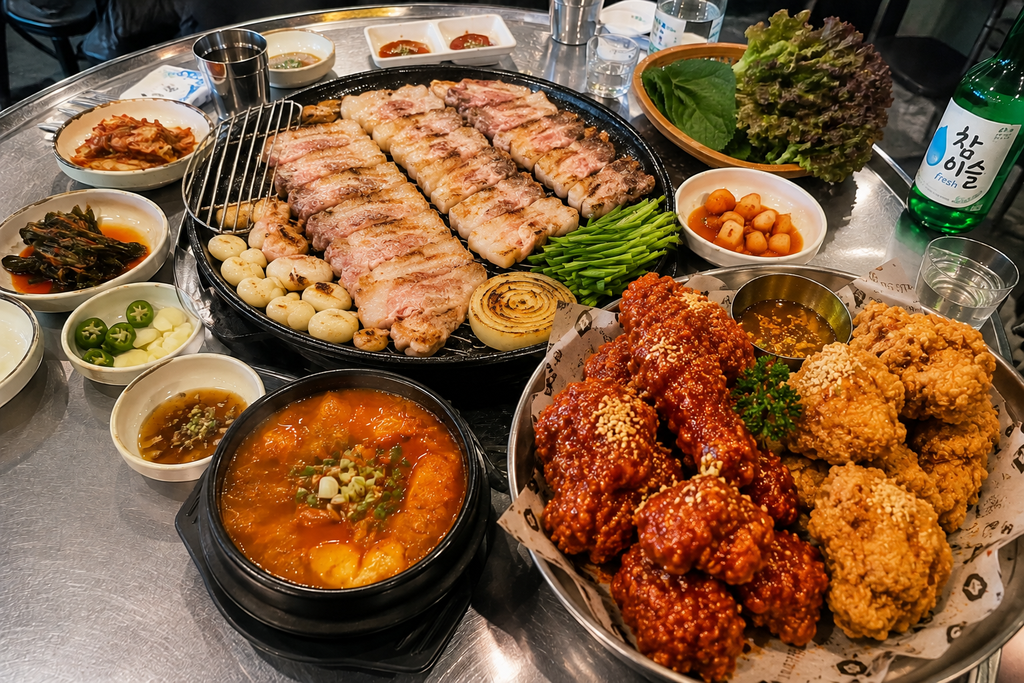
Seoul’s food scene goes far beyond Korean BBQ and street food. What you find can change noticeably from one neighborhood to another: traditional markets are good for sampling several Korean dishes in one stop, while areas such as Euljiro and Jongno have many long-running local restaurants, and neighborhoods like Seongsu and Yeonnam-dong are better known for cafés and newer dining spots.
For a first visit, I recommend planning meals around the neighborhoods you are already exploring instead of traveling across Seoul for every famous restaurant. This saves a surprising amount of time, especially during lunch and dinner hours when popular restaurants can have long waits.
Local Tip: If a restaurant has a long queue, check nearby side streets before waiting for an hour. In Seoul, another good restaurant is often only a few minutes away, especially in busy food areas.
Must-Try Korean Foods
If it is your first time in Seoul, start with a few Korean classics such as samgyeopsal (grilled pork belly), bulgogi, bibimbap, tteokbokki, and Korean fried chicken. For barbecue, ordering two or more portions of meat is common at many restaurants, so Korean BBQ is usually easier to enjoy when you are traveling with someone.
Traditional markets are another easy way to try several foods without planning separate restaurant visits. Gwangjang Market is popular with travelers for bindaetteok (mung bean pancakes), mayak gimbap, yukhoe (raw beef), and other Korean dishes, but it can become very crowded around popular stalls.
Food Tip: Do not feel like you need to eat every famous Korean dish in one day. Pick one main meal for each neighborhood and leave room for smaller snacks along the way—Seoul trips tend to involve a lot more spontaneous eating than expected.
Not sure which Korean dishes to try first? Explore our complete guide to 15 must-try Korean foods for first-time visitors, including popular meals, street food, and traditional dishes.
Cafés and Desserts
Café culture is a big part of everyday life in Seoul, but the experience varies a lot by neighborhood. Seongsu is a good choice for large cafés, converted industrial spaces, and popular new brands, while Yeonnam-dong has smaller cafés tucked into side streets around the Gyeongui Line Forest Park. Ikseon-dong is better if you want cafés built inside or inspired by traditional hanok buildings.
Many popular cafés become crowded on weekends, especially in Seongsu and Ikseon-dong. If you mainly want coffee and dessert rather than a specific famous café, walking a few streets away from the busiest area can mean shorter waits and a quieter atmosphere.
Local Tip: Do not build your itinerary around crossing Seoul just for one viral café. Choose a café area that fits naturally with the neighborhood you are already visiting—you will usually find plenty of good alternatives nearby.
How to Get Around Seoul
Seoul’s public transportation system makes it possible to explore most of the city without renting a car. The subway is usually the easiest option for longer trips between neighborhoods, while buses can be more convenient when your destination is far from a subway station.
One thing first-time visitors often underestimate is the size of Seoul. A route that looks simple on a map can involve a long station transfer, several subway stops, and additional walking after you arrive. Before leaving, check the entire route rather than choosing transportation based only on distance.
Local Tip: Plan each day around two or three nearby areas instead of jumping between opposite sides of Seoul. For example, Gyeongbokgung, Bukchon, Insadong, and Ikseon-dong fit naturally together, while Hongdae and Yeonnam-dong are easy to explore on the same day. This can save a significant amount of travel time.
Using the Subway and Transportation Cards
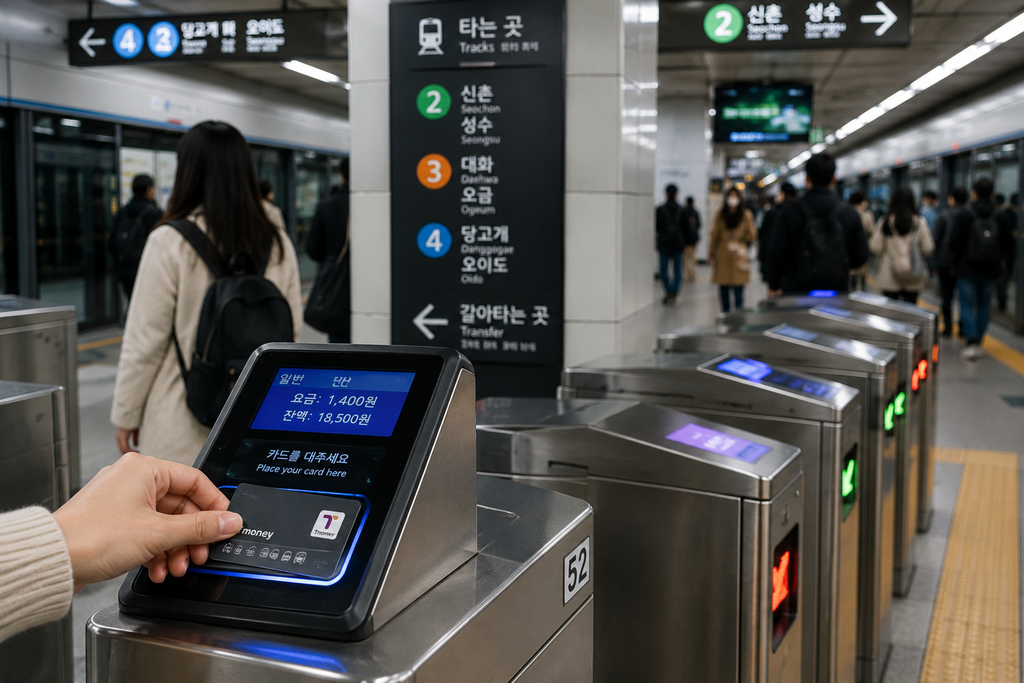
For most visitors, a rechargeable transportation card such as T-money is the simplest way to use Seoul’s subway and bus system. You can buy and recharge a T-money card at many convenience stores and subway stations, then tap it when entering and leaving the subway.
When riding a bus, remember to tap your card when you get on and again before getting off. This is especially important when transferring between buses or between the subway and a bus.
Seoul’s subway network is extensive, but large transfer stations can involve surprisingly long walks underground. When comparing routes, do not look only at the number of stops—sometimes a route with fewer transfers is easier even if it takes a few minutes longer.
Getting Around Tip: Keep some Korean won available for recharging your transportation card, and check your remaining balance before starting a long day of sightseeing. If you are using navigation apps, compare the suggested subway and bus routes rather than automatically choosing the first option.
For more detailed information about subways, buses, and transportation cards, read our complete guide to public transportation in Korea.
Getting to Seoul from Incheon Airport
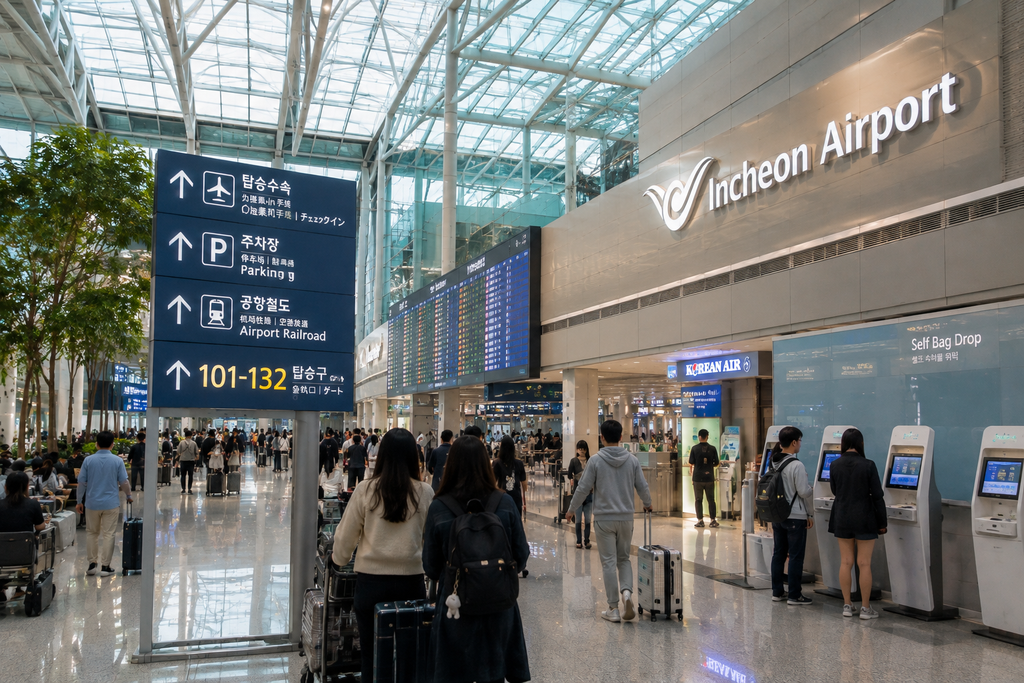
There is no single best way to get from Incheon International Airport to Seoul—the most convenient option depends on where you are staying, how much luggage you have, and how many people are traveling together.
AREX is a practical choice if your accommodation is near Seoul Station or if you can easily transfer from there. Airport buses can be more convenient when a bus stop is close to your hotel because you may avoid carrying heavy luggage through large subway stations. A taxi costs more, but it can make sense for families, small groups, late arrivals, or travelers carrying several large bags.
Before choosing your transportation, check the location of your accommodation first rather than automatically heading to Seoul Station. Seoul is a huge city, and reaching Seoul Station does not necessarily mean you are close to your hotel.
Local Tip: After a long flight, compare the entire airport-to-hotel journey—not just the fastest first leg. A slightly slower airport bus that stops near your accommodation can sometimes be much easier than taking a train and then making multiple transfers with luggage.
Where to Stay in Seoul
Where you stay can make a noticeable difference to your Seoul trip because the city is much larger than many first-time visitors expect. A cheaper hotel on the opposite side of the city from most of your planned activities can easily mean extra time on the subway every morning and evening.
Instead of choosing accommodation based only on the hotel itself, check the nearest subway station and the neighborhoods you plan to visit most often. Staying within a short walk of a useful subway line is usually more convenient than staying at a slightly nicer hotel that requires a bus ride or a long walk every time you go out.
Booking Tip: Before booking, search the route from the hotel to two or three places you definitely want to visit. This gives you a much better idea of the location than simply looking at the distance on a map.
If you are still deciding where to base yourself, see our complete guide to the best neighborhoods to stay in Seoul for a more detailed comparison.
Myeongdong – Best for First-Time Visitors
Myeongdong is a practical base for first-time visitors who want easy access to central Seoul. You are close to shopping and restaurants, while areas such as Namsan, Gyeongbokgung, Insadong, and Jongno are relatively easy to reach by public transportation.
It is especially convenient if your itinerary includes many of Seoul’s major attractions and you prefer returning to a busy area with plenty of food and shopping options in the evening. The trade-off is that Myeongdong is heavily visited by tourists, so it may not be the best choice if your priority is experiencing quieter residential neighborhoods.
Best for: First-time visitors, shopping, central sightseeing, and travelers who value convenience.
Local Tip: When comparing hotels in Myeongdong, check the actual walking distance to the nearest subway entrance. Two hotels described as being “in Myeongdong” can feel very different when you are carrying luggage or returning after a full day of walking.
Gangnam – Best for Modern Seoul
Gangnam is a good base for travelers who are more interested in Seoul’s modern neighborhoods, shopping, cafés, restaurants, and nightlife than spending most of their time around the historic center. Areas such as COEX, Apgujeong, Sinsa, and the southern side of the Han River are easier to explore from this part of the city.
The main drawback is distance. If most of your itinerary is focused on Gyeongbokgung, Bukchon, Insadong, Hongdae, and other areas north of the Han River, staying in Gangnam can mean spending more time traveling back and forth each day.
Best for: Modern Seoul, shopping, nightlife, business travelers, and visitors planning to spend significant time south of the Han River.
Local Tip: “Gangnam” covers a much larger area than the streets immediately around Gangnam Station. Before booking a hotel, check its exact subway station and your expected travel times rather than choosing it simply because the address says Gangnam.
3-Day Seoul Itinerary
Three days is enough to experience several different sides of Seoul, but only if you avoid spending too much of each day crossing the city. This itinerary groups attractions and neighborhoods together where possible, giving you a mix of traditional Seoul, modern districts, local food, shopping, cafés, and nightlife without unnecessary backtracking.
Treat the schedule as a flexible route rather than a checklist. If you enjoy a neighborhood, stay longer and skip something else instead of rushing through every stop. Opening hours, weather, and your accommodation location can also affect the best order for each day.
Local Tip: Save the places for each day in your navigation app before leaving your hotel. Seeing them together on the map makes it much easier to change the route if you get tired, the weather changes, or you decide to spend longer somewhere than expected.
Day 1 – Traditional Seoul
Start the morning at Gyeongbokgung Palace, when you have enough energy to explore the large palace grounds without rushing. Afterward, continue to Bukchon Hanok Village and then walk toward Insadong. These attractions are close enough to combine without repeatedly getting on and off the subway.
Spend the afternoon exploring Insadong and nearby Ikseon-dong. This is a good time to stop for lunch, browse small shops, or take a break at a café before continuing with the rest of the day.
In the evening, head toward Myeongdong for dinner, shopping, and street food. If you still have energy, you can combine Myeongdong with a walk around the Namsan area, but there is no need to force another attraction into the schedule after a long day of walking.
Local Tip: Wear comfortable shoes on this day. Bukchon has hills, the palace grounds involve plenty of walking, and you will probably cover much more distance on foot than the itinerary looks like on a map.
Day 2 – Modern Seoul and City Views
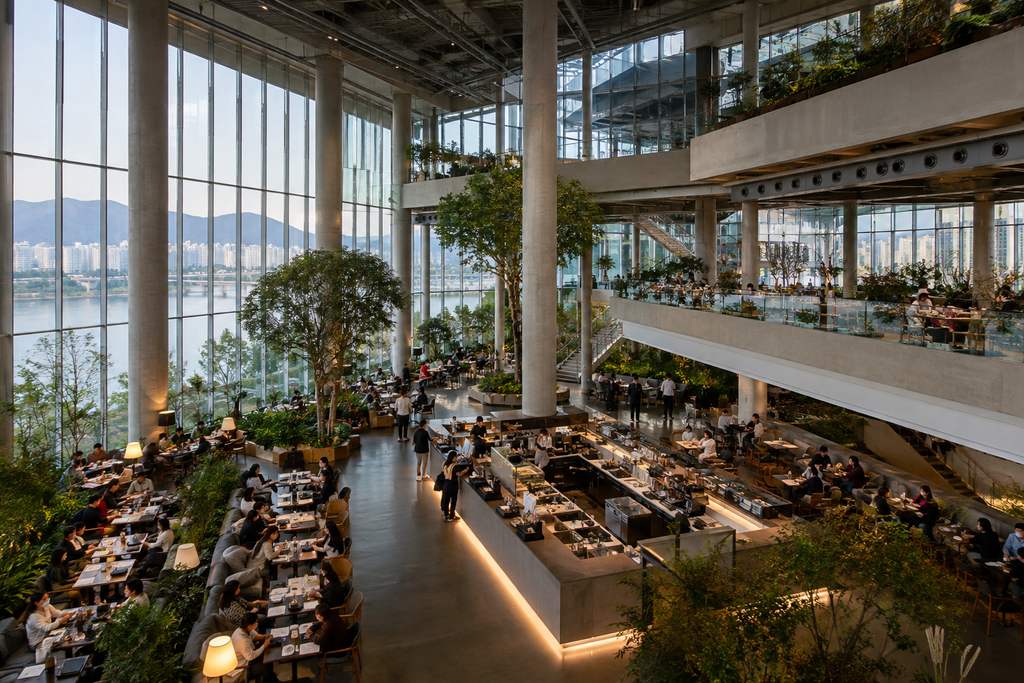
Begin the morning in Gangnam and head to COEX, where you can visit Starfield Library and explore the surrounding shopping, cafés, and restaurants. Unless shopping is a major part of your trip, you do not need to spend the entire day inside the complex.
In the afternoon, make your way toward the Han River. Choose a riverside park that fits your route rather than traveling across Seoul for a specific one. Give yourself some time to walk, sit by the river, or simply take a break before the evening part of your itinerary.
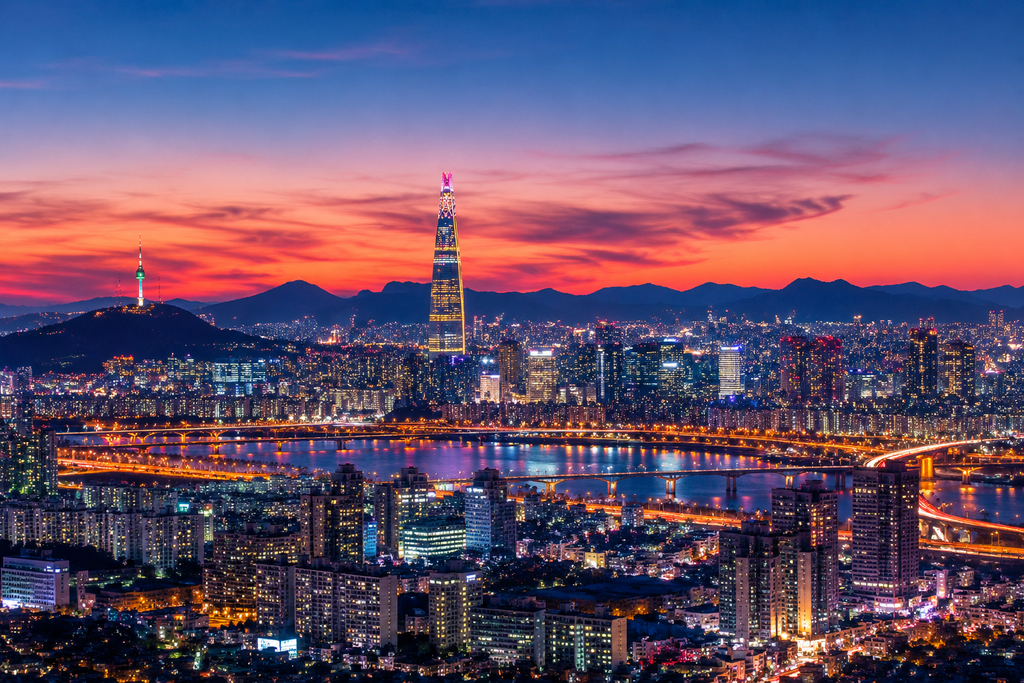
Later, head toward Namsan for N Seoul Tower. Arriving before sunset gives you a chance to see Seoul in daylight and stay as the city lights come on. Afterward, continue to Itaewon for dinner or drinks if you still have the energy.
Local Tip: This is the most spread-out day of the three-day itinerary, so check travel times as you go. If you are running behind, skip one stop rather than rushing through everything—N Seoul Tower is especially worth reconsidering when visibility is poor.
Day 3 – Hongdae and Local Neighborhoods
Spend your final day at a slower pace around Hongdae and Yeonnam-dong. Start in Yeonnam-dong and walk around the streets near Gyeongui Line Forest Park, where you will find cafés, restaurants, small shops, and a more relaxed atmosphere than the busiest parts of Hongdae.
Later, walk toward Hongdae and explore the shopping streets and areas around Hongik University. There is no single attraction you need to rush toward here—the neighborhood itself is the experience, so leave some time to wander into side streets instead of following only the busiest main road.
Stay in the area for dinner and try Korean barbecue, fried chicken, or another restaurant that catches your attention. Hongdae becomes noticeably livelier in the evening, so travelers interested in bars, clubs, or nightlife can continue after dinner without making another trip across Seoul.
Local Tip: This day is intentionally less structured than Days 1 and 2. After two busy sightseeing days, keeping your final day concentrated in one part of Seoul gives you time for cafés, shopping, food, or anything you missed earlier without constantly checking the clock.
Essential Seoul Travel Tips
A little preparation can save a surprising amount of time once you arrive in Seoul. The city is generally easy to travel around, but navigation apps, mobile data, payment methods, and a few local habits work differently from what some international visitors may be used to.
Before your first full day, make sure you have reliable mobile data, a navigation app that works well in Korea, and a transportation card ready to use. These small preparations make it much easier to change plans while you are exploring instead of returning to your hotel whenever something unexpected comes up.
Local Tip: Save your hotel name and address in both English and Korean on your phone. It can be useful when taking a taxi or asking for directions, especially if the English name of your accommodation is not immediately recognized.
Internet and Navigation
Reliable mobile data makes traveling around Seoul much easier because you will probably use your phone throughout the day for navigation, subway routes, restaurant searches, translation, and checking opening hours. An eSIM, local SIM card, or portable Wi-Fi are all practical options, so choose whichever fits your phone and travel style.
For navigation, Naver Map and KakaoMap are especially useful in South Korea. They can help you compare subway and bus routes, find station exits, and locate restaurants or cafés that may be difficult to find using only an English address.
When searching for a specific local restaurant or small business, try copying its Korean name into the map app if the English search does not return the place you are looking for. Also check which subway exit the app recommends—at Seoul’s larger stations, leaving through the wrong exit can add a surprisingly long walk.
Local Tip: Save important places in your map app before each day begins. Having your hotel, attractions, restaurants, and nearby subway stations already saved makes it much easier to adjust your itinerary while you are outside.
Payments and Cash
Credit and debit cards are widely accepted in Seoul, including at most hotels, restaurants, cafés, convenience stores, and major shops. For everyday sightseeing, you generally do not need to carry a large amount of cash.
However, keeping some Korean won with you is still useful. Traditional markets, small independent vendors, and certain machines or services may be easier to use with cash. Cash can also be useful when you need to recharge a transportation card during your trip.
If you are using a foreign card, it is a good idea to carry more than one payment method rather than relying on a single card for your entire trip. Even when cards are normally accepted, an individual transaction can occasionally fail.
Local Tip: Keep a small amount of cash separate from your main wallet for transportation and small purchases. There is little reason to walk around Seoul with a large amount of cash when cards cover most everyday spending.
Language and Local Etiquette
You can travel around Seoul without speaking Korean, especially in major tourist areas, hotels, and large transportation hubs. However, English is not guaranteed everywhere, particularly at smaller local restaurants, traditional markets, or businesses outside the busiest tourist districts.
A translation app can be useful for menus, signs, and short conversations. Keeping the Korean name and address of your hotel or destination on your phone can also make communication easier when taking a taxi or asking someone for directions.
When using public transportation, keep conversations and phone audio relatively quiet and follow signs for priority seating. In traditional neighborhoods such as Bukchon, remember that some of the streets are residential areas, so avoid excessive noise and respect any visitor restrictions posted locally.
Local Tip: You do not need to memorize a long list of Korean phrases before your trip. Simple expressions such as “annyeonghaseyo” (hello) and “gamsahamnida” (thank you), combined with a translation app when needed, are enough to make many everyday interactions easier.
Final Thoughts
Seoul is much easier to enjoy when you stop treating the city as a checklist of famous attractions. The distances between neighborhoods can be large, so grouping nearby places together and leaving some flexibility in your schedule will usually give you a better trip than trying to see everything at once.
For a first visit, combine Seoul’s major sights with time in individual neighborhoods. Explore the palaces and traditional streets around central Seoul, spend an evening around Hongdae or Itaewon, try food outside the busiest tourist areas, and leave enough time to discover cafés, markets, and smaller streets along the way.
If you have only three days, use the itinerary in this guide as a starting point rather than a strict schedule. With additional time, slow the pace down and explore more of Seoul beyond its major tourist attractions.
Want to explore beyond Seoul’s famous attractions? Discover 10 local places to visit in Seoul beyond the tourist spots, including neighborhoods, markets, and areas that offer a different side of the city.
The best Seoul trip is not necessarily the one where you visit the most places—it is the one where you spend less time crossing the city and more time actually experiencing each neighborhood.