
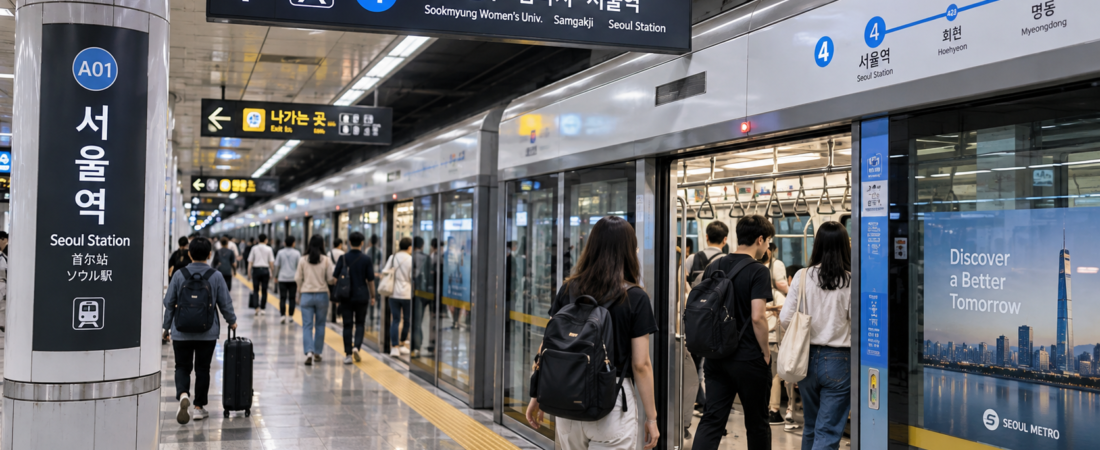
Getting around South Korea is easier than many first-time visitors expect. With an extensive subway and bus network, convenient transportation cards, and helpful navigation apps, you can explore most major cities without renting a car.
For travelers visiting Seoul or Busan, public transportation is often the fastest and most affordable way to get around. Even in destinations such as Jeju Island, where the subway is not available, buses can help you reach many popular attractions.
In this guide, you’ll learn how to use public transportation in Korea, including subways, buses, T-money cards, transfers, and useful transportation apps. Whether you’re visiting Korea for the first time or simply want to travel more efficiently, these practical tips will help you get around with confidence.
Understanding Public Transportation in Korea
South Korea has a well-developed public transportation system that makes traveling between and within major cities relatively easy.
In cities such as Seoul and Busan, travelers can use extensive subway networks along with local buses to reach most major attractions, shopping areas, neighborhoods, and transportation hubs. Public transportation is generally affordable, clean, and reliable, making it one of the best ways to explore Korea without a car.
A transportation card such as T-money makes the system even more convenient. Instead of purchasing a separate ticket for every ride, you can simply tap your card when entering and exiting subways or buses. The same card can be used across many cities in Korea.
However, transportation options vary depending on your destination. Seoul has the country’s largest subway network, while Busan also has a convenient subway system connecting many popular areas. Jeju Island does not have a subway, so travelers mainly rely on buses, taxis, rental cars, or organized tours.
Once you understand how transportation cards, transfers, and navigation apps work, getting around Korea becomes much easier—even if you do not speak Korean.
How to Use the Subway in Korea
The subway is one of the easiest and most convenient ways to travel around major Korean cities. Seoul has the largest subway network in the country, while Busan, Daegu, Daejeon, and Gwangju also operate subway systems.
Most subway stations have signs and announcements in both Korean and English, making the system relatively easy to use even if you do not speak Korean.
1. Find Your Route
Before entering the subway, check your route using a navigation app. Search for your destination and confirm the subway line, direction, transfer stations, and exit number.
2. Enter Through the Ticket Gate
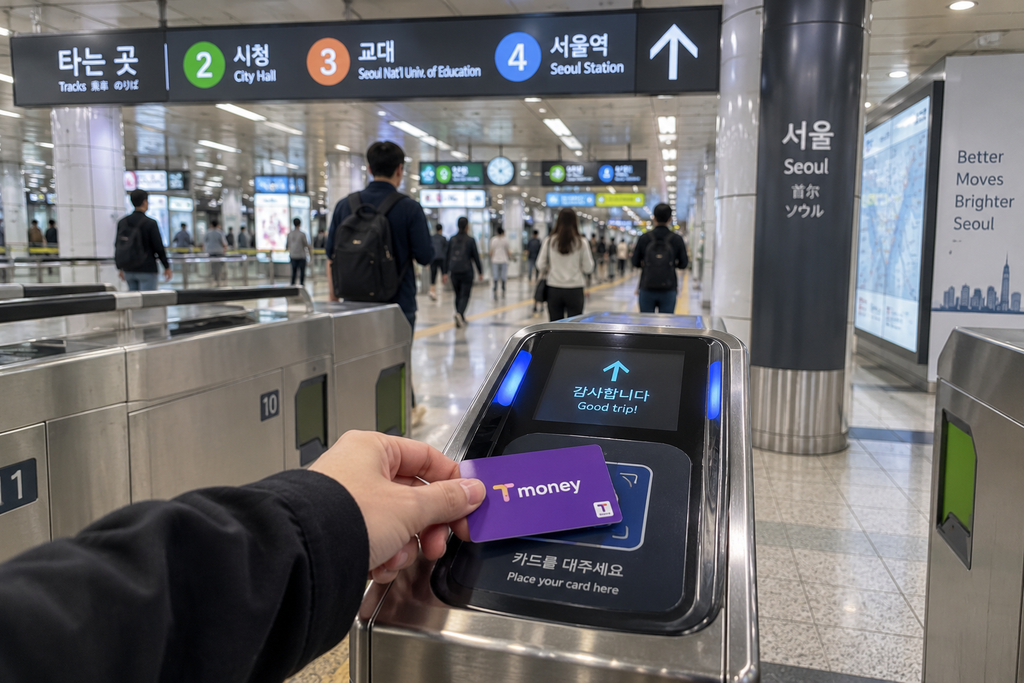
Use a transportation card such as T-money by tapping it on the card reader at the subway gate.
After you tap the card, the screen will display information such as the fare or remaining balance. Keep the same card with you throughout your journey because you will need it again when exiting.
3. Follow the Correct Subway Line
Korean subway lines are identified by numbers, names, and colors. Large stations may serve several different lines, so follow the signs carefully when transferring.
Transfer stations can sometimes require several minutes of walking, especially at large stations in Seoul.
4. Get Off at Your Destination
Inside the train, station information is displayed on screens and announced over the speakers. English announcements are commonly available on major subway systems.
When you arrive at your destination, follow the signs toward the correct exit. Choosing the right exit number can save a surprising amount of walking, especially at large stations.
5. Tap Your Card When You Exit
Tap your transportation card again at the ticket gate when leaving the subway.
Your fare is calculated based on factors such as the distance traveled. If you plan to transfer to a bus, continue using the same transportation card so the transfer can be processed correctly.
How to Use Buses in Korea
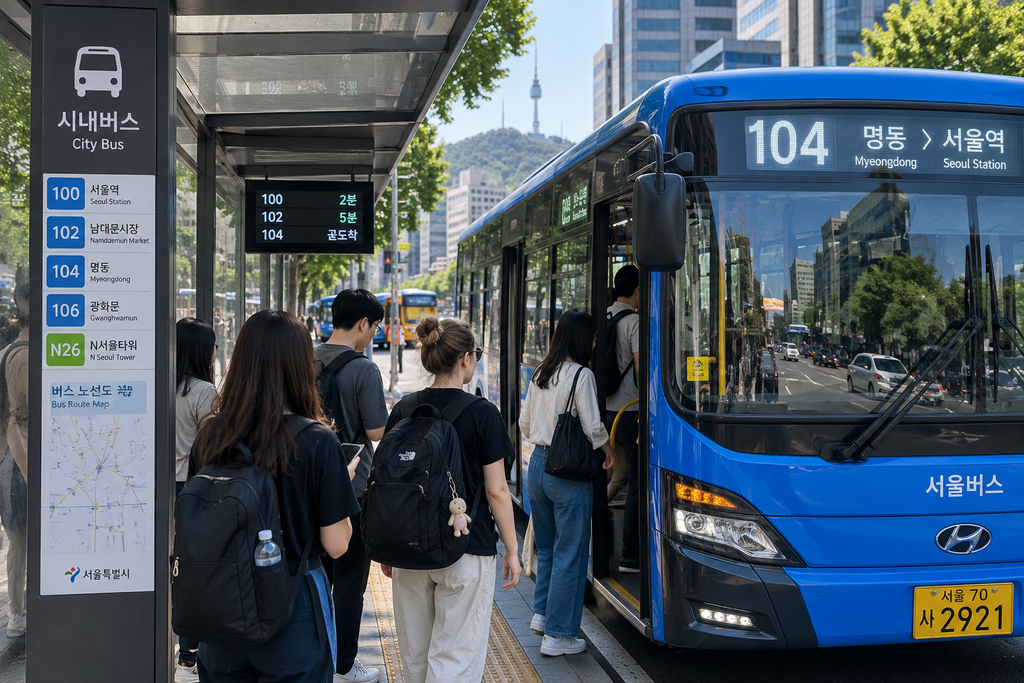
Buses are an important part of public transportation in Korea and can take you to many places that are not located near a subway station. They are especially useful in areas such as Jeju Island, where there is no subway system.
Using Korean buses may feel slightly more complicated than using the subway at first, but the process becomes simple once you understand the basics.
1. Check Your Bus Route
Before boarding, use a navigation app to check the correct bus number, bus stop, estimated arrival time, and where you need to get off.
Bus stops usually display route information, and many stops in major cities have electronic screens showing when the next bus will arrive.
2. Board the Bus and Tap Your Card
In most cases, passengers board through the front door. When you get on, tap your T-money or other compatible transportation card on the card reader near the driver.
You will hear a confirmation sound when the card has been successfully scanned.
3. Watch for Your Stop
Keep track of your location using the information screens, announcements, or your navigation app.
Stop names may be announced in English on many routes in major cities, but using a navigation app can make the journey much easier for international travelers.
4. Press the Stop Button
When your destination is approaching, press one of the stop buttons located throughout the bus.
This lets the driver know that you want to get off at the next stop.
5. Tap Your Card Again When Getting Off
Before leaving the bus, tap your transportation card on the reader near the exit door.
This step is important because it helps calculate the correct fare and can allow you to receive applicable transfer benefits when changing to another bus or subway.
Bus Tip: Try to have your transportation card ready before boarding, especially during busy commuting hours. Korean city buses can start moving soon after passengers board, so hold onto a handrail or take a seat as soon as possible.
What Is a T-Money Card?
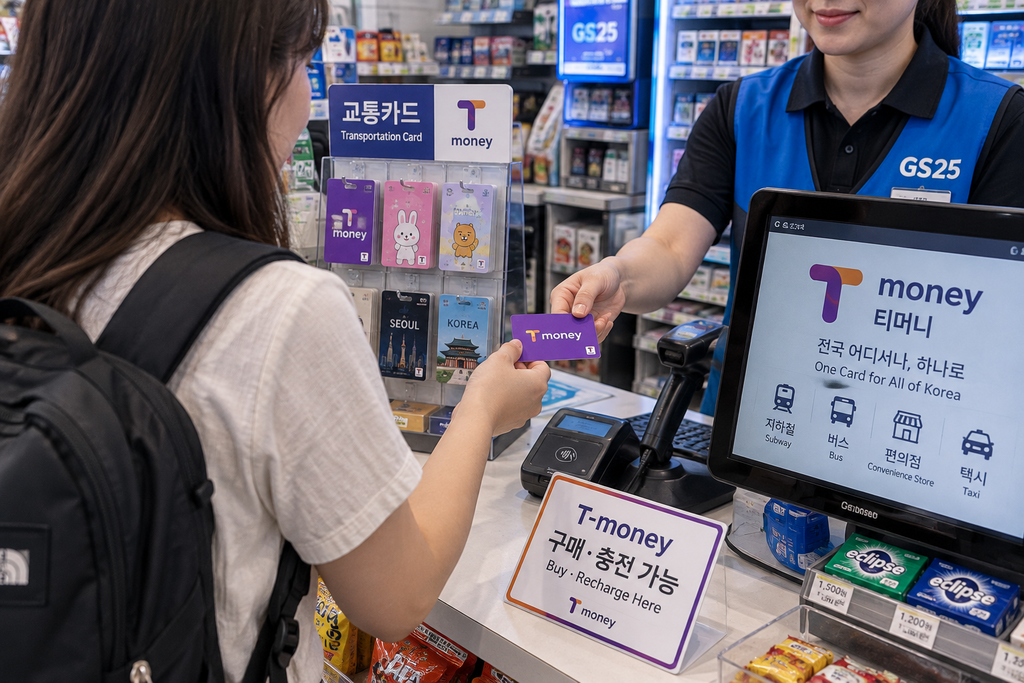
A T-money card is a rechargeable transportation card that makes using public transportation in South Korea much easier. Instead of buying individual tickets for each journey, you can simply tap the card when using subways and buses.
For most international travelers, getting a transportation card shortly after arriving in Korea is one of the easiest ways to simplify everyday travel.
Where to Buy a T-Money Card
T-money cards are widely available at convenience stores such as CU, GS25, 7-Eleven, and emart24. They can also be purchased at selected subway stations and transportation facilities.
Availability and card designs can vary by location, so if one store does not have the card you want, simply try another nearby convenience store.
How to Add Money to Your T-Money Card
You can recharge your T-money card at convenience stores and recharge machines located inside many subway stations.
For travelers, it is a good idea to keep some Korean won in cash available for transportation card recharging, as cash is commonly used for topping up standard T-money cards.
Rather than adding a large amount immediately, you can start with a smaller balance and recharge the card whenever necessary.
Where Can You Use T-Money?
T-money is accepted on many public transportation systems throughout Korea, including:
- Subways
- City buses
- Some taxis
- Selected convenience stores and other participating locations
Acceptance can vary depending on the city, operator, or service, so check locally if you plan to use the card for something other than regular public transportation.
T-Money Tip: Do not throw away your T-money card when traveling between Korean cities. In many cases, the same card can continue to be used on compatible buses and subway systems in other parts of the country.
How to Transfer Between Subway and Bus
One of the advantages of using a transportation card in Korea is that it makes transferring between eligible subways and buses much more convenient.
Instead of paying for every ride separately, the transportation system can recognize eligible transfers when you use the same transportation card throughout your journey.
Always Use the Same Transportation Card
Use the same T-money or compatible transportation card when transferring between buses and subways.
For example, if you take the subway and then transfer to a bus, tap the same card when exiting the subway and again when boarding the bus.
Remember to Tap When Getting Off the Bus
Always remember to tap your transportation card when getting off a bus.
This is especially important if you plan to transfer to another bus or subway, as the system uses your card activity to determine whether your next ride qualifies as a transfer.
Transfer Rules Can Vary
Transfer rules, time limits, and fares can vary depending on the city and transportation system.
To avoid unexpected charges, make your transfer reasonably soon after leaving the previous bus or subway and check local transportation information if your route involves regional or less common services.
Transfer Tip: If you accidentally use a different transportation card for the next part of your journey, the system may treat it as a new trip rather than a transfer. Keep one card easily accessible and use it consistently throughout the day.
Best Transportation Apps for Korea
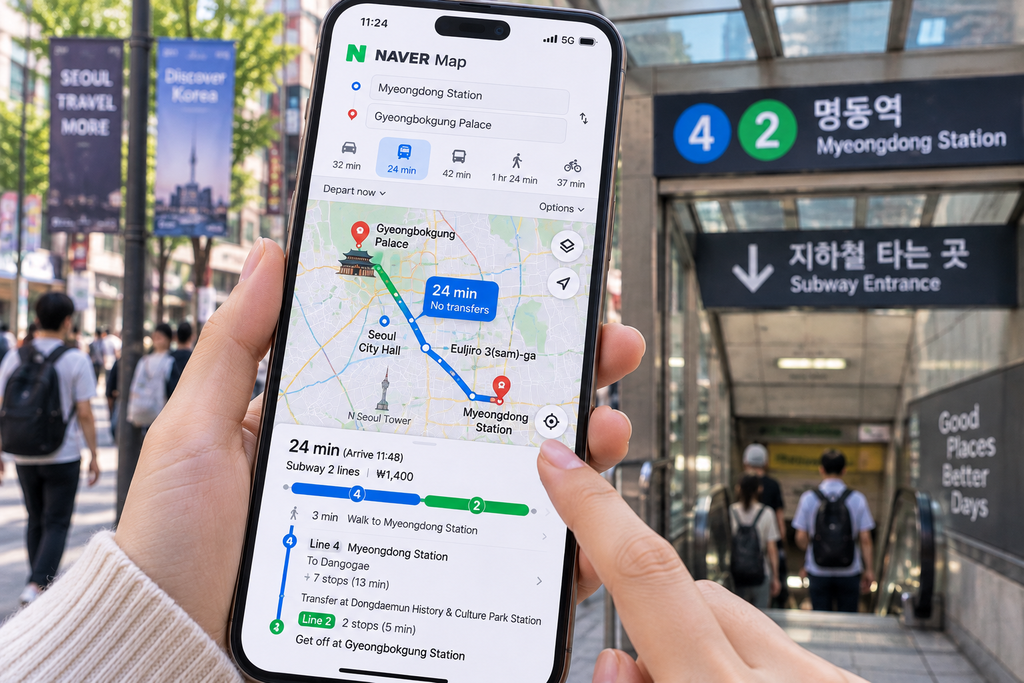
Having the right navigation app can make traveling around Korea much easier. For international visitors, NAVER Map and KakaoMap are two of the most useful options for finding subway, bus, and walking routes.
NAVER Map
NAVER Map is one of the most useful navigation apps for international travelers in Korea. It can help you search for destinations, compare public transportation routes, check subway and bus information, and find walking directions.
The app supports multiple languages, including English, making it particularly useful for travelers who cannot read Korean.
When planning a trip, NAVER Map can show useful information such as which subway line to take, where to transfer, which bus to board, and how to walk from the station or bus stop to your final destination.
KakaoMap
KakaoMap is another popular navigation app in Korea. It provides route planning for public transportation, walking, driving, and cycling.
It can be especially helpful for checking local routes and public transportation information while traveling around Korean cities.
What About Google Maps?
Google Maps can still be useful for searching for places and checking general location information in Korea. However, some navigation functions may not work the same way they do in many other countries.
For detailed local transportation and navigation, travelers should consider installing NAVER Map or KakaoMap before arriving in Korea.
Navigation Tip: Download at least one Korean navigation app before your trip and save the names or addresses of important places such as your hotel, airport, and major attractions.
If you have trouble finding a destination using its English name, try searching with the Korean name or copying the Korean address from the attraction or hotel’s official website.
Transportation Tips for Foreign Travelers
Public transportation in Korea is generally easy to use, but a few simple tips can make your journey much smoother—especially if it is your first time visiting the country.
Avoid Rush Hour When Possible
Subways and buses can become extremely crowded during weekday commuting hours, particularly in major cities such as Seoul and Busan.
If your schedule is flexible, traveling outside the busiest morning and evening periods can make carrying luggage and navigating unfamiliar stations much easier.
Check Your Transportation Card Balance
Keep an eye on the remaining balance of your T-money card and recharge it before it gets too low.
Having some Korean won in cash available can also be useful when you need to recharge a standard transportation card.
Check the Last Train
Subways in Korea do not operate 24 hours a day. If you plan to stay out late, check the last train for your specific route in advance using a local navigation app.
Last-train times can vary depending on the station, line, direction, and day.
Pay Attention to Exit Numbers
Large subway stations can have many different exits, and choosing the wrong one may leave you surprisingly far from your destination.
Before leaving the station, check the exit number recommended by your navigation app and follow the signs inside the station.
Give Yourself Extra Time at Large Stations
Some transfer stations are enormous. Changing lines may involve long corridors, stairs, escalators, or several minutes of walking.
Allow a little extra time when your route includes a transfer at a major station.
Keep Transportation Etiquette in Mind
When using escalators, platforms, buses, and subway cars, follow posted signs and local passenger flow. Allow passengers to exit before boarding and avoid blocking subway doors.
Priority seats are provided for passengers who may need them, including older adults, pregnant passengers, and people with disabilities.
Luggage Tip: If you are traveling with large suitcases, airport trains, airport buses, or taxis may sometimes be more comfortable than taking crowded local buses or making several subway transfers.
Getting Around Seoul, Busan and Jeju
Transportation in Korea varies depending on where you are traveling. Seoul and Busan have extensive subway and bus networks, while getting around Jeju Island requires a slightly different approach.
Getting Around Seoul
Seoul has the largest public transportation network in Korea, with an extensive subway system connecting most major attractions and neighborhoods.
For most visitors, using the subway together with local buses is an affordable and convenient way to explore the city. Areas such as Myeongdong, Hongdae, Gangnam, Itaewon, and major historical attractions can all be reached by public transportation.
Planning a trip to the capital? Read our Seoul Travel Guide 2026 for the best things to do, places to visit, food to try, and practical travel tips.
Getting Around Busan
Busan also has a convenient subway and bus network, although some attractions may require a combination of subway and bus travel.
Popular areas such as Haeundae, Gwangalli, Seomyeon, and Nampo are relatively easy to reach using public transportation. For attractions located farther from subway stations, local buses or taxis can be useful.
For more help planning your trip, check out our Busan Travel Guide 2026 for attractions, food, itineraries, and essential travel information.
Getting Around Jeju Island
Jeju Island does not have a subway system, so transportation works differently from Seoul and Busan.
Public buses connect many towns and attractions, but travel times can be longer and some destinations may require transfers. Depending on your itinerary, renting a car, taking taxis, or joining organized tours can provide more flexibility.
Before visiting the island, see our Jeju Travel Guide 2026 for the best attractions, local food, transportation advice, and a suggested 3-day itinerary.
Final Thoughts
Using public transportation in Korea may seem unfamiliar at first, but once you understand the basics, it is one of the easiest and most affordable ways to explore the country.
With a T-money card, a reliable navigation app, and a basic understanding of how subways, buses, and transfers work, you can travel around cities such as Seoul and Busan with confidence. Even in Jeju Island, where there is no subway system, buses and other transportation options make it possible to explore without relying entirely on a car.
Before heading out each day, check your route, keep an eye on your transportation card balance, and allow a little extra time for transfers at large stations.
Whether you are exploring Seoul’s busy neighborhoods, relaxing along the coast in Busan, or traveling around Jeju Island, understanding Korea’s transportation system will help you spend less time worrying about how to get around—and more time enjoying your trip.