
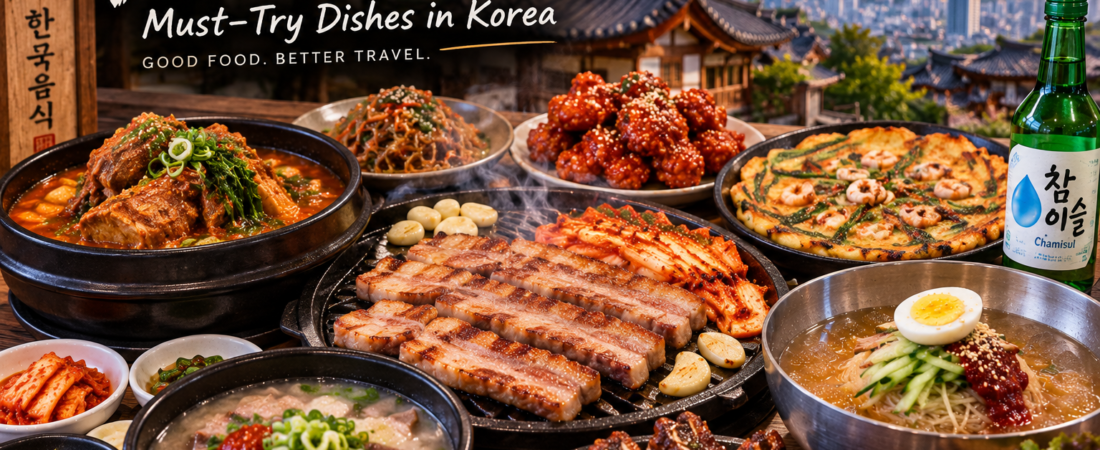
Korean food is much more than bibimbap, tteokbokki, and kimchi. While those dishes are famous for a reason, some of the best food experiences in Korea come from the dishes locals actually enjoy at neighborhood restaurants, late-night spots, and casual gatherings with friends.
From sizzling samgyeopsal and chewy gopchang to spicy dakdoritang, seafood pajeon, and hearty bowls of gukbap, Korean cuisine offers an incredible variety of flavors that many first-time visitors may not know about.
In this guide, we’ll introduce 15 must-try Korean foods that go beyond the usual tourist recommendations, including local favorites, popular drinking foods, comforting soups, grilled meats, and regional specialties worth trying during your trip to South Korea.
Quick List: 15 Must-Try Korean Foods
- Samgyeopsal (Korean Grilled Pork Belly)
- Gopchang (Grilled Beef or Pork Intestines)
- Dakdoritang / Dakbokkeumtang (Spicy Braised Chicken)
- Bulbaek (Korean BBQ Pork Set Meal)
- Haemul Pajeon (Seafood Green Onion Pancake)
- Jokbal & Bossam (Braised and Boiled Pork)
- Gamjatang (Spicy Pork Bone Stew)
- Gukbap (Korean Rice Soup)
- Jjimdak (Korean Braised Chicken)
- Korean Fried Chicken
- Kkomjangeo (Korean Grilled Hagfish)
- Galbi & Dwaeji Galbi (Korean Grilled Ribs)
- Deunggalbi (Korean Pork Back Ribs)
- Milmyeon (Busan-Style Wheat Noodles)
- Jeju Black Pork
1. Samgyeopsal (Korean Grilled Pork Belly)
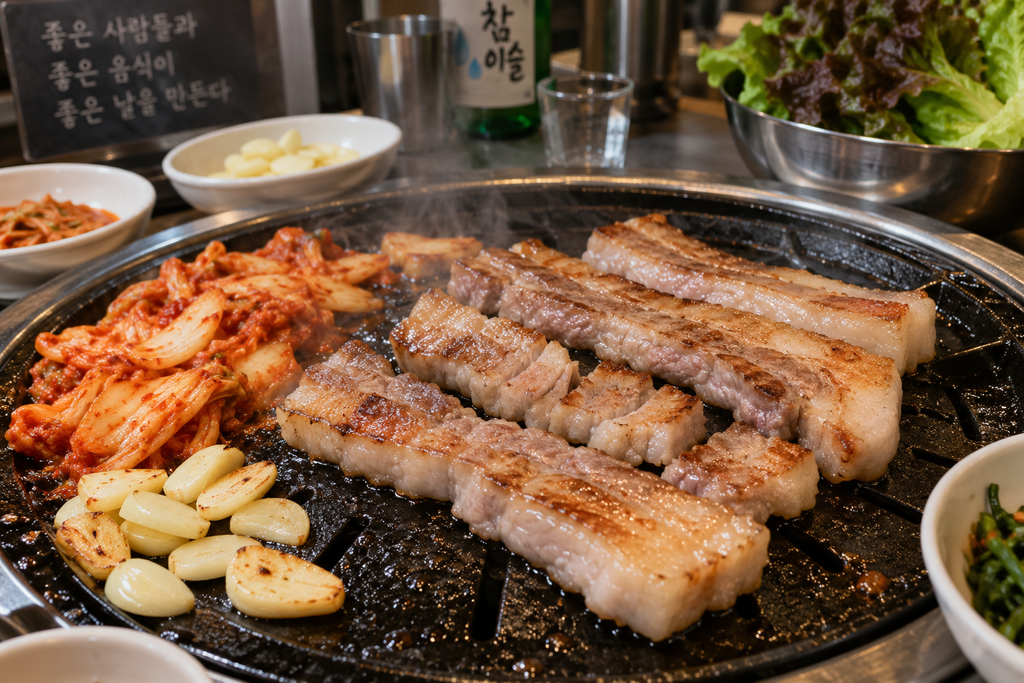
Samgyeopsal is one of the best ways to experience Korean dining culture. Thick slices of pork belly are grilled directly at the table and usually eaten with lettuce, garlic, ssamjang, kimchi, and a variety of side dishes.
Instead of eating the meat by itself, try making a ssam. Place a piece of grilled pork inside a lettuce or perilla leaf, add garlic, ssamjang, or kimchi, wrap everything together, and eat it in one bite.
Samgyeopsal restaurants are especially popular for dinner and group gatherings, and the meal is often enjoyed with soju or beer. After finishing the meat, many Koreans order fried rice, naengmyeon, or another side dish to finish the meal.
2. Gopchang (Grilled Beef or Pork Intestines)
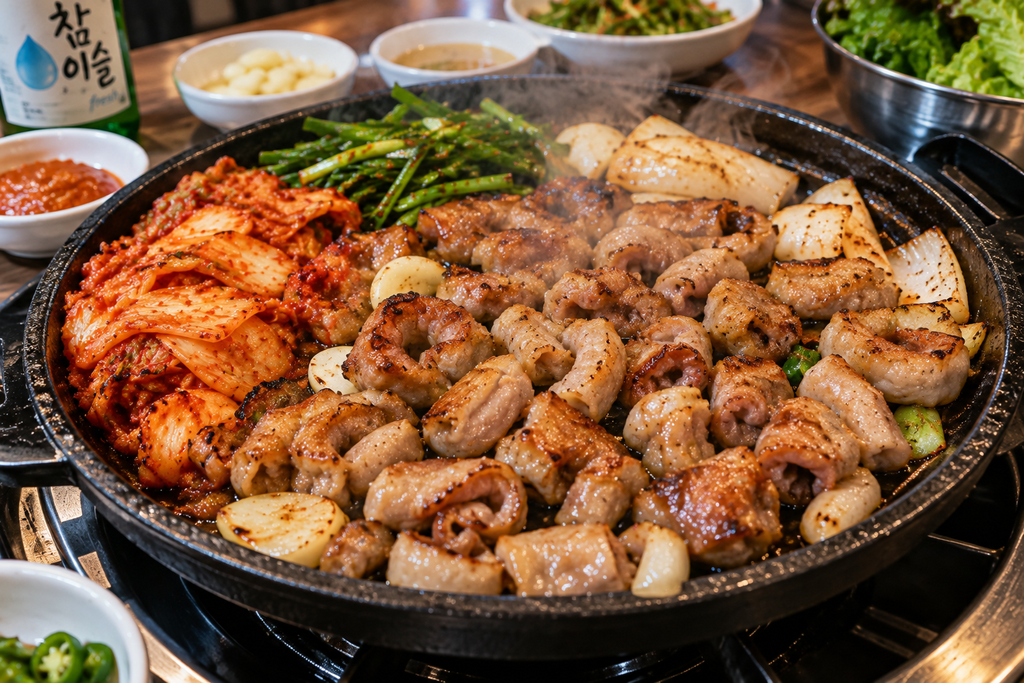
Gopchang is one of Korea’s most popular foods for people who want to try something beyond the usual Korean BBQ. It refers to beef or pork intestines that are grilled until the outside becomes slightly crispy while the inside stays rich, chewy, and flavorful.
At a typical gopchang restaurant, the meat is often cooked together with onions, garlic, chives, mushrooms, and other vegetables on a large grill. You may also see daechang (large intestine) and makchang served alongside gopchang. If you are not sure which one to order, a mixed platter is a practical choice for first-time visitors because you can compare several different flavors and textures in one meal.
Gopchang is especially popular as an evening meal with soju. One of the best parts comes at the end: many restaurants make bokkeumbap (fried rice) directly on the grill using the remaining juices, vegetables, and seasoning. Don’t leave before trying it.
3. Dakdoritang / Dakbokkeumtang (Spicy Braised Chicken)
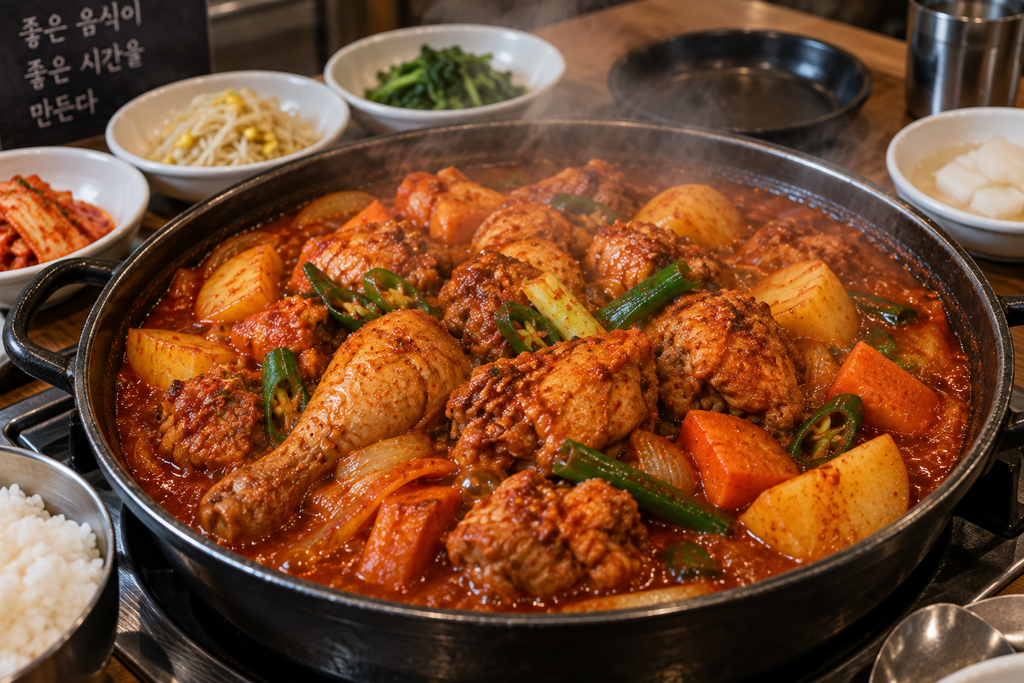
Dakdoritang, also commonly called dakbokkeumtang, is a spicy Korean chicken dish cooked in a rich red sauce with potatoes, onions, carrots, and other vegetables. The chicken slowly absorbs the spicy and slightly sweet sauce, while the potatoes become soft and full of flavor.
It is usually served in a large pot in the middle of the table and shared with rice, making it a great choice for two or more people. The spice level varies by restaurant, but the dish is generally much richer and more filling than street foods such as tteokbokki.
Once most of the chicken is gone, don’t waste the remaining sauce. Depending on the restaurant, you may be able to add fried rice, noodles, or extra ingredients to the pot. Mixing rice into the leftover spicy sauce is one of the best ways to finish the meal.
4. Bulbaek (Korean BBQ Pork Set Meal)
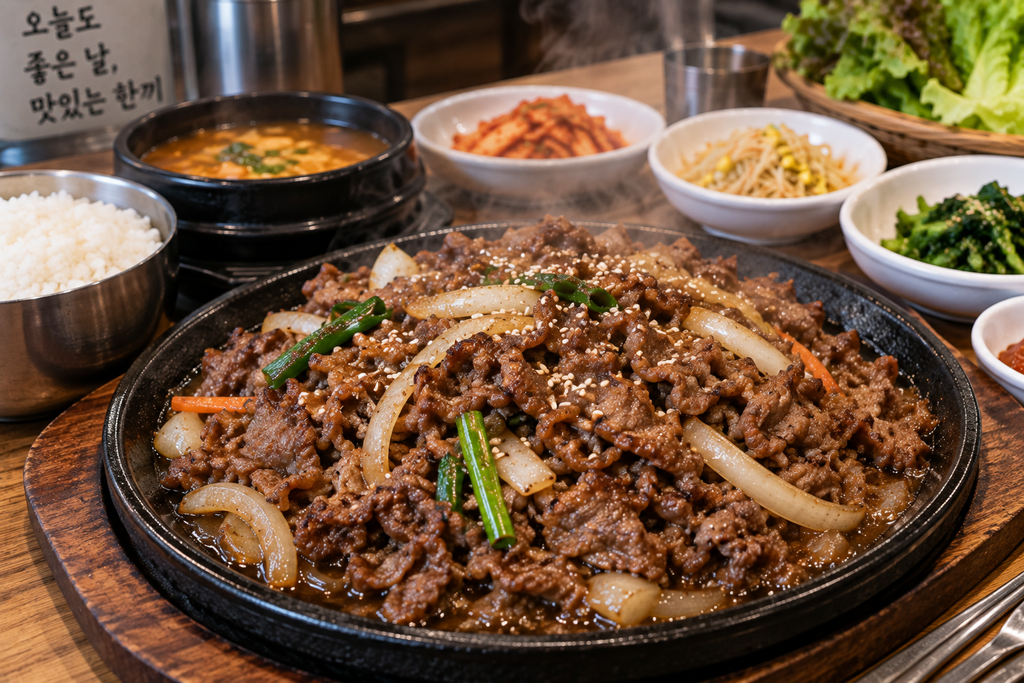
Bulbaek is short for bulgogi baekban, a simple but satisfying Korean set meal built around seasoned grilled pork. Unlike Korean BBQ restaurants where you grill the meat yourself, bulbaek usually arrives already cooked and is served with rice, soup, kimchi, and several side dishes.
You can often find bulbaek at casual neighborhood restaurants and gisa sikdang (driver restaurants), traditional eateries originally known for serving affordable and filling meals to taxi and other professional drivers. The pork is typically seasoned with a savory, slightly sweet, and sometimes spicy sauce that goes perfectly with a bowl of rice.
Bulbaek rarely appears at the top of tourist food lists, but that is exactly why it is worth trying. It is an inexpensive, filling, everyday Korean meal that gives travelers a taste of the kind of food locals actually eat for lunch or dinner.
5. Haemul Pajeon (Seafood Green Onion Pancake)
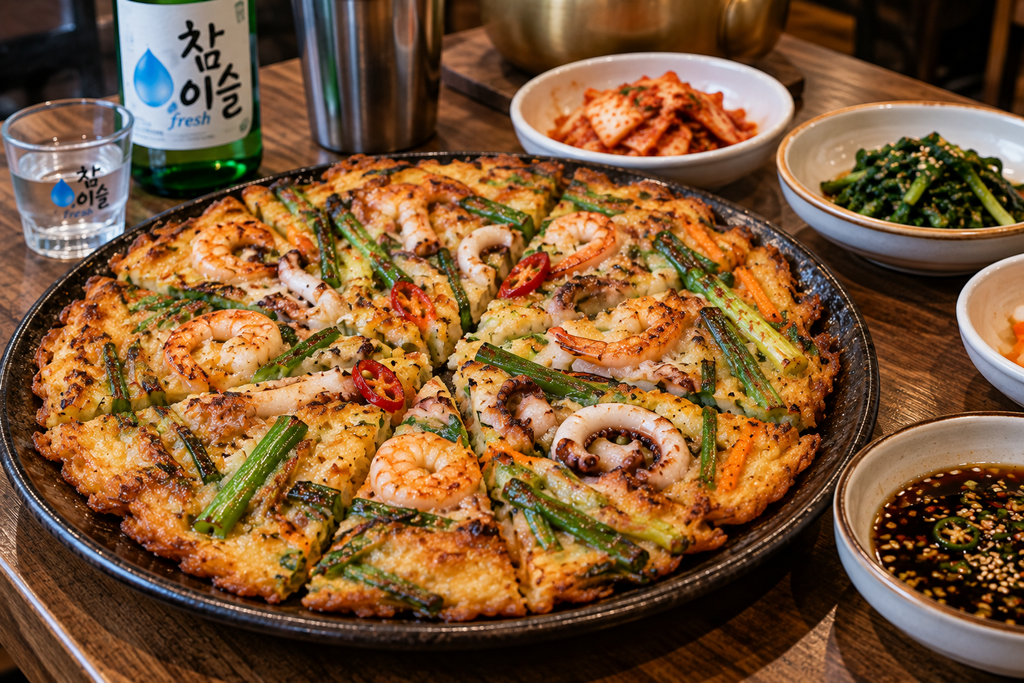
Haemul pajeon is a savory Korean pancake made with green onions and seafood such as squid, shrimp, and shellfish. It is pan-fried until the outside becomes crispy while the inside stays soft and packed with seafood and vegetables.
The pancake is usually cut into pieces and shared at the table with a soy-based dipping sauce. It works well as an appetizer or a dish to share, but in Korea, haemul pajeon is also strongly associated with drinking makgeolli, a traditional Korean rice wine.
There is even a popular Korean tradition of craving pajeon and makgeolli on rainy days. Whether it is raining or not, ordering a hot, crispy haemul pajeon with a cold bowl of makgeolli is one of those simple food experiences that feels distinctly Korean.
6. Jokbal & Bossam (Braised and Boiled Pork)
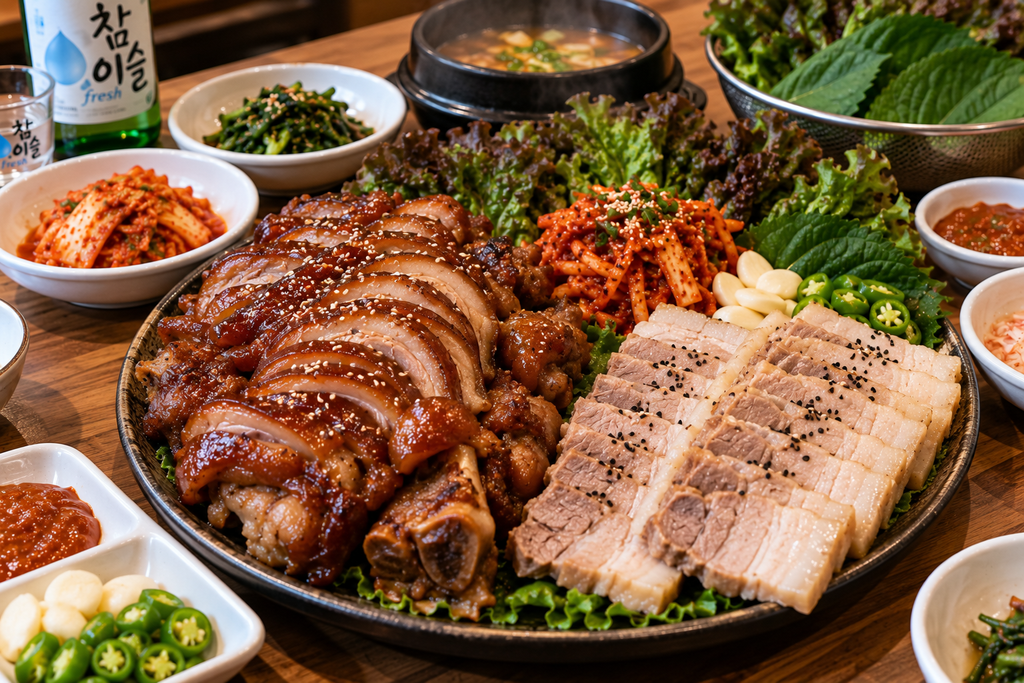
Jokbal and bossam are two classic Korean pork dishes that are especially popular for dinner, late-night meals, and gatherings with friends. Jokbal is made by braising pork trotters in a seasoned soy-based sauce, giving the meat a rich flavor and tender, slightly chewy texture. Bossam, on the other hand, is made with tender slices of boiled pork.
Both dishes are usually served with lettuce or napa cabbage, garlic, chili peppers, ssamjang, and flavorful kimchi. Wrap a piece of pork with the vegetables and condiments to make a ssam, just as you would with Korean BBQ. Bossam is particularly delicious with fresh or strongly seasoned kimchi.
Many restaurants specialize in both jokbal and bossam, and combination platters let you try the two dishes together. They are also popular with soju, making them a great choice if you want to experience Korea’s late-night dining and drinking culture.
7. Gamjatang (Spicy Pork Bone Stew)
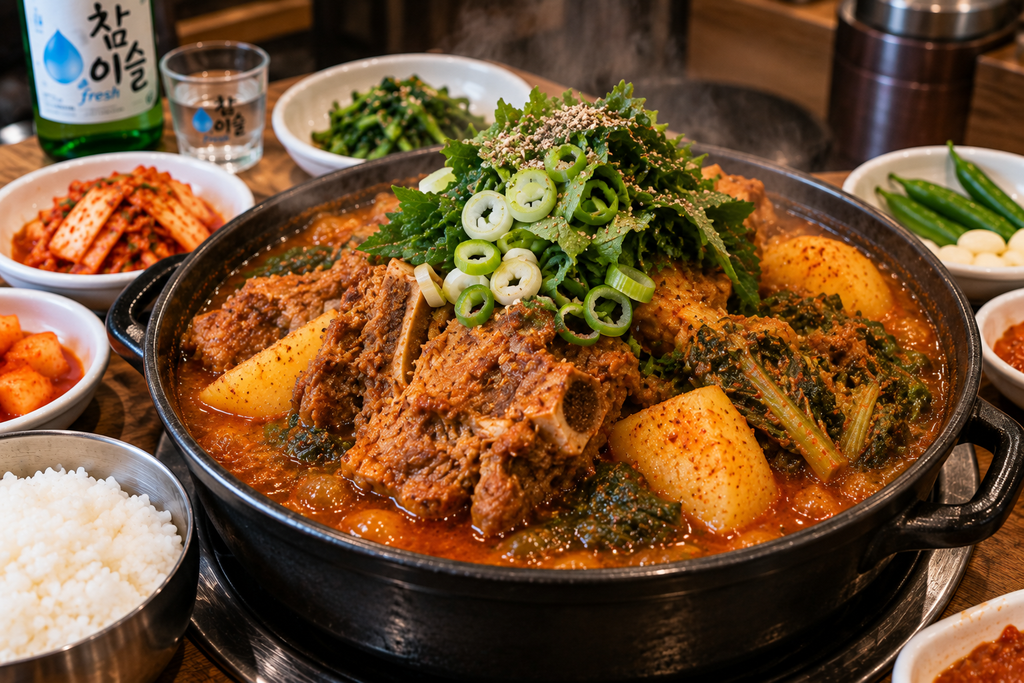
Gamjatang is a hearty Korean stew made with pork backbone, potatoes, vegetables, and a rich, spicy broth. Despite the name often being translated as “potato stew,” the real star of the dish is the tender pork cooked on the bone.
A large pot of gamjatang is usually served bubbling at the table and shared between several people. The broth is deeply savory and often flavored with perilla leaves and perilla seed powder, which give the dish a distinctive aroma and nutty flavor. Use chopsticks to pull the tender meat from the bones and enjoy it with rice and side dishes.
Gamjatang is especially satisfying on cold days or after a night out, and many restaurants stay open late or even 24 hours. If the restaurant offers bokkeumbap, save some broth at the end and order fried rice cooked directly in the remaining sauce.
8. Gukbap (Korean Rice Soup)
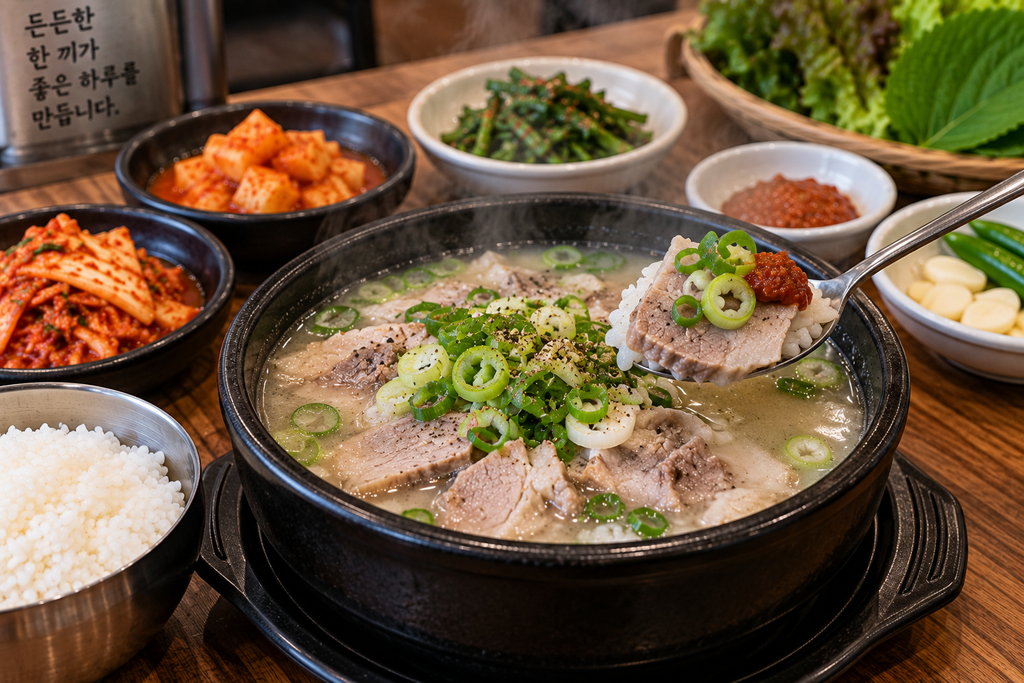
Gukbap literally means “soup with rice,” but in Korea it refers to a whole category of hearty, affordable meals built around hot broth, meat, and rice. Depending on the region and restaurant, you may find versions made with pork, beef, blood sausage, or other ingredients.
One of the most famous regional versions is dwaeji gukbap, or pork rice soup, a local specialty strongly associated with Busan. The pork broth is usually served with slices of pork, and diners can customize the flavor with salted shrimp, chives, garlic, or spicy seasoning. Some restaurants serve the rice inside the soup, while others serve it separately.
Gukbap is inexpensive, filling, and deeply connected to everyday Korean food culture. It is especially comforting on cold mornings, after drinking, or whenever you want a simple local meal. If you visit Busan, trying a bowl of dwaeji gukbap at a neighborhood restaurant should definitely be on your food list.
9. Jjimdak (Korean Braised Chicken)
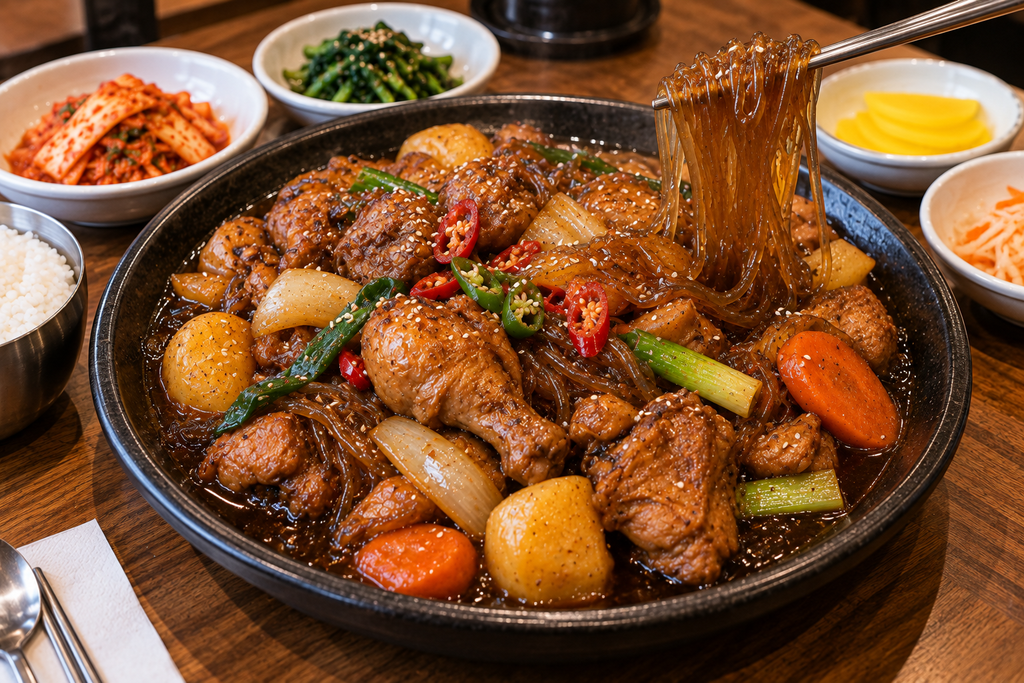
Jjimdak is a Korean braised chicken dish cooked in a savory and slightly sweet soy-based sauce with potatoes, carrots, onions, and chewy glass noodles. Unlike dakdoritang, which is usually red and spicy, classic jjimdak has a darker soy-based sauce and is generally easier for travelers who are not comfortable with very spicy food.
The dish is usually served in a large portion for sharing, with tender pieces of chicken and vegetables soaking up the rich sauce. The glass noodles, known as dangmyeon, are one of the best parts because they absorb the sauce and become incredibly flavorful.
Andong in southeastern Korea is especially famous for Andong jjimdak, but the dish is widely available throughout the country. Some restaurants also offer spicy versions or let you add cheese, extra noodles, or other toppings, so check the menu before ordering.
10. Korean Fried Chicken
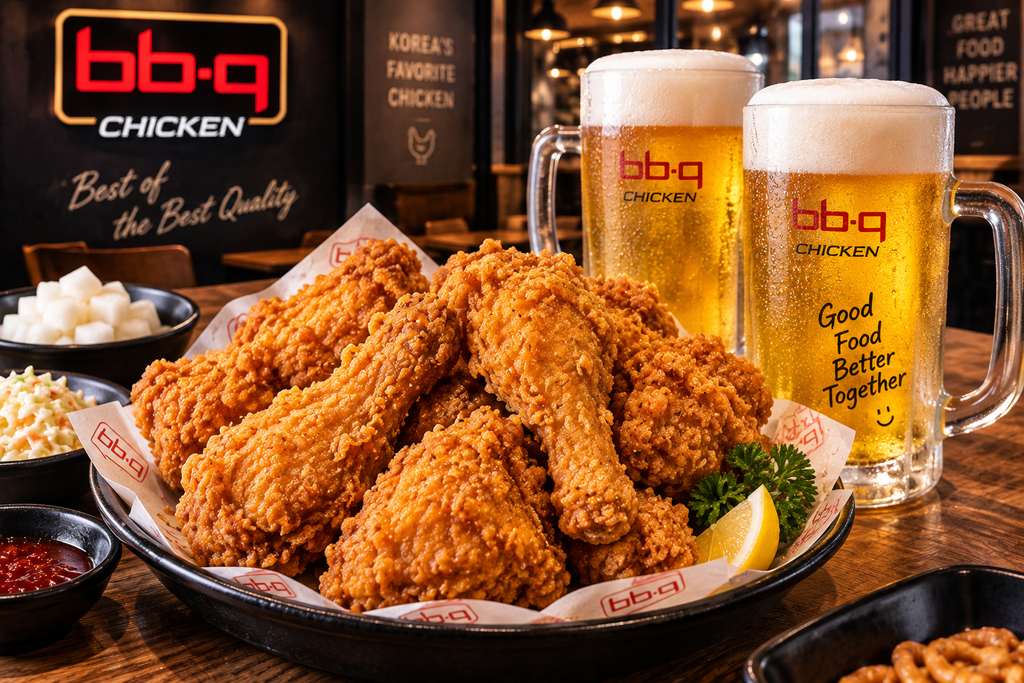
Korean fried chicken is famous for its extra-crispy coating and wide variety of sauces. Popular choices include original fried chicken, sweet and spicy yangnyeom chicken, soy garlic chicken, and other flavors that vary by restaurant.
If you cannot decide between original and seasoned chicken, look for banban chicken, which means “half-and-half.” It lets you order two flavors in one meal and is one of the easiest ways for first-time visitors to experience both classic fried chicken and Korea’s famous yangnyeom style. Keep in mind that portion sizes are often designed for sharing, so check the menu or ask about smaller options if you are dining alone.
Fried chicken is commonly enjoyed with beer in Korea, a combination known as chimaek—“chi” from chicken and “maek” from maekju, the Korean word for beer. Chicken restaurants and delivery shops are easy to find throughout Korea, making this one of the easiest Korean food experiences to try during your trip.
11. Kkomjangeo (Korean Grilled Hagfish)
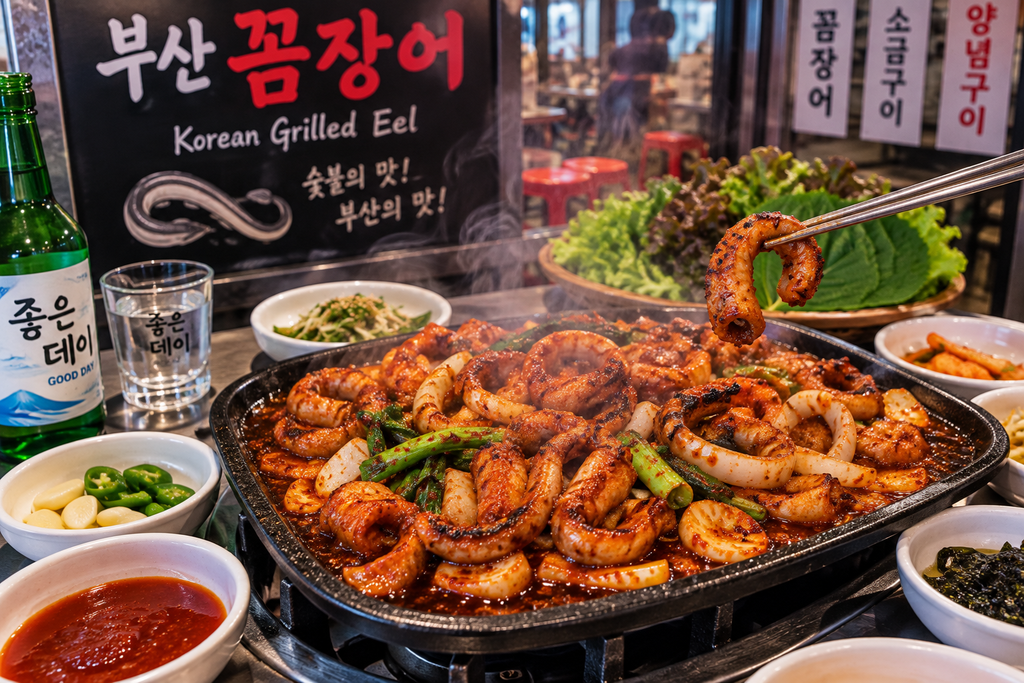
Kkomjangeo is one of Korea’s more adventurous local foods and is especially associated with Busan. Despite often being called “eel” in casual translations, kkomjangeo is actually hagfish, known for its chewy texture and rich flavor when grilled.
It is commonly grilled over charcoal or cooked in a spicy red sauce with onions, green onions, and other vegetables. The spicy version is smoky, savory, and slightly sweet, while charcoal-grilled kkomjangeo lets you enjoy more of the ingredient’s natural flavor and chewy texture.
Busan is one of the best places to try kkomjangeo, particularly at traditional markets and local seafood neighborhoods. It may look unfamiliar to first-time visitors, but if you enjoy discovering foods beyond the usual tourist dishes, kkomjangeo is one of the most memorable local meals to try with soju.
12. Galbi & Dwaeji Galbi (Korean Grilled Ribs)
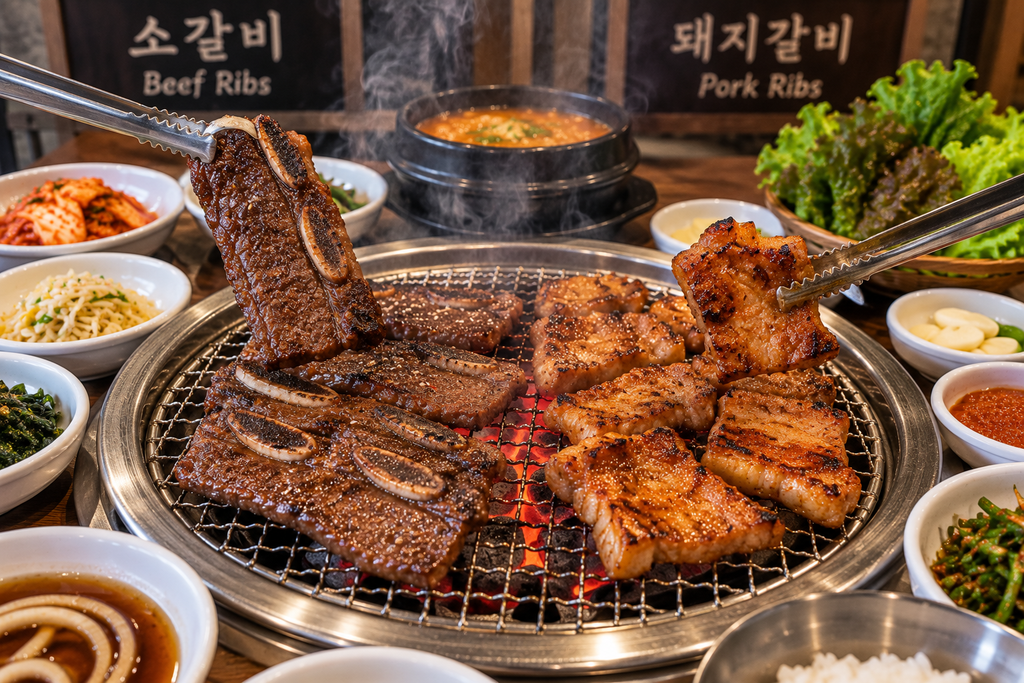
Galbi is one of Korea’s classic barbecue dishes, made with beef or pork ribs grilled over charcoal or a tabletop grill. Beef galbi is usually more expensive and has a rich, tender texture, while dwaeji galbi uses pork ribs and is often a more affordable choice at casual Korean BBQ restaurants.
One of the most popular versions is marinated galbi, where the meat is seasoned in a sweet and savory mixture commonly made with soy sauce, garlic, sugar, and other ingredients. As the meat cooks over the grill, the marinade caramelizes around the edges and creates a smoky, slightly sweet flavor.
Like samgyeopsal, galbi is usually eaten with lettuce or perilla leaves, garlic, ssamjang, kimchi, and other side dishes. If you have already tried samgyeopsal, ordering dwaeji galbi is a great next step because it shows a sweeter, more heavily seasoned side of Korean barbecue.
13. Deunggalbi (Korean Pork Back Ribs)
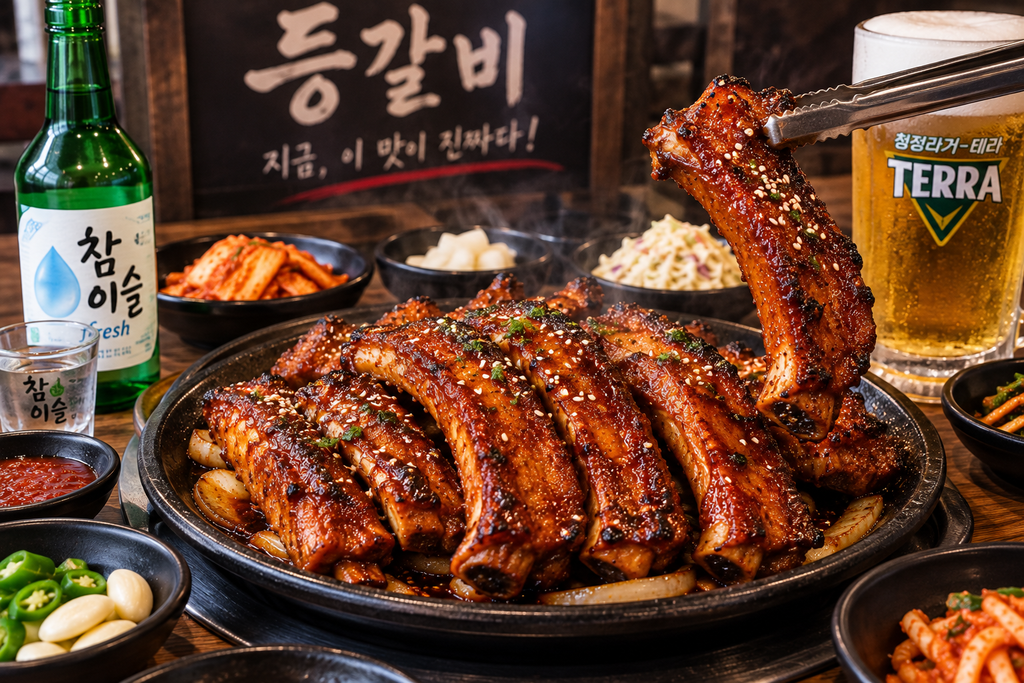
Deunggalbi refers to pork back ribs, a popular Korean dish that is often grilled or cooked in a spicy sauce. The meat is tender and flavorful around the bone, and many restaurants serve it sizzling in a pan with a rich red seasoning.
Spicy deunggalbi can be seriously hot, so first-time visitors who are sensitive to spice should check the heat level before ordering. If the restaurant offers different spice levels, start with a milder option rather than assuming the standard level will be comfortable. Many restaurants also serve the ribs with ingredients such as rice cakes, vegetables, or melted cheese, which can help balance the spicy sauce.
14. Milmyeon (Busan-Style Wheat Noodles)
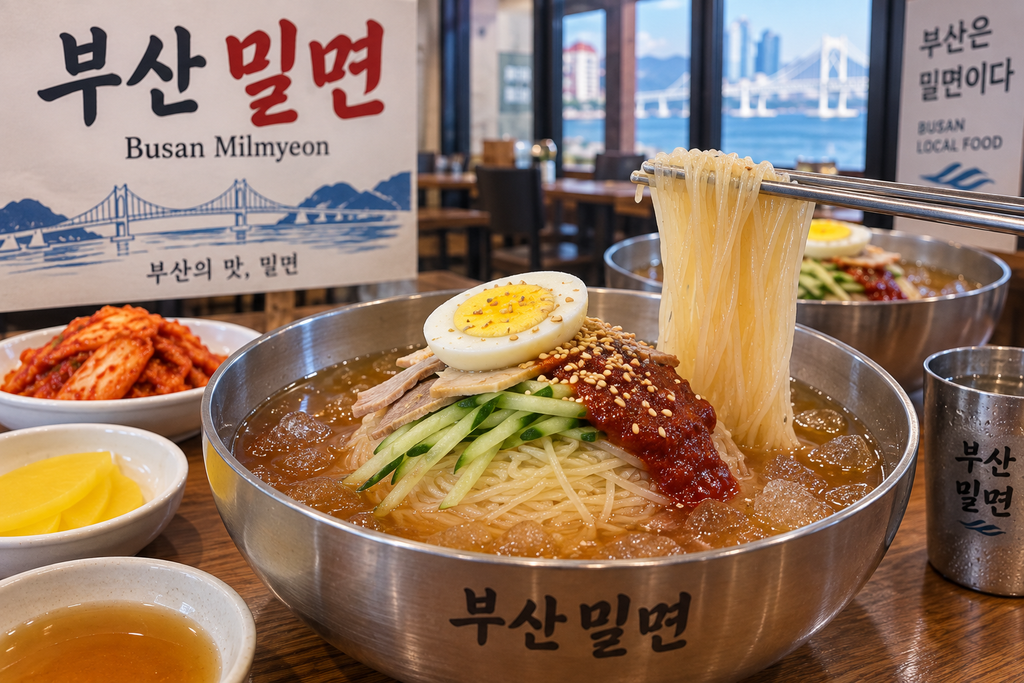
Milmyeon is a cold noodle dish and one of Busan’s best-known local specialties. Unlike naengmyeon, which is traditionally made with buckwheat or starch noodles, milmyeon uses wheat noodles with a softer and slightly chewier texture.
The two main styles are mul-milmyeon and bibim-milmyeon. Mul-milmyeon comes in a refreshing cold broth and is a good choice if you prefer a lighter, less spicy meal. Bibim-milmyeon is served without much broth and mixed with a sweet, tangy, and spicy sauce for a stronger flavor. If it is your first time trying milmyeon and you are sensitive to spicy food, mul-milmyeon is usually the easier place to start.
15. Jeju Black Pork
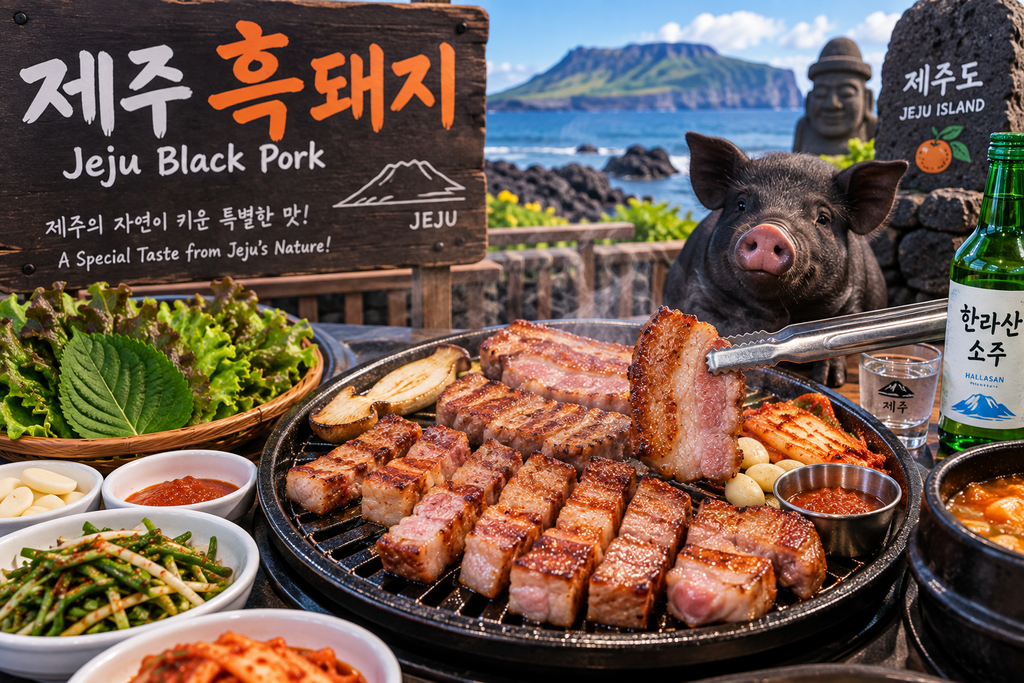
Jeju black pork is one of Jeju Island’s most famous local foods. The pork comes from Jeju’s native black pig breed and is especially popular when grilled over charcoal or a tabletop grill, similar to Korean BBQ.
At many Jeju black pork restaurants, the meat is grilled at the table and eaten with lettuce, garlic, kimchi, and dipping sauces. One of the most distinctive accompaniments is meljeot, a savory fermented anchovy sauce that is often heated on the grill and used as a dipping sauce for the pork. Its strong, salty flavor can be unfamiliar at first, so try a small amount with the pork before adding more.
Bonus: Korean Street Foods Worth Trying
While this guide focuses on Korean dishes beyond the usual tourist favorites, Korea’s street food is still an essential part of the experience. Traditional markets, busy shopping districts, and street food areas are great places to try several snacks in one visit.
- Tteokbokki – Chewy rice cakes served in a sweet and spicy red sauce.
- Eomuk – Fish cakes served on skewers, often with a warm cup of broth.
- Hotteok – A crispy, chewy pancake commonly filled with brown sugar, cinnamon, and nuts.
- Gimbap – Rice and various fillings rolled in seaweed, perfect for a quick and inexpensive meal.
- Bungeoppang – Fish-shaped pastries traditionally filled with sweet red bean paste, especially popular in colder weather.
Street food changes by season and location, so do not be afraid to try something you have never seen before. Markets such as Gwangjang Market in Seoul and traditional markets in Busan are especially fun places to explore Korean snacks and casual local food.
Tips for Ordering Food in Korea
Eating at local Korean restaurants can be one of the best parts of your trip, but the experience may be a little different from what you are used to. Here are a few simple tips that can make ordering and dining much easier.
- Check the minimum order – Some Korean BBQ and shared-dish restaurants require a minimum order of two portions, even for solo diners. This does not always mean two different dishes—you may simply need to order two servings of the same meat or menu item.
- Use photos or translation apps – Many restaurants have picture menus, but smaller local restaurants may only have Korean menus. A translation app can be extremely useful.
- Side dishes are usually included – Korean meals often come with banchan such as kimchi and other small side dishes. At many restaurants, some banchan can be refilled at no extra charge, but it is best to ask before assuming every side dish is refillable.
- Do not be afraid to ask about spice levels – Dishes such as dakdoritang, spicy deunggalbi, and some versions of kkomjangeo can be much hotter than first-time visitors expect.
- Look for the call button – Many Korean restaurants have a small call button on the table that you can press when you are ready to order or need assistance. If there is no button, it is normal to politely get a staff member’s attention instead of waiting for them to come to your table automatically.
Payment is usually made at the counter when you are ready to leave, although the exact system varies by restaurant. At some restaurants, you may need to bring your table number or receipt to the counter. Tipping is generally not expected at ordinary restaurants in South Korea.
Final Thoughts
Korean food is much more diverse than the dishes most travelers know before arriving. Along with famous favorites such as bibimbap and tteokbokki, exploring regional specialties and everyday dishes can give you a much better sense of how people actually eat across South Korea.
You do not need to try all 15 dishes in one trip. Start with foods that match your tastes, then gradually try something more adventurous. Whether you are grilling samgyeopsal with friends, eating a steaming bowl of gukbap in Busan, or trying Jeju black pork on Jeju Island, food is one of the best ways to experience Korean culture.
Keep an open mind and explore beyond the most famous dishes. Neighborhood restaurants, traditional markets, and regional specialties can lead to some of the most memorable meals of your trip—and often give you a better glimpse into everyday food culture in South Korea.