
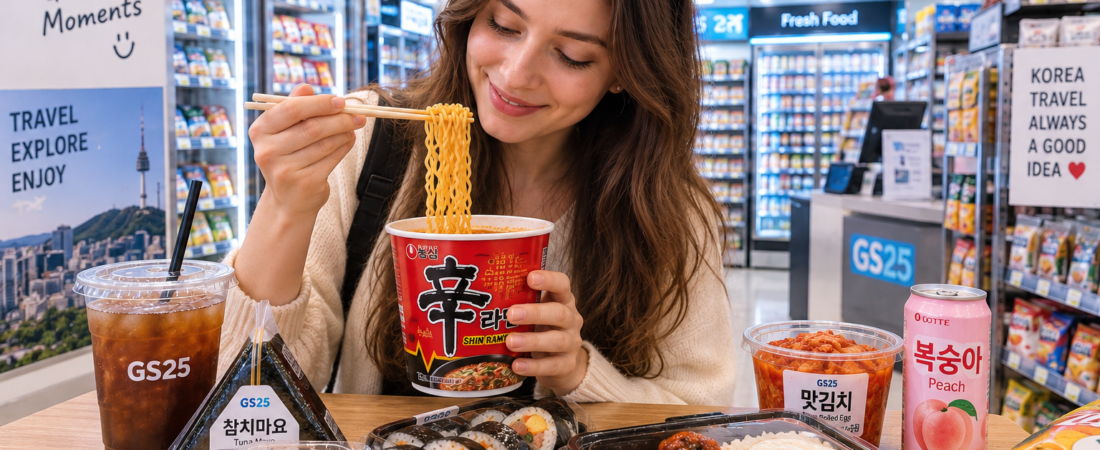
Korean convenience stores are everywhere in South Korea, but for travelers they can be much more useful than a place to grab a drink or bag of chips. Stores such as CU, GS25, 7-Eleven, and emart24 offer quick meals, snacks, coffee, desserts, travel essentials, and simple facilities that can be especially convenient during a busy sightseeing day.
First-time visitors may not immediately know how to prepare ramen, use the microwave, understand 1+1 and 2+1 promotions, choose ready-to-eat meals, or tell whether a store has seating and food-preparation facilities.
This guide explains what to eat and drink at Korean convenience stores, how to prepare and pay for your food, how common promotions work, and the practical habits that can make convenience stores easier to use during your trip.
1. Best Korean Convenience Store Foods to Try
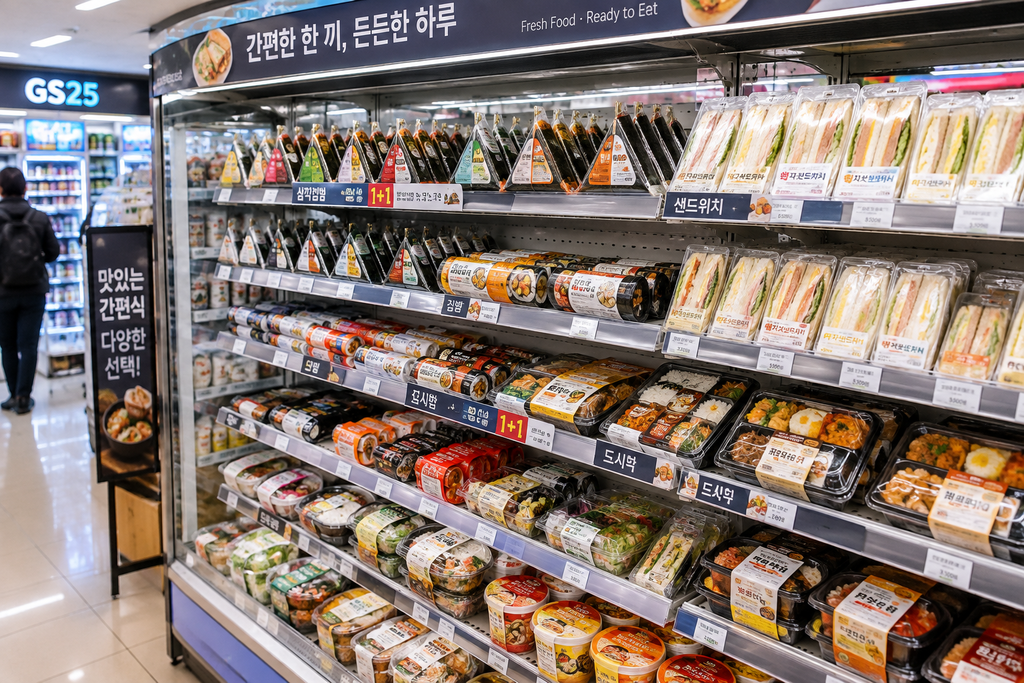
One of the best parts of visiting a Korean convenience store is the huge variety of ready-to-eat food.
You can find everything from triangle kimbap and lunch boxes to sandwiches, instant noodles, sausages, boiled eggs, and Korean snacks. Many of these foods are inexpensive and make an easy breakfast, late-night meal, or quick snack between sightseeing.
Popular products change frequently, and convenience store chains often release limited-edition foods or collaborations with restaurants, celebrities, and popular brands.
Instead of looking for only one specific product, explore the refrigerated food section and see what is available during your trip.
Shopping Tip: Check the shelf labels before choosing drinks, snacks, and ready-to-eat foods. Promotions such as 1+1 and 2+1 are common, but make sure the exact flavor, size, or product you pick is included in the offer.
2. Try Triangle Kimbap (Samgak Kimbap)
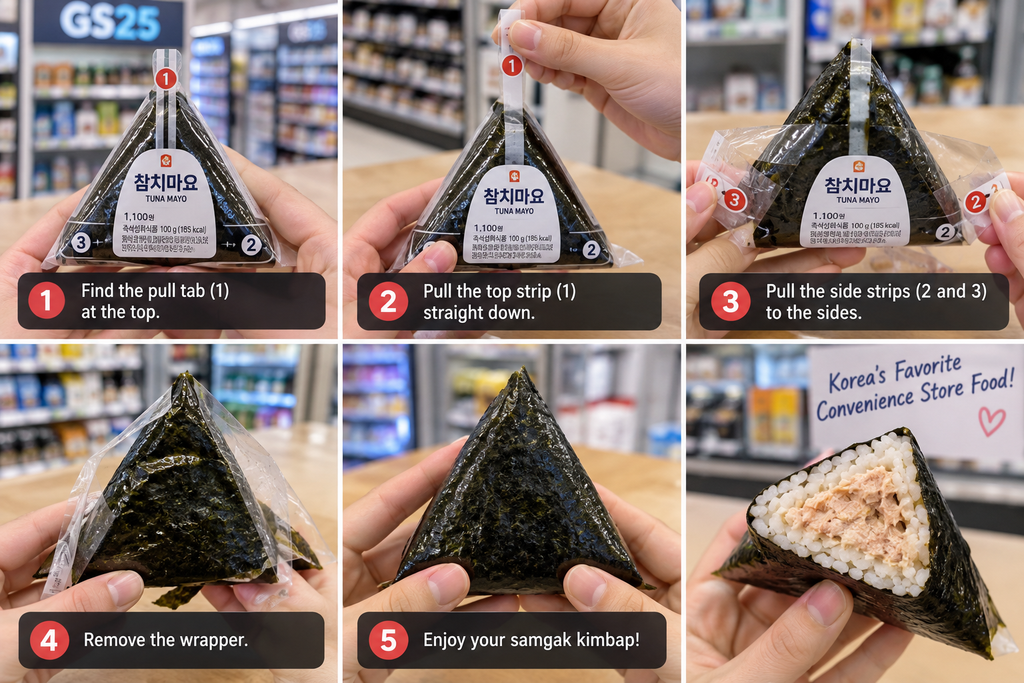
Triangle kimbap, called samgak kimbap in Korean, is one of the most popular quick meals you can find at Korean convenience stores.
It is a triangular portion of rice wrapped in seaweed with a filling in the center. Common flavors include tuna mayonnaise, spicy tuna, kimchi, bulgogi, and other Korean-style fillings.
The packaging may look confusing the first time you open one. It is designed to keep the seaweed separate from the rice until you are ready to eat, so the seaweed stays crispy.
Follow the numbered steps printed on the package: pull the center strip first, then remove the two side sections of the wrapper.
Samgak kimbap is inexpensive, portable, and especially useful when you need a quick breakfast or snack before sightseeing.
Quick Meal Tip: Samgak kimbap works well as a light breakfast or snack, but you can make it more filling by pairing it with cup ramen, a boiled egg, or a small packaged side dish.
3. How to Make Instant Ramen at a Korean Convenience Store
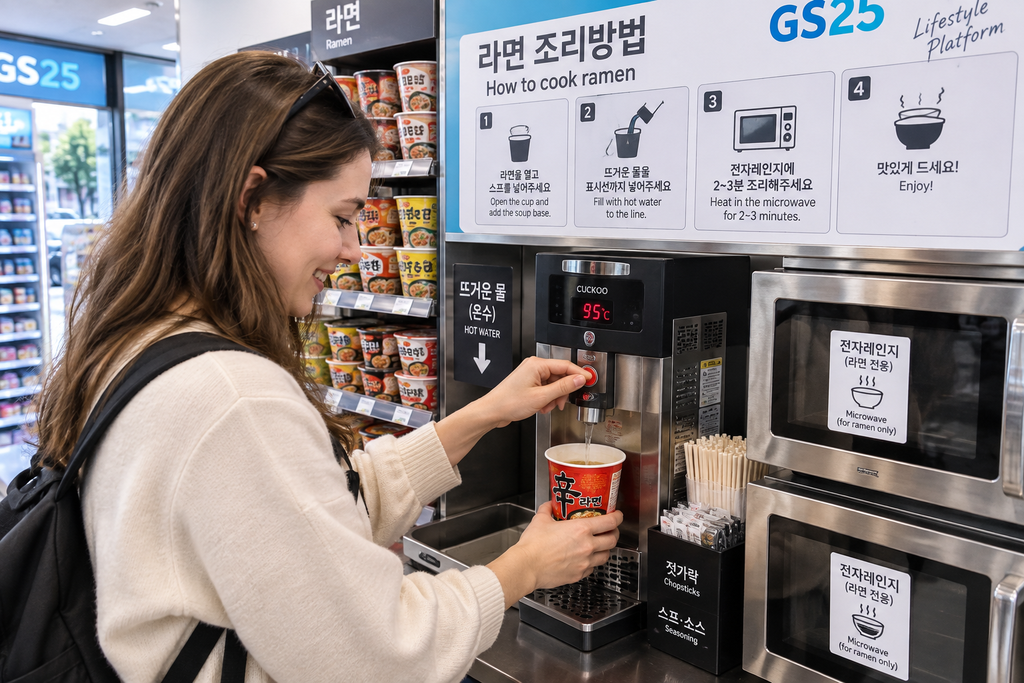
Instant ramen is one of the most popular foods to try at a Korean convenience store, and many stores make it easy to prepare and eat it on the spot.
After choosing a cup ramen, look for the hot water dispenser or ramen preparation area. Open the lid, remove any seasoning packets, add the seasoning as directed, and pour in hot water up to the indicated line.
Depending on the type of noodles, you will usually need to wait a few minutes before eating. Cooking instructions are printed on the package, although they may sometimes be mostly in Korean.
Some larger convenience stores also have dedicated ramen cooking machines that can heat noodles in special containers. The exact facilities vary by store, so check the preparation area before opening your ramen.
If the store has a seating area, you can usually enjoy your food there after preparing it.
Ramen Tip: Check the preparation area before opening your ramen because facilities vary by store. If hot water or a ramen machine is available, follow the instructions on the package or machine, and add extras such as an egg, sausage, cheese, or packaged kimchi only after checking how your noodles should be prepared.
4. Korean Convenience Store Lunch Boxes (Dosirak)
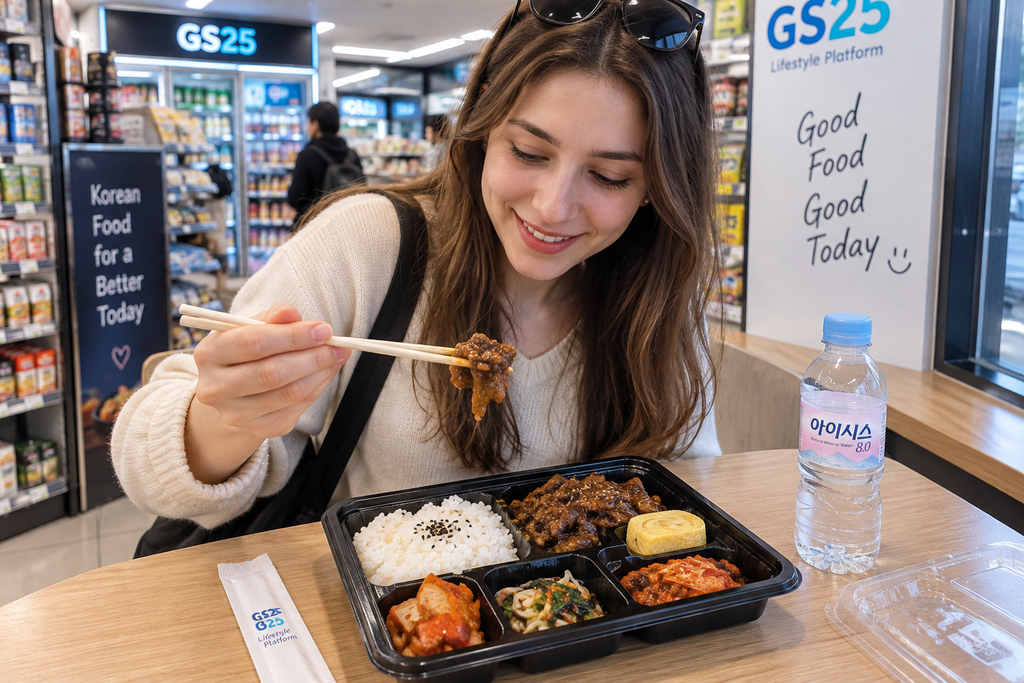
Korean convenience store lunch boxes, called dosirak, are an easy option when you want a filling meal without going to a restaurant.
Most convenience stores have a refrigerated section with different types of dosirak. Common meals may include rice, grilled or fried meat, sausages, eggs, kimchi, and several small side dishes.
Many lunch boxes can be heated in the microwave inside the convenience store. Check the package for heating instructions, and remove any part of the packaging that the instructions tell you to remove before using the microwave.
The selection changes frequently, so you may find different lunch boxes depending on the convenience store chain, location, and time of day.
Dosirak can be especially useful when you arrive late at your hotel, need a quick meal before catching a train, or simply want to try an everyday Korean convenience store meal.
Dosirak Tip: Check the heating instructions before putting a lunch box in the microwave, especially for lids, sauce packets, or other parts that may need to be removed. If you want a wider selection, look earlier around meal times because popular ready-to-eat items can sell out.
5. Easy Hot Snacks and Side Dishes to Try
Korean convenience stores also have plenty of small foods that are perfect when you want something more filling than a bag of chips.
Popular options include sausages, fish cakes, boiled or seasoned eggs, chicken skewers, dumplings, and other packaged snacks that can often be heated in the microwave.
The exact selection depends on the store, and new products appear regularly. Some locations also have heated display cases with ready-to-eat items near the checkout counter.
These foods are useful on their own, but they are even better when combined with ramen, triangle kimbap, or a lunch box.
Meal Combination Tip: Start with one main item such as ramen, samgak kimbap, or a lunch box, then add an egg, sausage, dumplings, or another small side dish if you want something more filling.
6. Korean Convenience Store Desserts and Bakery Items
Korean convenience stores are also a great place to discover affordable desserts, breads, and sweet snacks.
Depending on the store, you may find cream-filled breads, cakes, macarons, puddings, ice cream, traditional Korean sweets, and seasonal desserts in the refrigerated and bakery sections.
CU, GS25, 7-Eleven, and emart24 frequently introduce new products and limited-edition collaborations, so the selection can change throughout the year.
Convenience store desserts are especially useful when you want to try something new without visiting a café or bakery, and many items are easy to take back to your hotel for a late-night snack.
Dessert Tip: Check both the regular snack shelves and the refrigerated section. Many cream-filled breads, puddings, cakes, and other chilled desserts are displayed near milk, yogurt, and ready-to-eat foods rather than with packaged snacks.
7. Popular Korean Convenience Store Drinks
The drink section of a Korean convenience store is worth exploring because you will find much more than bottled water and soda.
Popular choices include banana milk, flavored milk, bottled coffee, fruit drinks, yogurt drinks, sports drinks, and a wide variety of teas. Many convenience stores also have seasonal or limited-edition beverages that change throughout the year.
One classic drink that many first-time visitors want to try is Korean banana milk. You can usually find it in the refrigerated section alongside other flavored milk products.
Convenience stores are also a convenient place to grab inexpensive coffee before sightseeing. Bottled and canned coffees come in many varieties, including sweet latte-style drinks and unsweetened black coffee.
Drink Tip: Check the promotion label before buying bottled coffee, flavored milk, or other drinks. Beverages are frequently included in 1+1 or 2+1 offers, which can be useful if you are traveling with someone or want an extra drink for later.
8. How to Use the Microwave, Hot Water and Seating Area
Many Korean convenience stores provide simple facilities that allow customers to prepare and eat food immediately after buying it.
Microwaves are commonly available for heating lunch boxes, rice, sausages, and other packaged foods. Check the heating instructions on the package before putting anything in the microwave, especially if the product contains a lid, sauce packet, or other packaging that needs to be removed first.
Hot water dispensers are also commonly available for cup ramen. Some stores may have additional equipment such as ramen cooking machines, while larger locations may provide tables or counter seats where customers can eat.
However, facilities vary by location. Smaller convenience stores may have little or no seating, so do not assume that every store has a place to sit down.
Preparation Tip: Pay for your food before using the microwave, hot water dispenser, or ramen equipment. Check the package instructions first, and if you are unsure what needs to be removed or how an item should be heated, ask the staff before preparing it.
9. Paying at Korean Convenience Stores
Paying at a Korean convenience store is usually straightforward, and credit or debit cards are commonly used for everyday purchases.
International cards often work at major convenience store chains, but it is still a good idea to carry some Korean won in case your foreign card is declined.
If you buy several products, the cashier may ask whether you need a bag. Disposable bags are generally not automatically provided for free, so you may need to pay a small additional fee or use your own reusable bag.
You may also see self-checkout machines at some locations. These can be convenient, although the available languages and payment options vary by store.
Payment Tip: International cards often work at major convenience store chains, but keep some Korean won as a backup in case your card is declined. Cash can also be useful when you need to recharge a T-money card during your trip.
10. Understanding 1+1 and 2+1 Deals
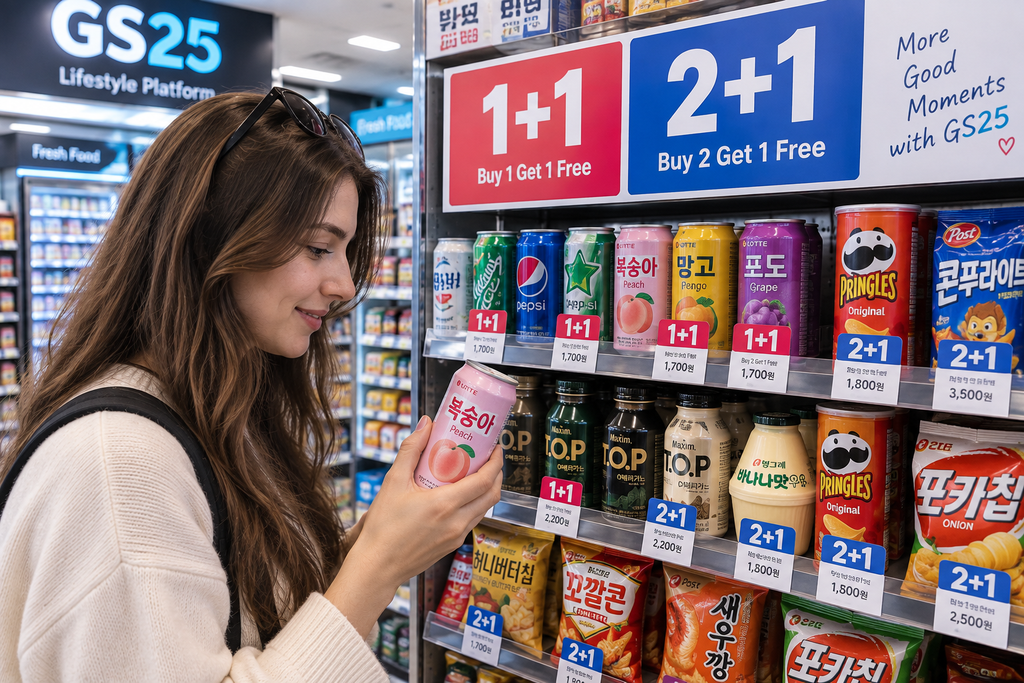
Promotional deals are extremely common in Korean convenience stores, and understanding them can help you save money during your trip.
A 1+1 promotion means that when you buy one eligible product, you receive another eligible item for free. A 2+1 promotion generally means you receive three eligible items while paying for two.
You will often see these promotions on drinks, snacks, instant foods, ice cream, and other everyday products. Look for small 1+1 or 2+1 labels on the shelf directly below the product.
Make sure the exact product you choose is included in the promotion, since similar flavors, sizes, or varieties may have different offers.
Promotion Tip: Check the shelf label carefully before taking an extra item. A similar flavor, size, or version of the same product may not be included in the promotion, so make sure the items you choose match the offer shown on the shelf.
11. Try a Korean Convenience Store Food Combination
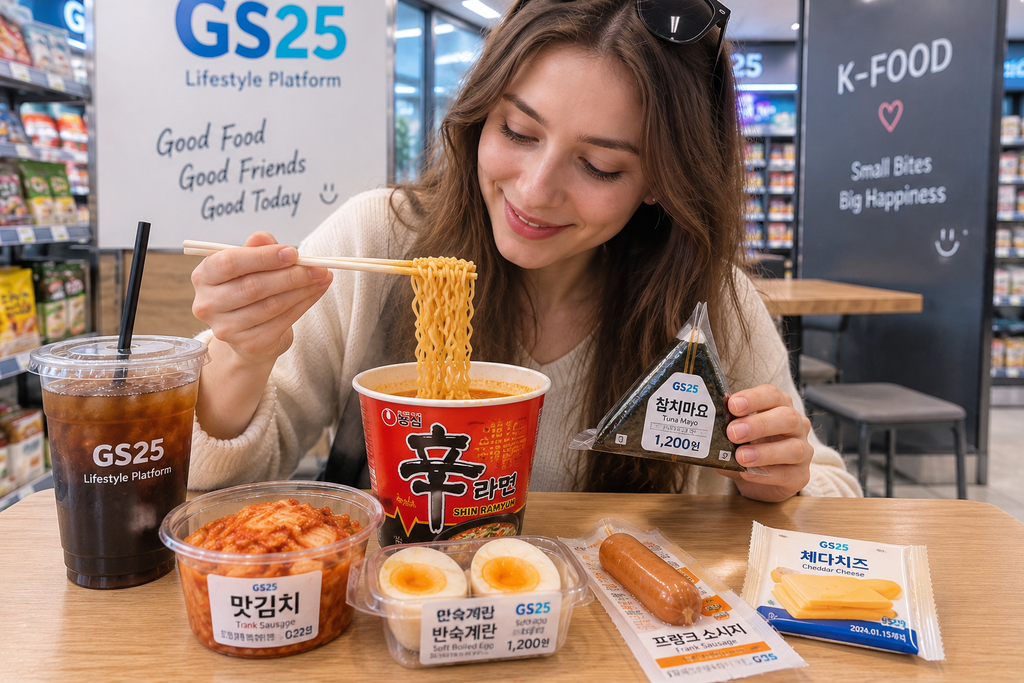
One fun way to experience Korean convenience store food is to combine several simple items into one meal.
Instead of eating only a cup of ramen or triangle kimbap, many people add small side dishes, eggs, sausages, cheese, or other ready-to-eat foods.
An easy combination for first-time visitors is cup ramen with samgak kimbap and a boiled egg. You can also pair a convenience store lunch box with packaged kimchi or add a slice of cheese to spicy ramen.
There is no single correct combination, so part of the fun is walking around the store and creating your own meal from whatever looks interesting.
Food Combination Tip: If you are not sure what to choose, start with a simple combination such as cup ramen, samgak kimbap, and a boiled egg. Then explore seasonal or newly released items if you want to try something different.
12. When Convenience Stores Are Most Useful for Travelers
Korean convenience stores can be especially useful when restaurants and cafés do not fit your travel schedule.
They are a convenient option for an early breakfast, a quick meal between attractions, or a late-night snack after returning to your accommodation. Many locations operate 24 hours, although opening hours can vary by store.
Convenience stores are also useful before long train or bus journeys. You can pick up bottled water, coffee, snacks, samgak kimbap, or other portable foods before heading to the station.
If you arrive in Korea late at night and nearby restaurants are closed, a convenience store can also be one of the easiest places to find a simple meal without searching far from your hotel.
Travel Day Tip: Convenience stores can be especially useful before a long train or bus journey. Buy water, coffee, or portable snacks before heading to the platform or terminal, and check any food rules that apply during your journey.
13. Convenience Store Mistakes Tourists Should Avoid
Korean convenience stores are easy to use, but a few small mistakes can make the experience confusing for first-time visitors.
Do not open or eat products before paying for them. Even if you plan to eat inside the store, take everything to the checkout counter and complete your purchase first.
If the store has a seating area, clean up after yourself and separate your trash according to the bins provided. Some locations have separate containers for general waste, recyclables, and leftover liquids.
Also, do not assume that every convenience store has a restroom, seating area, microwave, or ramen cooking machine. Facilities can vary significantly depending on the size and location of the store.
Store Facility Tip: Check what is available before buying food that needs preparation. Seating areas, microwaves, hot water dispensers, restrooms, and ramen machines are not guaranteed at every convenience store.
14. Other Useful Services at Korean Convenience Stores
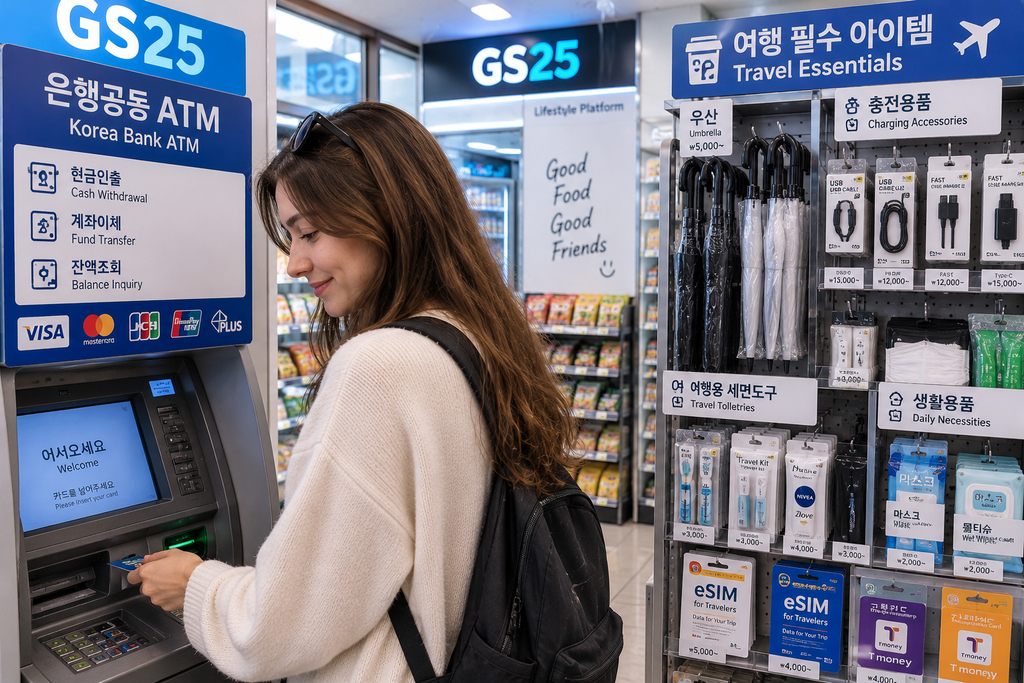
Korean convenience stores can offer more than food and drinks, although the available services vary by location.
Some stores have ATMs, which can be useful if you need Korean won during your trip. However, not every ATM accepts international cards, so look for machines that clearly display international card networks or foreign-language options.
Depending on the location, you may also find services such as parcel delivery, phone charging accessories, umbrellas, basic toiletries, batteries, and other everyday travel essentials.
This makes convenience stores particularly useful when you suddenly realize that you forgot something at your hotel or need a small item late at night.
Travel Essentials Tip: Larger convenience stores near subway stations and transportation hubs can be useful for last-minute essentials, but ATMs, charging accessories, umbrellas, toiletries, and other services vary by location.
15. Best Convenience Store Tips for First-Time Visitors
Korean convenience stores are easiest to use when you explore beyond the regular snack aisle. Check the refrigerated section for ready-to-eat meals and desserts, and look around the store for seasonal products and promotions.
Before heating or preparing anything, read the package instructions and check which facilities are available. Also look carefully at 1+1 and 2+1 labels because promotions may apply only to specific products, sizes, or flavors.
Exploration Tip: Try more than one convenience store chain during your trip instead of searching everywhere for one viral product. CU, GS25, 7-Eleven, and emart24 may carry different exclusive products, collaborations, and seasonal releases.
Final Thoughts: Enjoy Korean Convenience Stores Like a Local
Korean convenience stores can be one of the easiest ways for travelers to experience a small part of everyday life in South Korea. They are useful for everything from a quick breakfast and late-night meal to drinks and snacks before a long travel day.
Try samgak kimbap, prepare instant ramen, explore the refrigerated meal and dessert sections, and check the shelves for 1+1 and 2+1 promotions. The available products change frequently, so discovering something you did not plan to buy can be part of the experience.
Rather than treating convenience stores as just another tourist attraction, use them when they genuinely make your trip easier. A quick meal, forgotten travel essential, or late-night snack can turn a nearby convenience store into one of the most practical stops of your trip.