

Reserving a restaurant in South Korea can work differently depending on where you want to eat. Many casual and neighborhood restaurants accept walk-ins, while popular restaurants may use advance reservations, digital waitlists, kiosks, or numbered waiting systems.
For international travelers, the biggest challenge is that some local booking and waiting systems may require a Korean phone number. Services such as CATCHTABLE Global can make certain reservations easier, but not every restaurant uses the same system.
This guide explains when you should reserve in advance, how CATCHTABLE and restaurant waitlists work, what to do without a Korean phone number, and how to handle deposits, walk-ins, and fully booked restaurants.
1. Do You Need a Reservation at Restaurants in Korea?
Not every restaurant in South Korea requires a reservation.
Many casual restaurants, local Korean restaurants, and small neighborhood spots accept walk-in customers. However, popular restaurants, fine-dining restaurants, trendy cafés, and places that have become famous on social media may require a reservation or have long waiting lines.
Some restaurants use online reservation platforms, while others use digital waitlist systems that let you register and wait for your turn.
If there is a specific restaurant you really want to visit, check its reservation or waiting system before you arrive.
Reservation Decision Tip: If a restaurant is a must-visit for your trip, check its booking or waiting system before the day you plan to go. For flexible meals, keeping one or two nearby alternatives can save time if the restaurant is full.
2. Using Catchtable to Reserve Restaurants in Korea
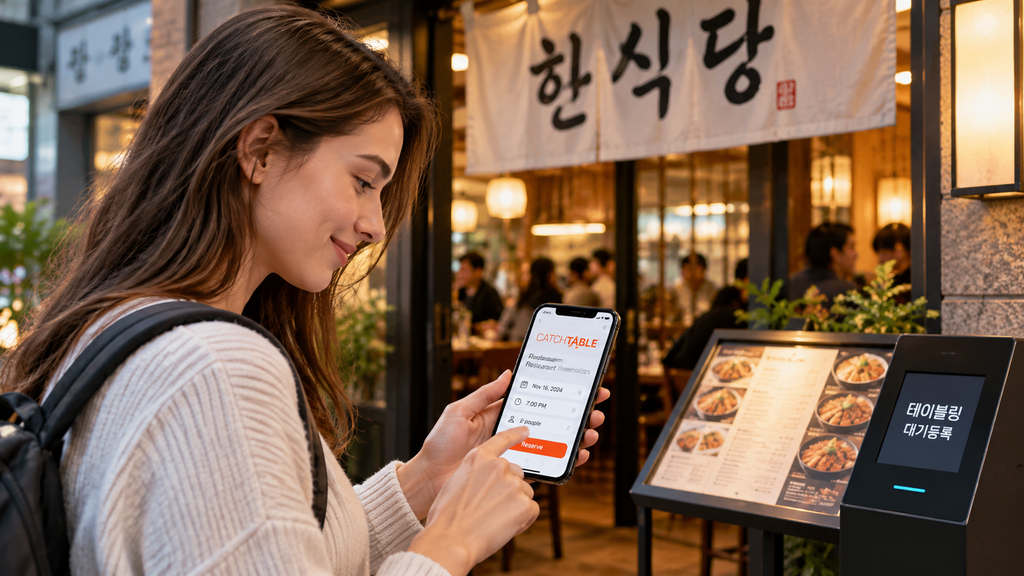
Catchtable is one of the most widely used restaurant reservation platforms in South Korea and is especially useful for popular restaurants.
International travelers can use CATCHTABLE Global, which is designed to make reservations easier for visitors who may not have a Korean phone number.
You can search for restaurants, choose an available date and time, and make a reservation directly through the service. Some restaurants may require a reservation deposit when booking.
Restaurant availability and booking conditions vary, so always check the details shown for the specific restaurant before confirming your reservation.
Booking Tip: If a restaurant is important to your itinerary, check CATCHTABLE Global before arriving in Korea rather than waiting until the day of your visit. Popular restaurants may have limited time slots, and availability can change quickly.
3. How Restaurant Waitlists Work in Korea
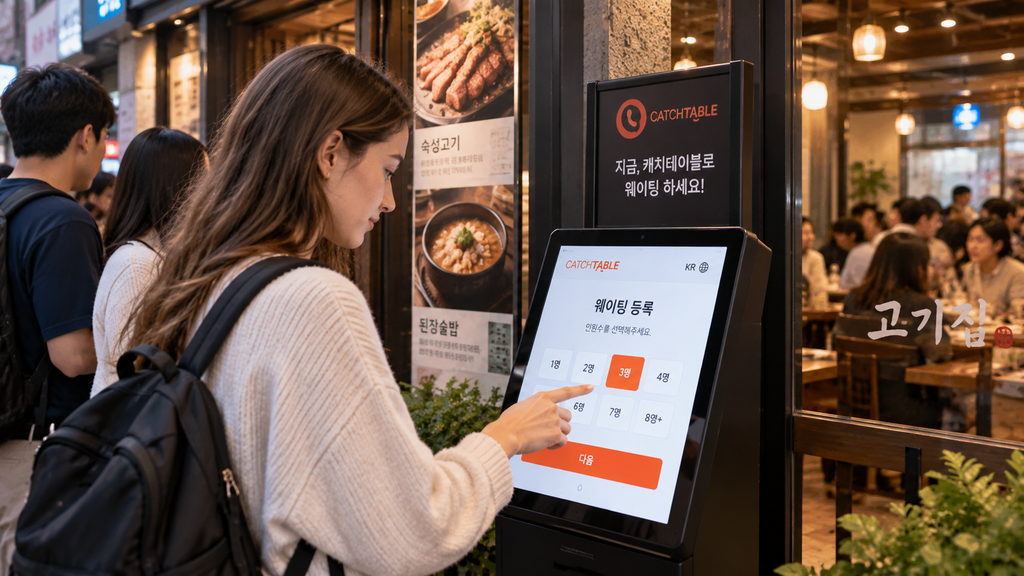
Many popular restaurants in Korea use digital waitlists instead of traditional reservations.
When you arrive, you may need to register through a tablet or kiosk near the entrance. Depending on the system, you may receive a notification when your table is almost ready.
Some restaurants also allow remote waiting through restaurant reservation or waitlist apps, which can save time at especially busy locations.
However, the exact system varies by restaurant, and some waitlists may be less convenient for travelers without a Korean phone number.
Waitlist Tip: Before joining a physical line, check the restaurant entrance for a tablet, kiosk, QR code, or numbered ticket system. At some restaurants, standing in line without registering does not place your party on the actual waitlist.
4. What If You Don’t Have a Korean Phone Number?
A Korean phone number can sometimes be required for restaurant reservations or digital waitlists, which can be confusing for international travelers.
If a restaurant is available through CATCHTABLE Global, this is usually one of the easiest options because the service is designed for international visitors.
For restaurants that use local-only booking or waiting systems, ask the restaurant staff whether they can register your party manually.
If none of these options work, visiting the restaurant in person and asking about the waiting process may be the simplest solution.
Phone Number Tip: Save the restaurant’s name and address in Korean before you go. If a local booking or waitlist system does not work with your phone number, showing this information to hotel staff or restaurant employees can make it much easier to ask for help.
5. Deposits, Prepayments & No-Show Rules
Some restaurants in Korea may require a reservation deposit to help prevent no-shows.
The amount and cancellation policy depend on the restaurant and booking platform. Depending on the reservation, a deposit may be applied toward your final bill, refunded according to the cancellation policy, or forfeited if you cancel too late or do not show up.
Always check the cancellation deadline and refund conditions before completing a reservation.
If you are booking with an international card, also check which payment methods the reservation platform accepts.
Cancellation Tip: Before paying a reservation deposit, check the cancellation deadline, refund conditions, and whether the deposit will be applied to your final bill. Save a screenshot of both the reservation confirmation and cancellation policy in case you need to check them later.
6. What If a Restaurant Does Not Accept Reservations?
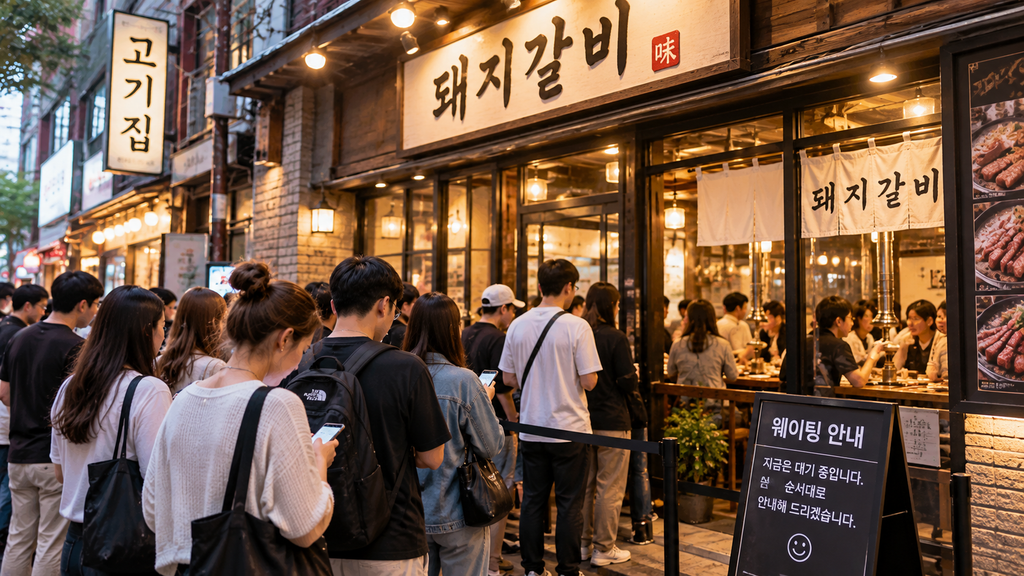
Many restaurants in Korea do not accept reservations and operate entirely on a walk-in basis.
At busy restaurants, you may need to add your name or party to a waiting list when you arrive. Smaller local restaurants may simply ask customers to wait near the entrance until a table becomes available.
If you want to avoid a long wait, try visiting outside the busiest meal times. Lunch is often busiest around noon, while dinner crowds usually increase in the evening.
Do not assume that a long line means you should simply stand at the end of it. Check the entrance first to see whether the restaurant uses a waiting list, kiosk, or numbered ticket system.
Walk-In Tip: If a restaurant does not accept reservations, arrive a little before the main meal rush and check the entrance as soon as you get there. Look for a kiosk, waiting list, or numbered ticket before assuming you should simply stand in line.
7. Simple Tips for Restaurant Reservations in Korea
A little preparation can make restaurant reservations in Korea much easier.
Check whether the restaurant accepts reservations before visiting, and save your booking confirmation on your phone. If the restaurant uses a waitlist, arrive with enough time and check the entrance for a kiosk or registration system.
For very popular restaurants, try booking several days in advance when possible. If reservations are full, check whether the restaurant accepts walk-ins or operates a separate waiting list.
It is also useful to save the restaurant’s Korean name and address so you can easily show them to hotel staff, taxi drivers, or restaurant employees.
If you are still deciding what to eat, our guide to must-try Korean foods can help you plan which dishes and restaurants to look for.
Backup Plan Tip: Do not build your entire day around one difficult reservation. Save one or two nearby alternatives so you can quickly change plans if your first choice is fully booked or has a much longer wait than expected.
Final Thoughts: Reserving Restaurants in Korea
Restaurant reservations in Korea become much easier once you know which system a restaurant uses. For a must-visit restaurant, check its booking options in advance and use CATCHTABLE Global when available. If reservations are not offered, look for an on-site waitlist, kiosk, numbered ticket, or walk-in queue.
Travelers without a Korean phone number should save the restaurant’s Korean name and address and be prepared to ask staff for help if a local-only system causes problems. When making a paid reservation, also check the cancellation deadline, refund conditions, and no-show policy before confirming.
Most importantly, keep your dining plans flexible. A fully booked restaurant does not have to disrupt your itinerary, and having a nearby backup option can save both time and frustration.