
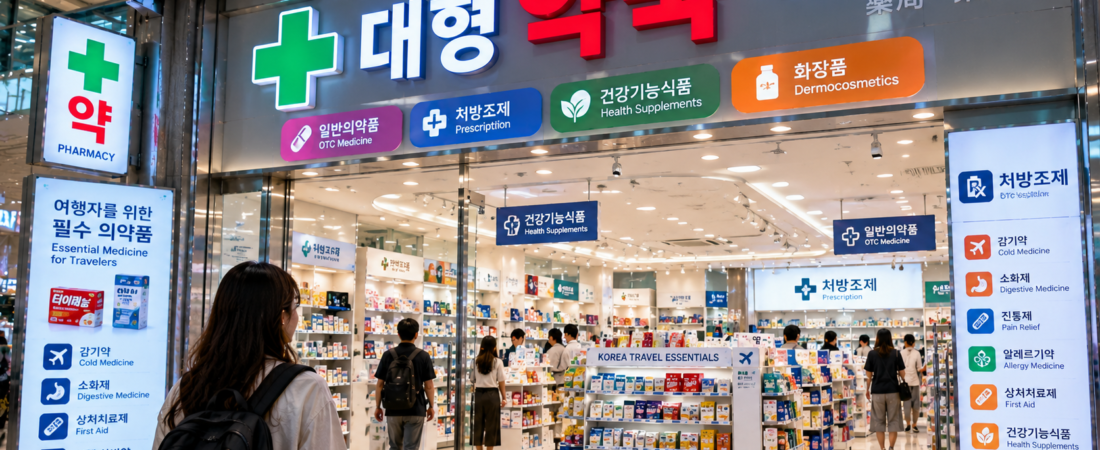
Getting sick or needing medicine while traveling in South Korea can feel stressful, especially if you are not familiar with Korean pharmacies or do not speak Korean.
Fortunately, pharmacies are easy to find in most Korean cities, and many common over-the-counter medicines can be purchased without visiting a hospital.
However, pharmacies in Korea work differently from convenience stores, and some medicines that travelers may be used to buying freely in their home country may require a prescription or may be sold differently in Korea.
In this guide, we’ll explain how to find a pharmacy in Korea, what tourists should know when buying medicine, what you can buy at convenience stores, and practical tips that can make the process much easier.
1. How Pharmacies Work in South Korea
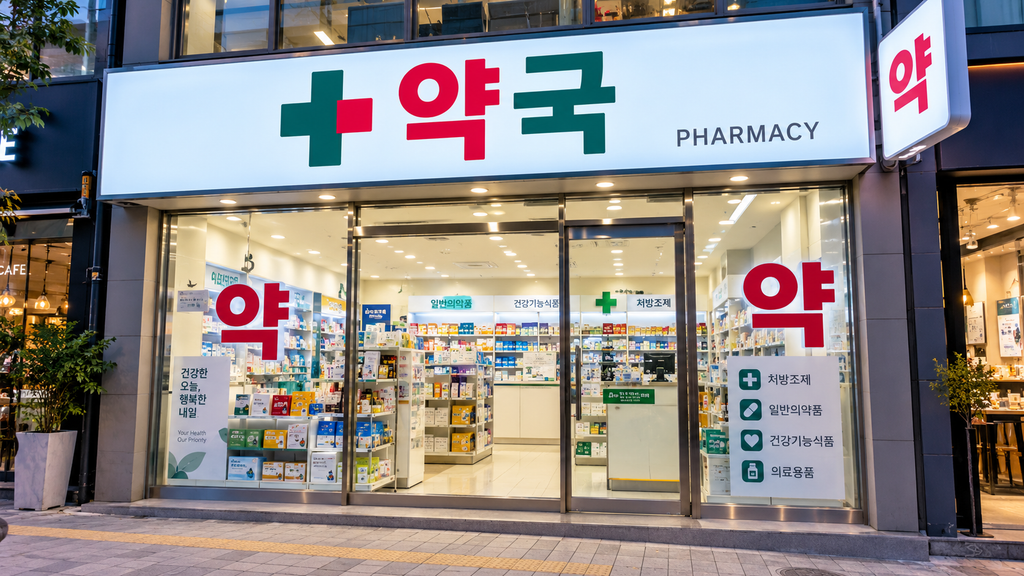
Pharmacies in South Korea are called “yakguk” (약국), and you can usually recognize them by a sign displaying the Korean word 약국.
Unlike convenience stores, Korean pharmacies are staffed by licensed pharmacists and sell a much wider range of medicines.
Many common over-the-counter medicines can be purchased directly from a pharmacy, while prescription medicines require a prescription from a doctor or medical clinic.
When you visit a pharmacy, you can explain your symptoms to the pharmacist and ask what over-the-counter options are available.
Pharmacy Search Tip: Save the Korean word “약국” on your phone. If you search 약국 on Naver Map, you can quickly find pharmacies near your current location.
2. How to Find a Pharmacy in Korea
Pharmacies are common throughout South Korea, especially near hospitals, medical clinics, subway stations, and busy commercial areas.
One of the easiest ways to find one is to search “약국” on Naver Map. Searching the Korean word often gives you more local results than searching only in English.
Opening hours vary by pharmacy. Many neighborhood pharmacies close in the evening, and some may have shorter hours on weekends or public holidays.
If you need medicine late at night or on a holiday, you may need to look for a pharmacy that is specifically open during those hours rather than simply visiting the nearest one.
Opening Hours Tip: Always check the pharmacy’s current opening hours before walking there, especially at night, on Sundays, or during Korean holidays such as Seollal and Chuseok.
3. Can Tourists Buy Medicine Without a Prescription?
Yes. Many common over-the-counter medicines can be purchased at Korean pharmacies without a prescription.
Depending on the product, pharmacies may sell medicines for common problems such as headaches, cold symptoms, indigestion, allergies, minor pain, or motion sickness.
However, not every medicine is available over the counter. Some medicines require a prescription from a doctor, and a product you can buy freely in your home country may be regulated differently in South Korea.
Instead of searching only for a familiar brand name, explain your symptoms to the pharmacist and ask what options are available in Korea.
Medicine Identification Tip: If you regularly use a specific medicine, save a photo of the package and the active ingredient name on your phone. This can make it much easier to explain what you are looking for.
4. What Medicine Can You Buy at Korean Convenience Stores?
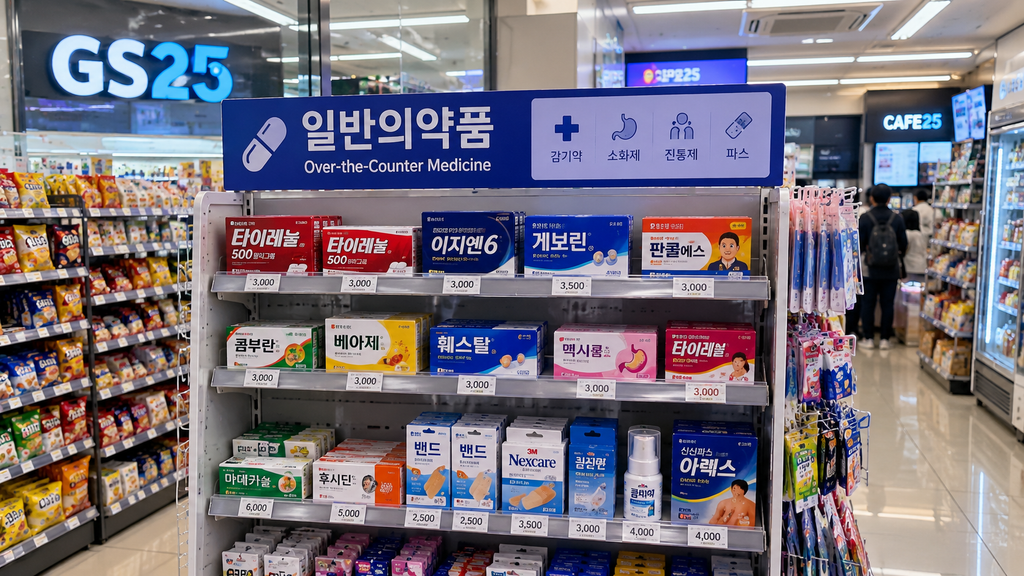
Korean convenience stores can sell a limited selection of designated over-the-counter medicines, which can be useful when a pharmacy is closed.
The selection is much smaller than at a pharmacy. Korea currently designates 13 safety medicines for sale outside pharmacies, including certain pain and fever medicines, cold medicines, digestive medicines, and medicated patches.
Not every convenience store will necessarily have the same products in stock, so a pharmacy is still the better option when you need a wider selection or want advice from a pharmacist.
If your symptoms are severe, unusual, or getting worse, do not rely only on convenience-store medicine and consider seeking medical care.
Late-Night Tip: Convenience-store medicine can be especially useful late at night when nearby pharmacies are closed, but look for the designated medicine section rather than assuming regular health products are medicines.
5. How to Explain Your Symptoms at a Korean Pharmacy
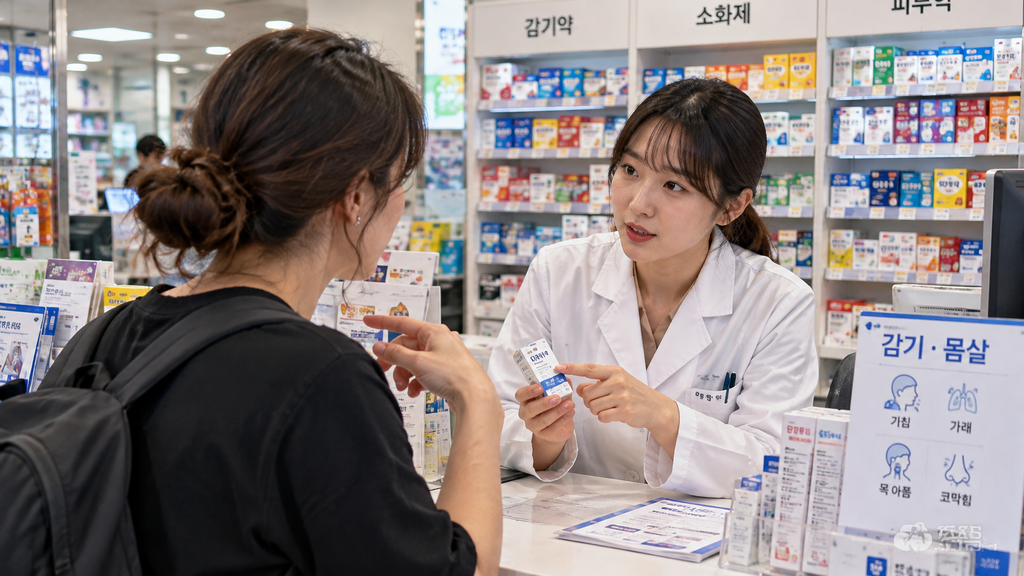
You do not need to speak fluent Korean to visit a pharmacy, but explaining your symptoms clearly can help the pharmacist understand what you need.
Translation apps such as Papago can be useful if the pharmacist does not speak English. You can type a short description of your symptoms and show the translated Korean text on your phone.
Try to mention important details such as when the symptoms started, whether you have a fever, and whether you have any allergies or are already taking other medicines.
If you have a photo of a medicine you normally use, showing the package or active ingredient can also help the pharmacist understand what you are looking for.
Communication Tip: Keep your explanation short and specific. Showing a translated sentence on your phone is often easier than trying to pronounce complicated medical words in Korean.
6. Useful Korean Phrases at a Pharmacy
Knowing a few simple Korean phrases can make visiting a pharmacy much easier.
“약 주세요” (yak juseyo) means “Please give me medicine,” but it is usually better to describe the specific symptom you have.
Here are a few useful phrases:
“머리가 아파요” (meoriga apayo) — I have a headache.
“배가 아파요” (baega apayo) — My stomach hurts.
“감기 증상이 있어요” (gamgi jeungsangi isseoyo) — I have cold symptoms.
“알레르기가 있어요” (allereugiga isseoyo) — I have an allergy.
“하루에 몇 번 먹어요?” (harue myeot beon meogeoyo?) — How many times a day should I take it?
“식전이에요, 식후예요?” (sikjeonieyo, sikhu-yeyo?) — Should I take it before or after eating?
Korean Phrase Tip: You do not need to memorize these phrases. Save them on your phone and show the Korean text directly to the pharmacist if communication is difficult.
7. What to Check Before Taking Medicine in Korea
Before taking any medicine you buy in Korea, make sure you understand how and when it should be taken.
Ask the pharmacist about the correct dosage, how often to take it, and whether it should be taken before or after meals.
You should also tell the pharmacist if you have known drug allergies, are pregnant, or are currently taking other medicines. This can help avoid potentially harmful interactions or unsuitable products.
Medicine packaging and instructions may be written mainly in Korean, so use a translation app if you do not fully understand the directions.
Do not take more than the recommended amount simply because your symptoms are not improving quickly.
Dosage Tip: Before leaving the pharmacy, take a photo of the medicine package and make sure you understand the dosage instructions. It is much easier to ask questions while you are still with the pharmacist.
8. How to Find a Pharmacy Open at Night or on Weekends
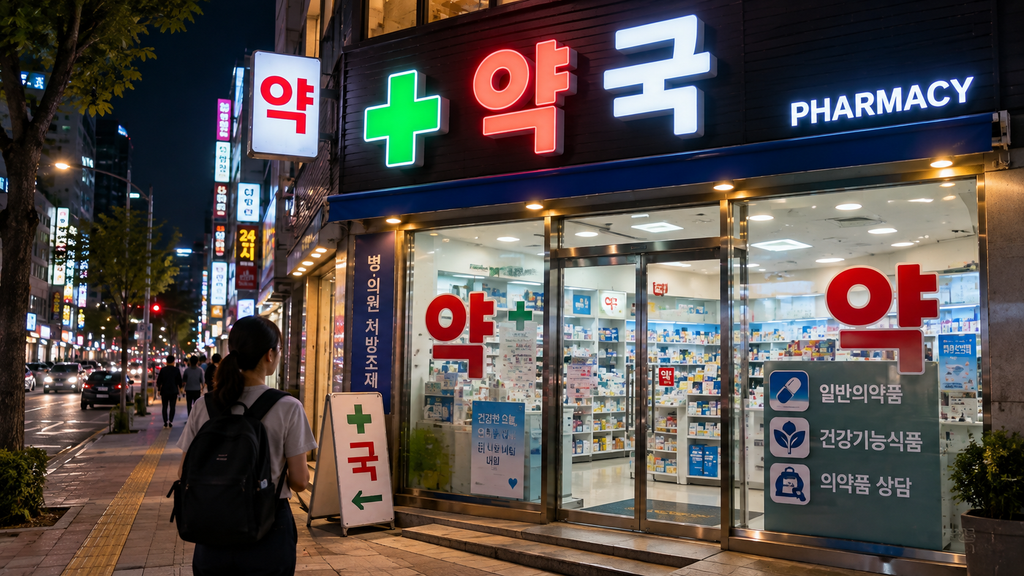
Finding an open pharmacy can be more difficult late at night, on Sundays, or during Korean public holidays.
Instead of relying only on the nearest pharmacy shown on a map, check whether it is currently open before traveling there.
South Korea’s official E-GEN emergency medical portal can help you find pharmacies that are open at night, on weekends, or during public holidays. You can search by location and check pharmacies that are currently operating. Because opening hours can change, confirm the latest hours before visiting.
If no pharmacy is available nearby, some convenience stores may sell a limited range of designated medicines for common minor symptoms.
Night Pharmacy Tip: Do not wait until you are standing outside a closed pharmacy to start searching. Check opening hours before leaving your hotel, especially if it is already late in the evening.
9. When Should You Visit a Doctor Instead of a Pharmacy?
Pharmacies can be useful for minor symptoms, but they are not a substitute for medical care when you are seriously ill or injured.
Consider visiting a medical clinic or hospital if your symptoms are severe, continue to get worse, or do not improve as expected.
You should also seek medical attention for problems such as difficulty breathing, severe allergic reactions, serious injuries, loss of consciousness, or other symptoms that may require urgent treatment.
In an emergency in South Korea, call 119 for emergency medical assistance.
If you do not speak Korean, you can say “English please” or “Interpreter please” after connecting to 119 to request language assistance.
Medical Care Tip: If you are unsure whether your problem can be handled at a pharmacy, ask the pharmacist. They can tell you when it may be more appropriate to visit a medical clinic or hospital.
10. What If You Need Prescription Medicine in Korea?
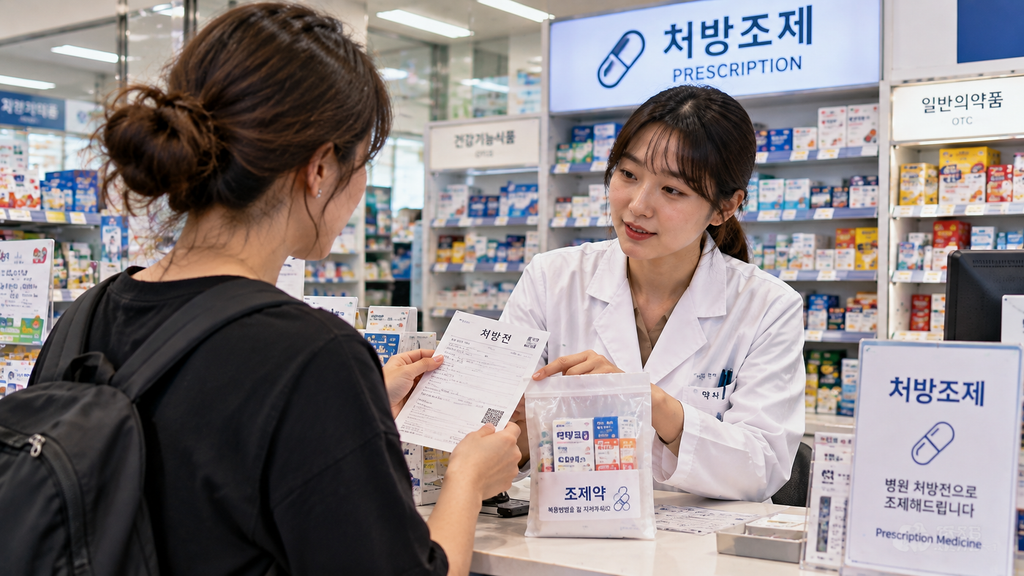
If you need a medicine that requires a prescription in South Korea, you will generally need to visit a doctor or medical clinic first.
After the consultation, you can take the prescription to a pharmacy and have the medicine dispensed there.
If you already take prescription medicine at home, bring enough for your trip whenever possible and keep information about the medicine, including its active ingredient and dosage.
Travelers bringing their own medication into South Korea should also check Korean import rules before traveling, especially for controlled or restricted medicines.
Prescription Tip: Keep prescription medicine in its original packaging when possible and carry a copy of your prescription or a doctor’s letter if the medicine may be restricted or difficult to identify.
11. Do Korean Pharmacists Speak English?
English ability varies from pharmacy to pharmacy in South Korea.
Pharmacies in major tourist areas may be more familiar with international visitors, but you should not assume that every pharmacist will be comfortable speaking English.
If communication is difficult, use a translation app such as Papago and show the pharmacist a short description of your symptoms. A photo of a medicine you normally take or its active ingredient can also be helpful.
In busy tourist areas, you may occasionally find pharmacies that specifically offer foreign-language assistance.
Language Tip: Instead of translating a long explanation, prepare a few simple details on your phone: your main symptom, when it started, any drug allergies, and medicines you are already taking.
12. Can You Get the Same Medicine Brands You Use at Home?
Medicine brands sold in South Korea may be different from the brands you normally use in your home country.
Even when a familiar international brand is available, the ingredients, dosage, or formulation may not always be identical to the version sold in another country.
Instead of relying only on a brand name, check the active ingredient and dosage. If you are unsure, show the pharmacist the packaging or a photo of the medicine you normally use.
Do not assume that two medicines are equivalent simply because they are used for similar symptoms. Ask the pharmacist before switching to an unfamiliar product.
Medicine Comparison Tip: Before traveling, take photos of any medicines you regularly use, including the front of the package and the active ingredient information. This can make finding an appropriate option in Korea much easier.
Final Thoughts: Buying Medicine in Korea
Buying medicine in South Korea is usually straightforward once you understand how Korean pharmacies work. For common minor symptoms, a local pharmacy is often the best place to start because a pharmacist can help you find an appropriate over-the-counter option and explain how to take it.
If communication is difficult, use a translation app and keep important information such as your symptoms, allergies, current medications, and photos of medicines you normally use available on your phone. Remember that convenience stores carry only a limited selection of designated medicines, while prescription medicines generally require a visit to a doctor or medical clinic.
Before your trip, check the rules for any prescription or restricted medicines you plan to bring into South Korea. A little preparation can make it much easier to find a pharmacy, communicate with a pharmacist, and get the help you need during your trip.