
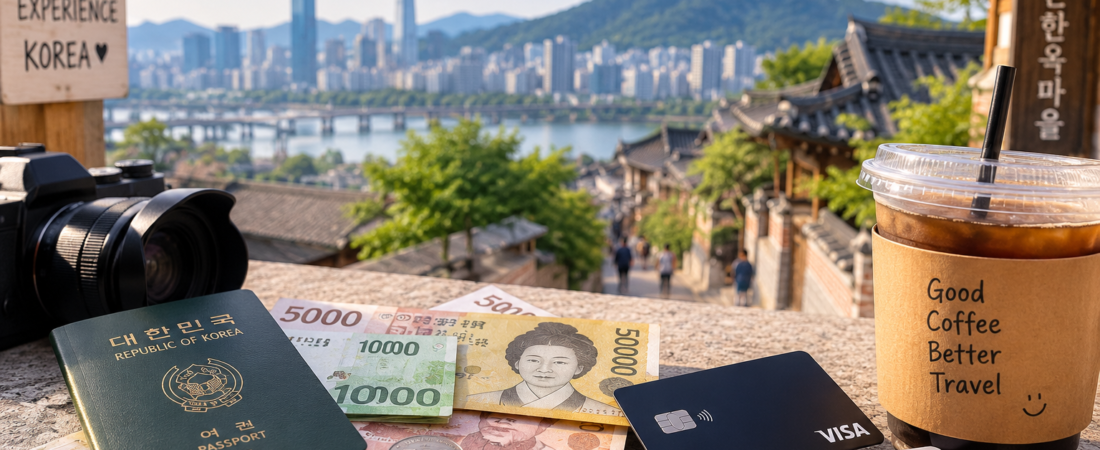
Paying for things in South Korea is generally easy, but first-time visitors often wonder whether they need cash, if foreign credit cards are widely accepted, and where they can withdraw Korean won.
South Korea is highly card-friendly, especially in cities such as Seoul and Busan. However, carrying some cash is still useful for certain situations, including traditional markets, small businesses, transportation cards, and places where international cards may not work.
In this guide, we’ll explain how to use money in Korea as a tourist, including cash, credit and debit cards, ATMs, currency exchange, T-money, and practical payment tips for your trip.
Do You Need Cash in South Korea?
You can travel around South Korea using cards for most everyday purchases, but it is still a good idea to carry a small amount of Korean won (KRW) in cash.
Credit and debit cards are widely accepted at hotels, restaurants, cafés, convenience stores, department stores, and many tourist attractions. In major cities, you may go through most of the day without using cash at all.
However, cash can still be useful at traditional markets, some small local businesses, street food stalls, and in situations where a foreign card is not accepted. Keeping some Korean won as a backup can help you avoid payment problems during your trip.
Can You Use Foreign Credit Cards in Korea?
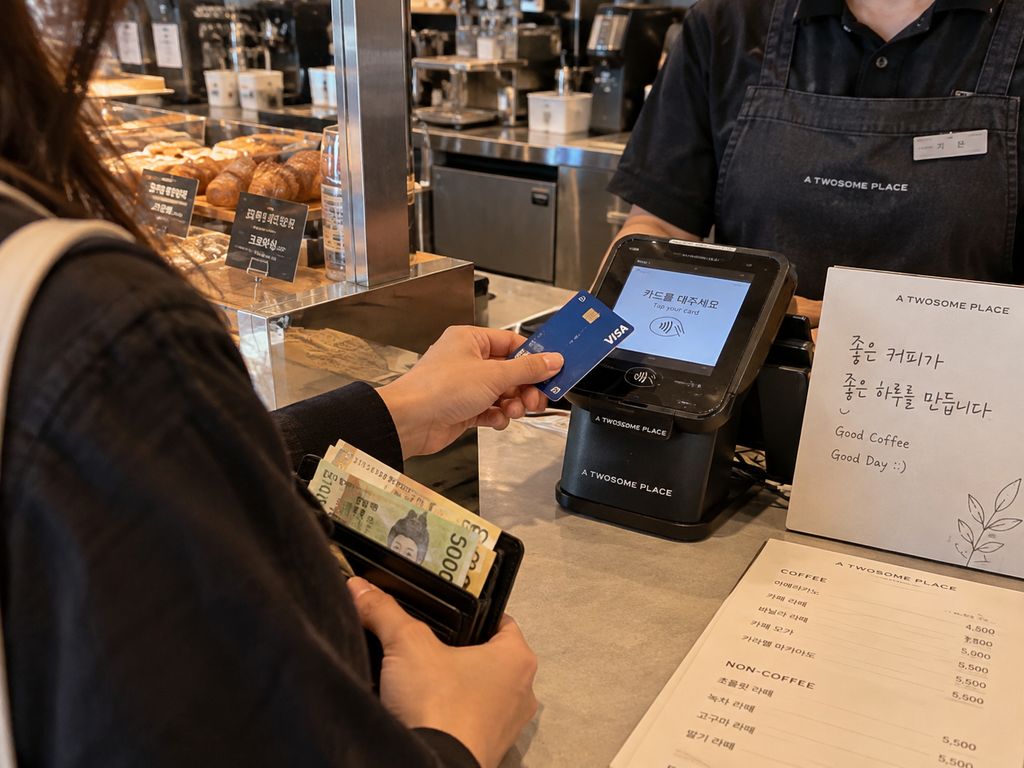
International credit and debit cards are accepted at many businesses throughout South Korea, particularly in major cities and popular tourist areas.
Visa and Mastercard are commonly accepted, while acceptance of other international card networks can vary depending on the store or payment terminal. Even if your card works at most places, it is a good idea to carry a second payment method in case a transaction is declined.
Before traveling, check whether your bank charges foreign transaction fees and make sure your card is enabled for international purchases. It is also a good idea to know your card’s PIN, since some payment situations may require it. When possible, paying in Korean won (KRW) can help you avoid unfavorable currency conversion offered by some payment terminals.
Pay in Korean Won (KRW) When Possible
When paying with a foreign card in Korea, some payment terminals may give you the option to pay in Korean won or in your home currency.
Choosing your home currency may seem convenient, but this can involve Dynamic Currency Conversion (DCC), which may use a less favorable exchange rate or include additional fees.
When given the choice, paying in Korean won (KRW) is generally the better option. Your card issuer will then handle the currency conversion according to its own exchange rate and fee policy.
Using ATMs in Korea
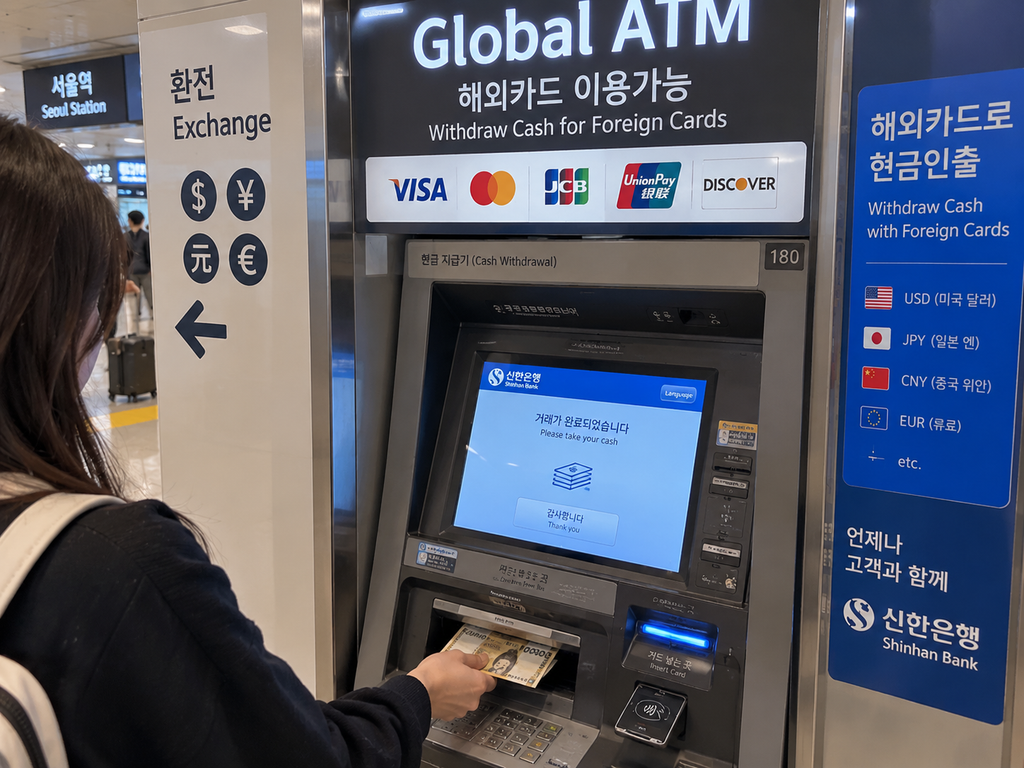
ATM withdrawal limits and fees can vary depending on the machine and your card issuer. Your home bank may also charge an international withdrawal or currency conversion fee. Before confirming a withdrawal, check any fee shown on the ATM screen and consider withdrawing enough for several days rather than making many small withdrawals if your bank charges a fee each time.
Exchanging Money in Korea
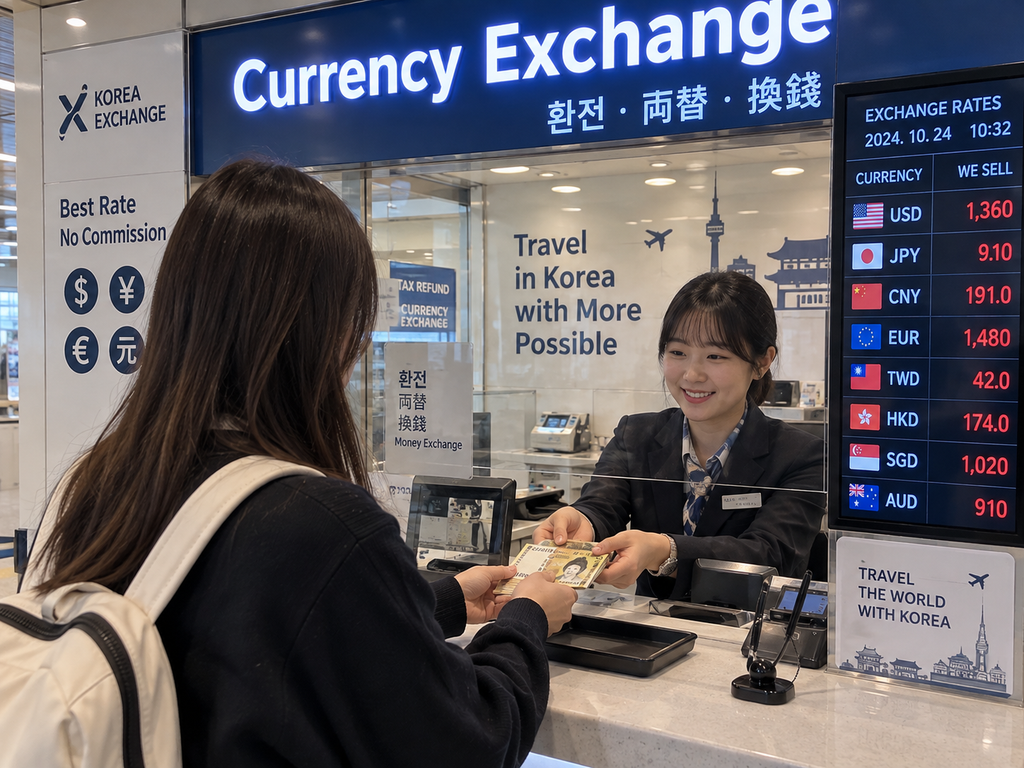
Airport exchange counters are convenient when you first arrive, but exchange rates may not always be as favorable as those available elsewhere. If you need Korean won immediately, consider exchanging only a small amount at the airport for your first expenses, then compare rates at banks or authorized exchange offices after reaching the city.
Currency Exchange Tip: Compare Rates Before Exchanging
In major tourist areas, you may find private currency exchange offices offering competitive rates compared with airport exchange counters. In Seoul, areas such as Myeongdong are well known for having multiple exchange offices within walking distance, making it easier to compare rates before exchanging money.
Rather than exchanging all of your cash at the airport, consider exchanging only what you need when you arrive and comparing rates again once you are in the city. Always use legitimate exchange businesses and check the displayed rate before handing over your money.
Using Cash for T-Money and Transportation
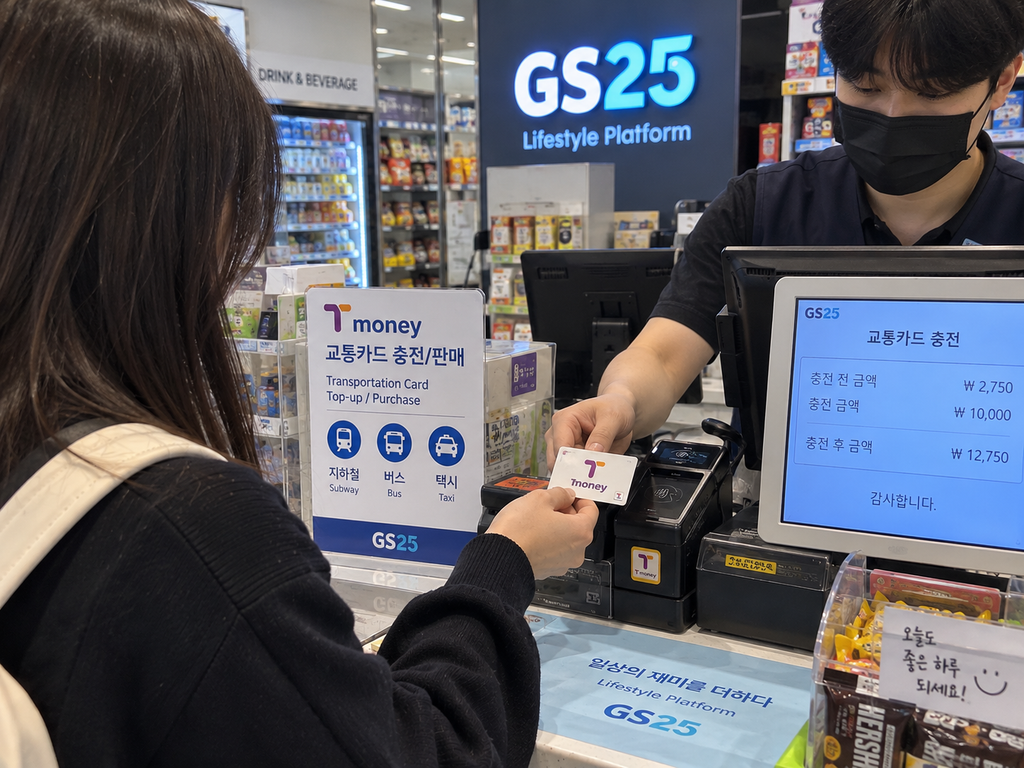
T-money is one of the most useful transportation cards for travelers in South Korea. It can be used on subways, buses, and some taxis, as well as at certain convenience stores.
While you can purchase a T-money card at many convenience stores and transportation locations, standard T-money top-ups commonly require Korean won in cash. For this reason, it is a good idea to keep some small bills available instead of relying entirely on credit or debit cards for transportation.
If you plan to use buses and subways frequently during your trip, getting a T-money card can make transportation much easier.
For a complete guide to using subways, buses, and T-money cards, read our guide to public transportation in Korea.
What to Do If Your Card Does Not Work in Korea
If your card does not work, try another credit or debit card first. If the payment is still declined, ask whether you can pay in cash or try paying at a staffed counter if you are using a self-service kiosk. You can also use a nearby Global ATM to withdraw Korean won if necessary.
Payment Tip: What to Do If a Kiosk Rejects Your Card
Self-service kiosks are common in Korean cafés, fast-food restaurants, cinemas, and some other businesses. While many kiosks accept international cards, some machines may reject foreign-issued cards even when the same card works at a staffed counter.
If your card does not work at a kiosk, do not assume that the business does not accept foreign cards. Try paying at the staffed counter if one is available, use another card, or ask an employee for help.
This is one reason why carrying a small amount of Korean won can still be useful, especially when visiting smaller local businesses or places that rely heavily on self-service payment machines.
When Is Cash Useful in Korea?
Although South Korea is largely card-friendly, there are still situations where carrying cash can make your trip easier.
Cash can be useful at some traditional markets, street food stalls, small local businesses, and when topping up transportation cards such as T-money. It is also a useful backup if your foreign card is unexpectedly declined.
You do not need to carry a large amount of cash. For most travelers, the best approach is to use cards for everyday purchases while keeping some Korean won available for smaller payments and emergencies.
Practical Payment Tips for Tourists in Korea
- Carry at least two different payment methods in case one card is declined.
- Keep a small amount of Korean won for traditional markets, street food, T-money top-ups, and emergencies.
- When a card terminal offers a choice of currencies, choose Korean won (KRW) rather than your home currency.
- Check your bank’s foreign transaction and ATM withdrawal fees before traveling.
- Use Global ATMs when you need to withdraw Korean won with an international card.
- Avoid carrying large amounts of cash. Cards can be used for most everyday purchases in South Korea.
Keep your backup card and emergency cash separate from your main wallet so you still have another payment option if your wallet is lost or stolen.
Frequently Asked Questions About Money in Korea
Can I Travel in Korea Without Cash?
You can travel through most of South Korea using credit or debit cards, especially in major cities. However, carrying a small amount of Korean won is recommended for T-money top-ups, some traditional markets, street food stalls, and situations where a foreign card may not work.
Are Foreign Credit Cards Accepted in Korea?
Yes. Foreign credit and debit cards are widely accepted at hotels, restaurants, cafés, convenience stores, shopping malls, and many tourist attractions in South Korea.
Visa and Mastercard are commonly accepted, but card acceptance can vary by business and payment terminal. Carrying a backup card and some Korean won is a good idea in case your primary card is declined.
Can I Withdraw Cash from ATMs in Korea with a Foreign Card?
Yes. Many ATMs in South Korea allow international travelers to withdraw Korean won using foreign debit or credit cards.
Look for ATMs labeled “Global ATM” or machines displaying your card network logo. Availability, withdrawal limits, and fees can vary, so check the information shown on the ATM before confirming the transaction.
Should I Exchange Money Before Traveling to Korea?
You do not necessarily need to exchange a large amount of money before traveling to South Korea. Many travelers can use international cards for most purchases and withdraw Korean won from compatible ATMs after arriving.
However, having a small amount of Korean won when you arrive can be convenient for transportation, T-money top-ups, small purchases, or situations where your foreign card does not work.
If you exchange money, compare exchange rates and fees rather than exchanging a large amount at the first counter you see.
Final Thoughts
Paying for things in South Korea is generally simple for international travelers. Credit and debit cards are widely accepted, especially in major cities, so there is usually no need to carry a large amount of cash.
Still, keeping a small amount of Korean won is useful for T-money top-ups, traditional markets, small purchases, and situations where a foreign card or self-service kiosk does not work as expected.
For a smoother trip, bring more than one payment method, keep your backup card and emergency cash separate, check your bank’s international fees before traveling, and choose Korean won (KRW) when a payment terminal offers you a choice of currencies.