
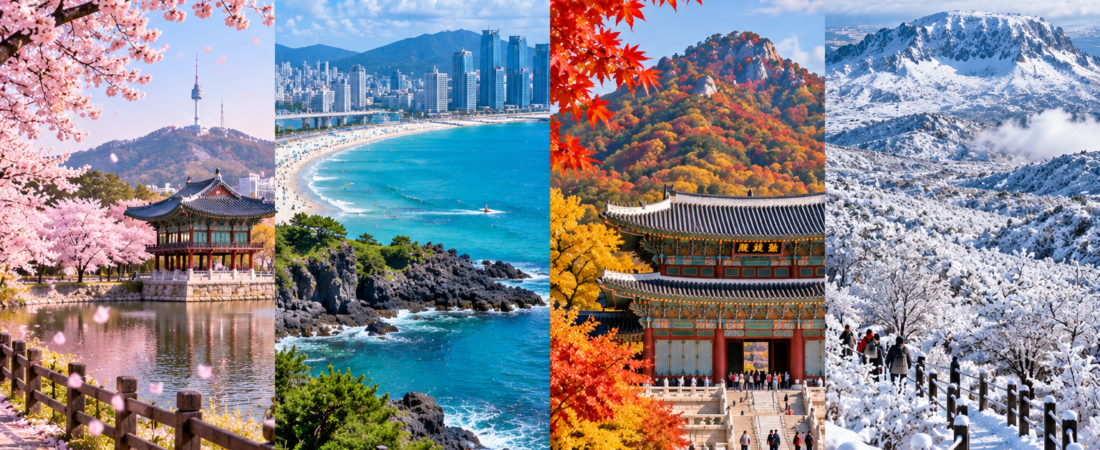
South Korea is a year-round destination, but the experience can feel completely different depending on when you visit. Spring brings cherry blossoms and mild weather, summer is hot and humid with a rainy season, autumn offers cooler temperatures and fall foliage, and winter brings freezing weather and snow in some parts of the country.
But choosing the best time to visit Korea is not just about picking the season with the nicest weather. Cherry blossom dates can shift from year to year, summer rain can affect outdoor plans, major Korean holidays can make intercity travel much busier, and seasonal conditions vary between Seoul, Busan, Jeju, and the mountains.
This guide will help you choose when to visit South Korea based on weather, crowds, seasonal experiences, and the type of trip you are planning.
Quick Answer: When Is the Best Time to Visit South Korea?
For most first-time visitors, spring (April to May) and autumn (October to early November) are the easiest seasons for sightseeing because temperatures are generally more comfortable for walking and outdoor activities.
However, there is no single best month for everyone. Visit in spring for blossoms, summer for beaches and festivals, autumn for foliage and hiking, or winter for skiing and a colder, quieter side of Korea.
If your dates are flexible, choose the season based on what you actually want to experience rather than planning your entire trip around a single “best” month.
South Korea Weather by Season
Spring in South Korea (March to May)
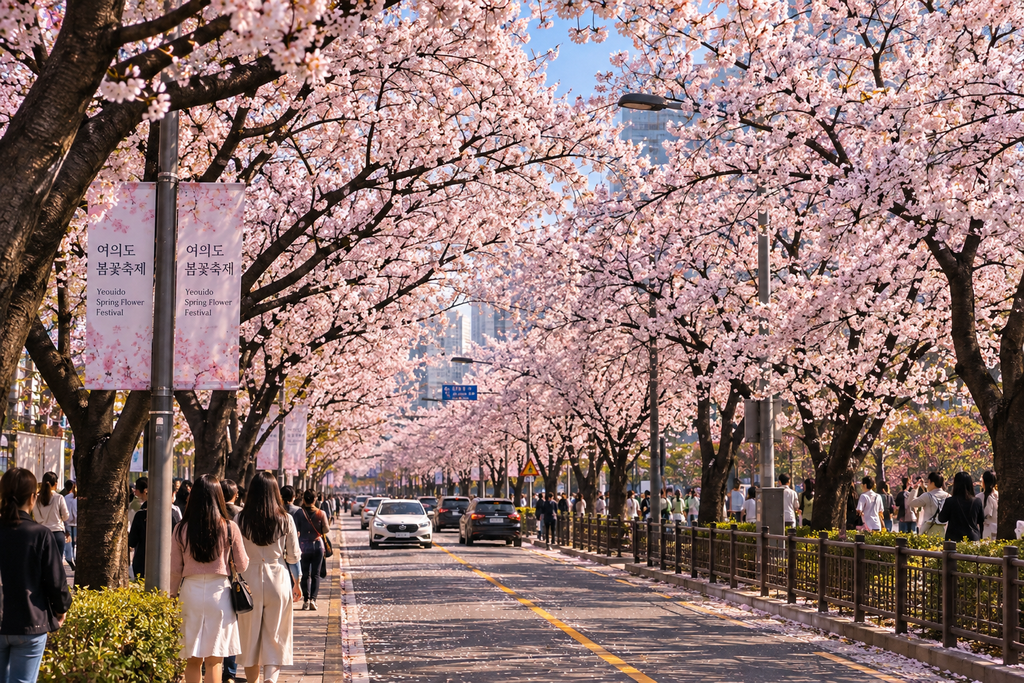
Spring is one of the most popular seasons to visit South Korea, but conditions can change quickly from March to May.
March can still feel cold, especially in the mornings and evenings. By April, temperatures usually become more comfortable for walking and outdoor sightseeing, while May is generally warmer and greener.
Cherry blossoms are a major reason travelers visit Korea in spring, but do not plan a trip around one exact bloom date. The timing changes each year depending on the weather, and blossoms can disappear quickly after rain or strong wind.
Blooming also does not happen everywhere in Korea at the same time. Southern areas such as Jeju and Busan generally reach spring conditions earlier than Seoul, so travelers following blossoms across multiple cities should check the latest regional forecast shortly before the trip.
Practical Tip: If cherry blossoms are important to you, build some flexibility into your itinerary instead of reserving one specific day for them. Keep another park, neighborhood, or indoor attraction as a backup in case the weather changes.
Summer in South Korea (June to August)
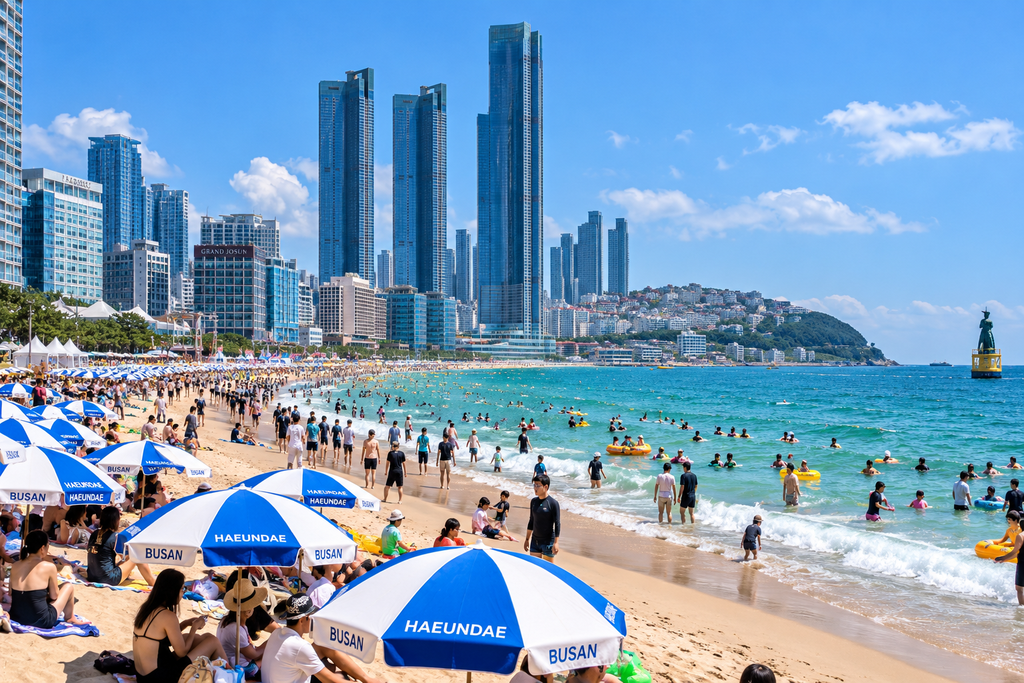
Summer in South Korea is hot and humid, especially in July and August. It can still be a fun season to visit, but your itinerary needs more flexibility than in spring or autumn.
June generally marks the transition into summer, while July and August can bring high humidity, heavy rain, and very warm daytime temperatures. Korea’s summer rainy period does not mean it rains continuously every day, but heavy rainfall can disrupt outdoor plans when it occurs.
Summer works particularly well if beaches and coastal destinations are a major part of your trip. Busan and Jeju are popular choices, but beaches and major attractions can become much busier during the Korean summer vacation period.
For city sightseeing, avoid packing every outdoor attraction into the hottest part of the afternoon. Start earlier when possible, take an indoor break at a café, museum, department store, or shopping area during the hottest hours, and continue exploring later in the day.
Practical Tip: Check the short-term weather forecast each morning rather than relying on a forecast made weeks before your trip. Keep at least one indoor option ready for days with heavy rain or extreme heat.
Autumn in South Korea (September to November)
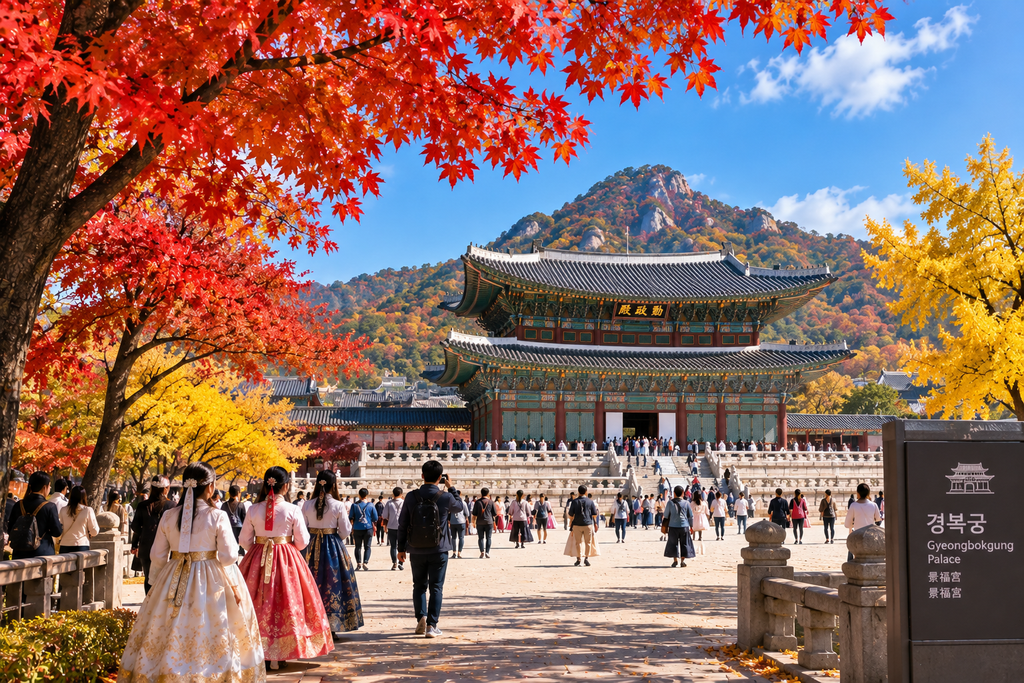
Autumn is one of the most comfortable seasons for traveling around South Korea, especially once the summer heat and humidity begin to fade.
September can still feel warm, while October is generally better suited to long days of walking and outdoor sightseeing. By November, temperatures drop more noticeably, particularly in Seoul and mountainous areas.
Fall foliage is a major attraction, but peak colors do not arrive everywhere at the same time. Mountain areas and northern parts of Korea generally change earlier, while southern cities and lower elevations can reach peak color later.
Popular mountains and foliage destinations can become very busy on autumn weekends as Korean hikers and day-trippers head outdoors. If hiking is an important part of your trip, a weekday visit or an early start can make the experience easier.
Practical Tip: Treat foliage forecasts as a planning guide rather than a guarantee. Weather and elevation affect the timing, so check current conditions shortly before visiting a specific mountain, park, or city.
Winter in South Korea (December to February)
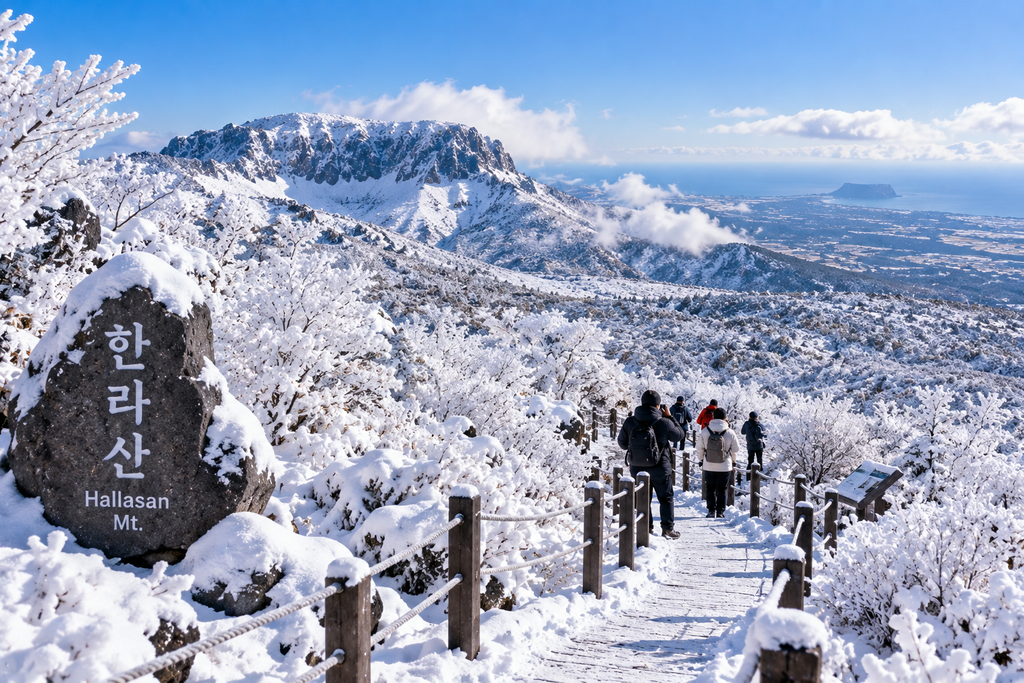
Winter in South Korea is cold and dry, with the experience varying significantly depending on where you travel.
December through February can bring freezing temperatures, particularly in Seoul and inland areas. Busan and Jeju are generally milder than Seoul, but cold winds can still make coastal areas feel much colder than the temperature suggests.
Snow is possible in Seoul, but travelers should not expect the city to remain covered in snow throughout winter. If seeing snow is an important part of your trip, mountainous regions and ski resort areas are generally better choices than building your plans around snowfall in central Seoul.
Winter can also be a good season for travelers who enjoy skiing, hot Korean food, cafés, indoor attractions, and a very different atmosphere from Korea’s warmer seasons. Pack proper layers, especially if you plan to spend long periods outdoors.
Practical Tip: Check both the temperature and wind conditions before heading out. On particularly cold days, alternate outdoor sightseeing with markets, museums, cafés, shopping areas, or other indoor stops.
South Korea Weather by Month
You do not need to memorize twelve separate monthly weather guides to plan a trip to Korea. A simpler way to think about the year is by transition periods:
January–February: Cold winter weather, with freezing temperatures common in Seoul and inland areas.
March: A transition month. Spring may be approaching, but mornings and evenings can still feel cold.
April–May: Mild spring weather and one of the most comfortable periods for outdoor sightseeing.
June: Warmer and more humid as Korea moves toward summer.
July–August: The hottest and most humid period, with a greater chance of heavy rain.
September: Summer heat gradually fades, although early September can still feel warm.
October: Generally comfortable for walking, hiking, and outdoor sightseeing.
November: Cooler weather arrives quickly, especially later in the month.
December: Winter conditions return, with colder temperatures and shorter daylight hours.
The exact conditions vary by year and region, so use this as a general planning guide and check the latest forecast shortly before your trip.
Best Time to Visit Korea for Different Experiences
The best time to visit Korea depends on what you want to do during your trip.
Cherry blossoms: Usually spring, with timing varying by region and weather each year. Check the latest blossom forecast close to your travel dates.
Hiking: Spring and autumn are generally the most comfortable seasons. Popular mountain trails can be crowded on weekends, especially during peak fall foliage.
Beaches: Summer is the main season for destinations such as Busan and Jeju, but expect heat, humidity, and larger crowds during vacation periods.
Skiing and winter activities: Winter is the obvious choice, particularly in mountainous areas and ski resort regions where snow is more reliable than in central Seoul.
City sightseeing: Spring and autumn are usually easiest for long days outdoors, but Seoul, Busan, and other major cities can be visited year-round if you adjust your itinerary for the weather.
When Should You Avoid Visiting South Korea?
Rainy Season and Peak Summer Heat
If you are particularly sensitive to heat and humidity, July and August may be the most challenging months for sightseeing in Korea.
Heavy rain can also disrupt outdoor attractions, hiking, and coastal plans during parts of the summer. This does not make summer a bad time to visit, but travelers planning mostly outdoor activities should build more flexibility into their itinerary.
Practical Tip: If you must travel during peak summer, avoid scheduling every major outdoor attraction on consecutive days. Leave room to rearrange plans around short-term weather conditions.
Seollal and Chuseok Holidays
Seollal (Lunar New Year) and Chuseok are two of South Korea’s biggest traditional holidays, and their dates change each year because they follow the lunar calendar.
During these periods, millions of Koreans travel across the country to visit family. Intercity trains and buses can sell out quickly, highways can become heavily congested, and some restaurants, shops, and smaller businesses may close or operate reduced hours.
This does not mean you should avoid Korea completely during Seollal or Chuseok. However, long-distance travel requires more planning than usual. If your itinerary includes moving between cities such as Seoul and Busan, check transportation schedules early and confirm the opening hours of places you specifically want to visit.
Practical Tip: If your schedule is flexible, avoid making a major intercity transfer on the busiest holiday travel days. Staying within one city can make your itinerary much easier to manage.
Peak Cherry Blossom and Autumn Foliage Periods
Cherry blossom season and peak autumn foliage can bring noticeably larger crowds to popular destinations in Korea, especially on weekends.
Accommodation in high-demand areas may also become more expensive or sell out earlier than usual. If seeing blossoms or fall colors is a major reason for your trip, book accommodation early but keep your daily itinerary flexible.
Peak conditions can shift from year to year, so avoid relying on an exact date chosen months in advance. Check the latest seasonal conditions shortly before your trip and adjust individual sightseeing days if necessary.
Practical Tip: For famous parks, mountains, and blossom spots, visiting on a weekday or early in the morning can help you avoid the heaviest crowds.
Final Thoughts
There is no single perfect time to visit South Korea. The best season depends on what you want to experience and how comfortable you are with heat, cold, rain, and crowds.
For most travelers, spring and autumn offer the easiest conditions for sightseeing, while summer and winter can be equally rewarding when your trip is planned around seasonal activities.
Instead of choosing your dates based only on average weather, check current conditions shortly before your trip and stay flexible when planning weather-dependent experiences such as cherry blossoms, hiking, beaches, fall foliage, or snow.