
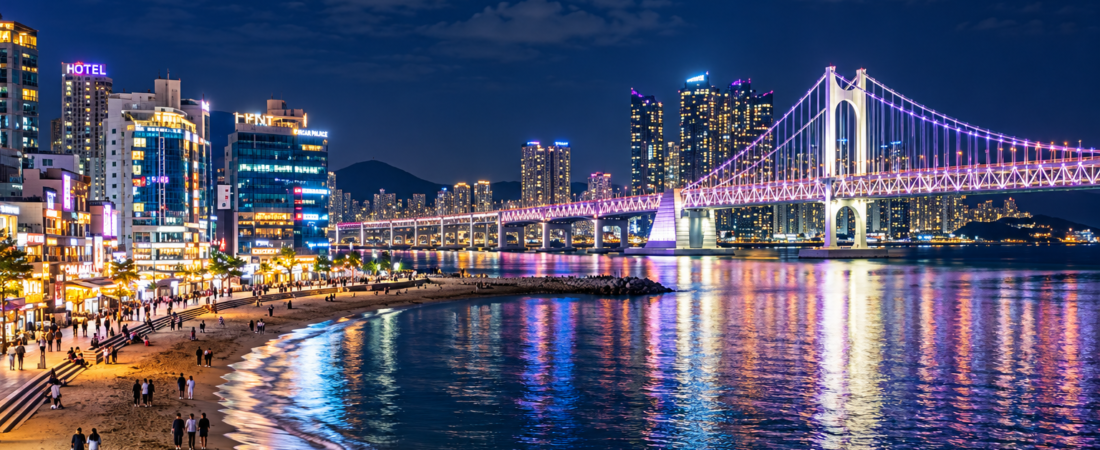
Busan is South Korea’s largest coastal city, but planning a first trip can be trickier than it looks. Haeundae, Gwangalli, Nampo-dong, Songdo, and the eastern coast are spread across different parts of the city, so trying to visit attractions in the wrong order can mean spending a surprising amount of time on buses and subways.
The easiest way to explore Busan is to plan each day around one part of the city. Haeundae and the eastern coast work well together, while Gamcheon Culture Village, Jagalchi Market, Nampo-dong, and Songdo can be grouped into another day. Gwangalli is especially worth saving for late afternoon and evening when the bridge lights up across the water.
This guide covers Busan’s major attractions, local food, beaches, neighborhoods, transportation, and a practical three-day itinerary, with tips to help first-time visitors spend less time crossing the city and more time actually experiencing Busan.
Why Visit Busan?
Busan feels noticeably different from Seoul. The city is built around mountains, beaches, ports, and coastal neighborhoods, so a day here can include a seaside temple in the morning, a traditional market in the afternoon, and dinner overlooking the ocean at night.
What makes Busan especially rewarding is the variety between different parts of the city. Haeundae feels modern and resort-like, Gwangalli is best known for its beachfront atmosphere and nighttime bridge views, while Nampo-dong and Jagalchi offer a more traditional downtown experience with markets, street food, and seafood.
Local Tip: Do not underestimate travel times just because two places are both in Busan. The city stretches a long way along the coast, so choosing attractions in the same area for each day can make a much bigger difference here than many first-time visitors expect.
Best Things to Do in Busan
Busan is packed with attractions ranging from famous beaches and coastal temples to traditional markets and colorful hillside neighborhoods. Here are some of the best places to visit on your first trip to Busan.
Haeundae Beach
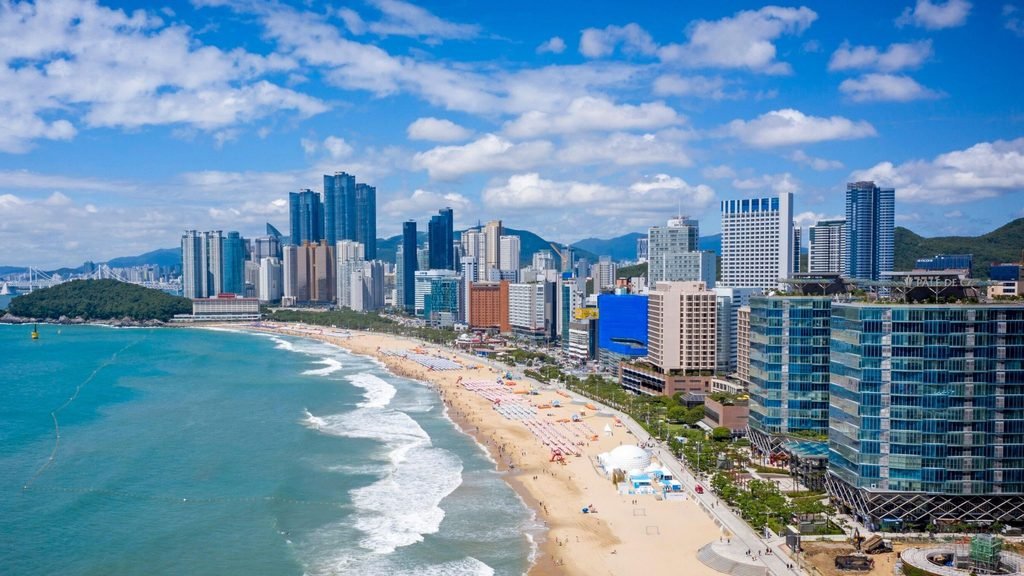
Haeundae Beach is Busan’s best-known beach and an easy starting point for exploring the eastern side of the city. The long beachfront is surrounded by hotels, restaurants, cafés, and high-rise buildings, but the area is more than just a place to swim during summer.
After walking along the beach, continue toward Dongbaekseom and the coastal path for a different view of Haeundae and the surrounding skyline. Haeundae Traditional Market is also nearby and works well for a casual meal or evening snack without making another trip across the city.
Route Tip: If you are visiting Haeundae and Haedong Yonggungsa on the same day, plan them together rather than returning to this side of Busan later. Save Gwangalli for late afternoon or evening, when the beach and Gwangandaegyo Bridge are at their most atmospheric.
Gwangalli Beach & Gwangandaegyo Bridge
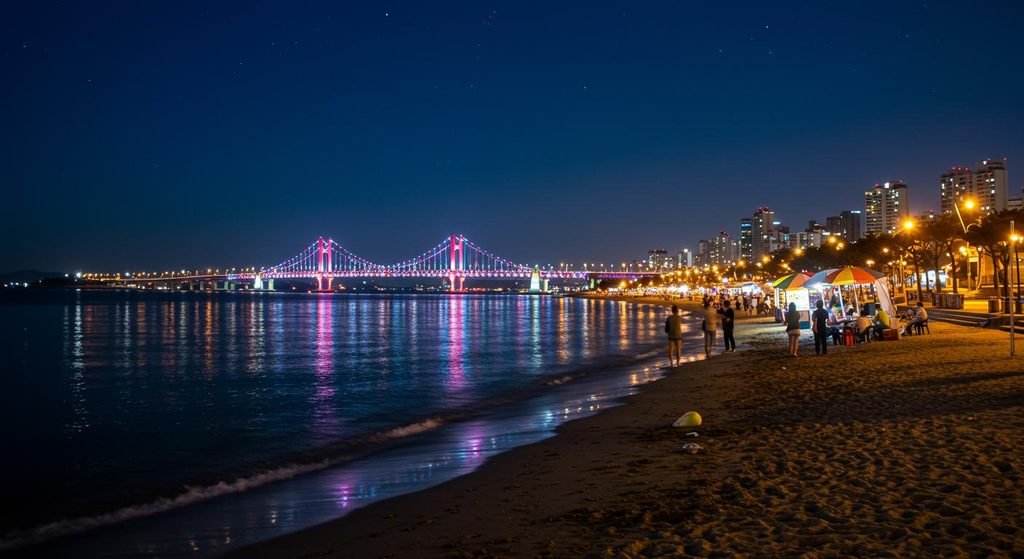
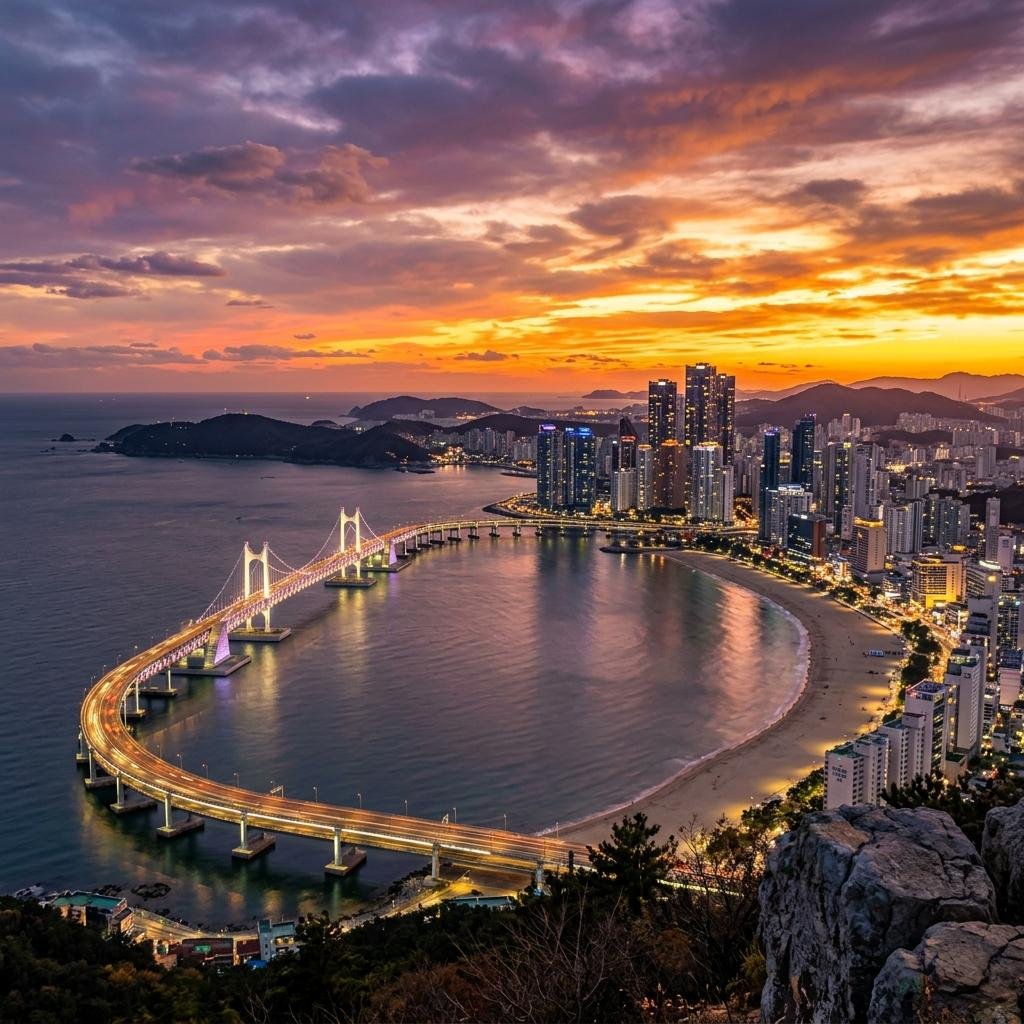
Gwangalli Beach is one of the best places in Busan to spend the late afternoon and evening. Unlike Haeundae, where the beach itself is often the main attraction, much of Gwangalli’s appeal comes from the atmosphere along the waterfront and the uninterrupted view of Gwangandaegyo Bridge across the water.
Arrive before sunset if you want to experience both daytime ocean views and the illuminated bridge after dark. Restaurants, cafés, and bars line the streets behind the beach, so there is little reason to leave the area for dinner. A simple evening here can be just as enjoyable as trying to fit another major attraction into the schedule.
Timing Tip: If Gwangalli is already on your itinerary, avoid visiting briefly in the middle of the day and then returning at night. Arriving later and staying through sunset gives you the best part of the neighborhood without adding another cross-city trip.
Gamcheon Culture Village
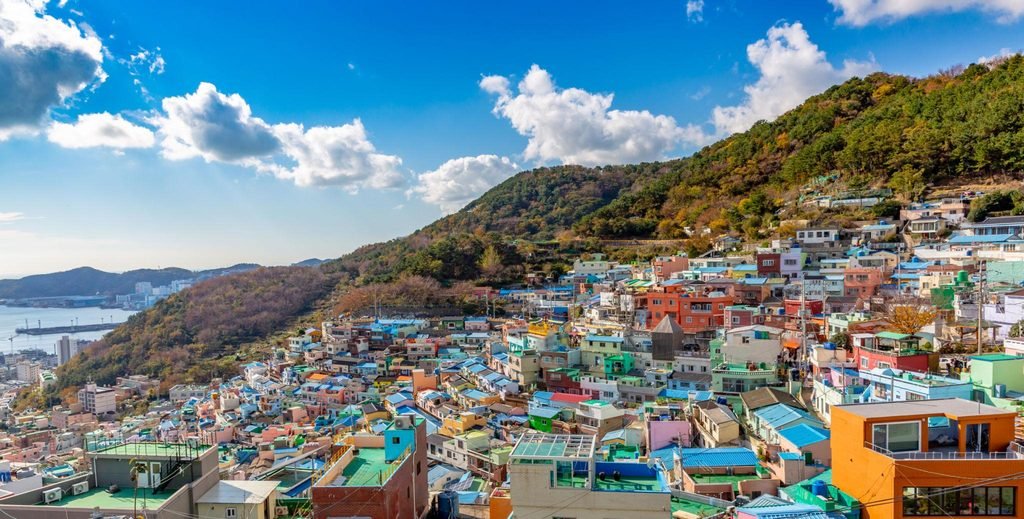
Gamcheon Culture Village is one of Busan’s most distinctive hillside neighborhoods, known for its colorful houses, narrow alleys, murals, small cafés, and viewpoints overlooking the surrounding city and coastline. Rather than treating it as a single photo stop, give yourself time to walk through the neighborhood and explore some of the smaller streets away from the busiest viewpoints.
The village is built on steep hills, so expect stairs and slopes throughout your visit. It fits particularly well with Jagalchi Market, BIFF Square, Nampo-dong, and Songdo because all of these stops can be grouped into the same part of your Busan itinerary instead of requiring another trip across the city.
Walking Tip: Wear comfortable shoes and avoid planning Gamcheon as a quick stop between tightly scheduled attractions. Some of the best views require walking uphill, and this is still a residential neighborhood, so keep noise down and respect signs marking private areas.
Haedong Yonggungsa Temple
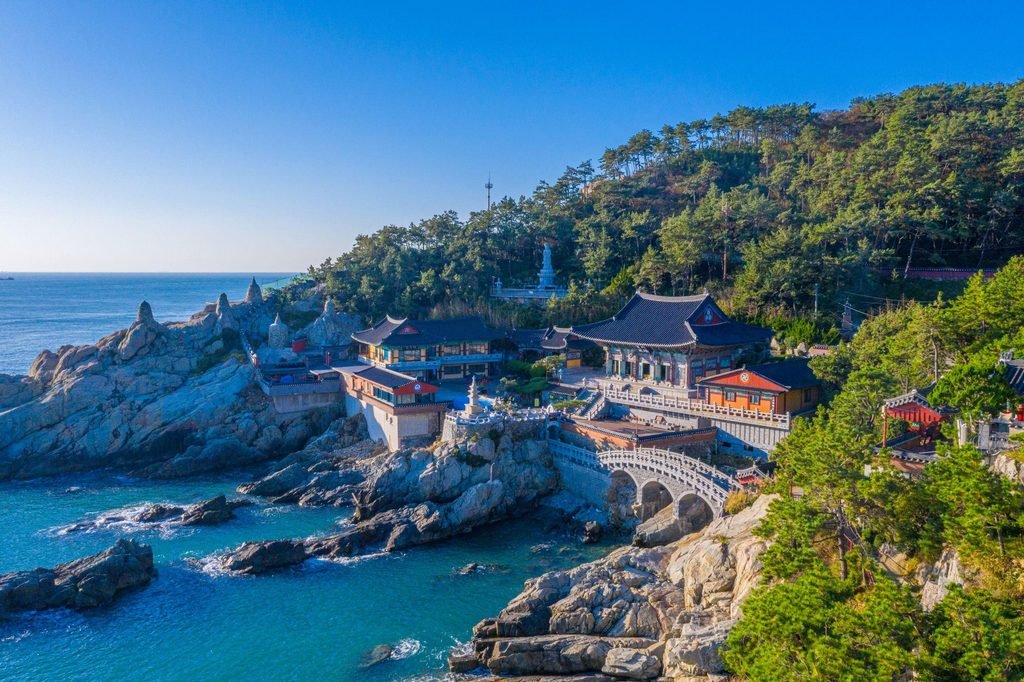
Haedong Yonggungsa Temple is one of Busan’s most memorable coastal attractions, with traditional temple buildings set directly against the rocky shoreline. The setting is very different from many Korean temples located in the mountains, and several points around the grounds offer open views of the sea.
Because the temple is on the eastern side of Busan, it makes more sense to combine it with Haeundae or other attractions in eastern Busan than to visit it between stops around Nampo-dong or Songdo. The grounds also include stairs and uneven sections, so allow enough time to explore without rushing.
Timing Tip: Visit earlier in the day if you want to avoid the busiest period, particularly on weekends and holidays. If Haedong Yonggungsa and Haeundae are both on your itinerary, keep them on the same day to avoid unnecessary travel across Busan.
Jagalchi Market
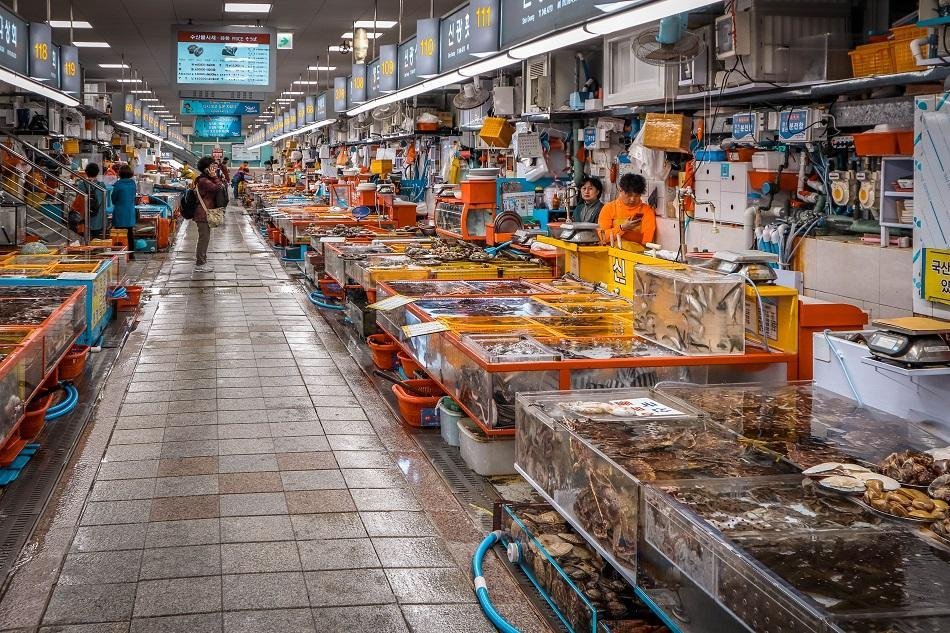
Jagalchi Market is one of Busan’s best-known seafood markets and one of the easiest places for first-time visitors to experience the city’s connection to the sea. Even if you are not planning a full seafood meal, walking through the market and the surrounding streets gives you a very different experience from Busan’s modern beach districts.
Do not limit your visit to the main market building. The surrounding area is filled with seafood vendors, restaurants, and busy local streets, and you can continue on foot toward BIFF Square, Nampo-dong, and Gukje Market. This makes Jagalchi much easier to include as part of a half-day exploring central Busan rather than visiting it as an isolated attraction.
Food Tip: If you plan to eat seafood here, check the menu and prices before ordering, especially when choosing live or market-priced seafood. If seafood is not your priority, continue toward BIFF Square and Nampo-dong, where you will find many other local dishes and street-food options.
BIFF Square & Nampo-dong
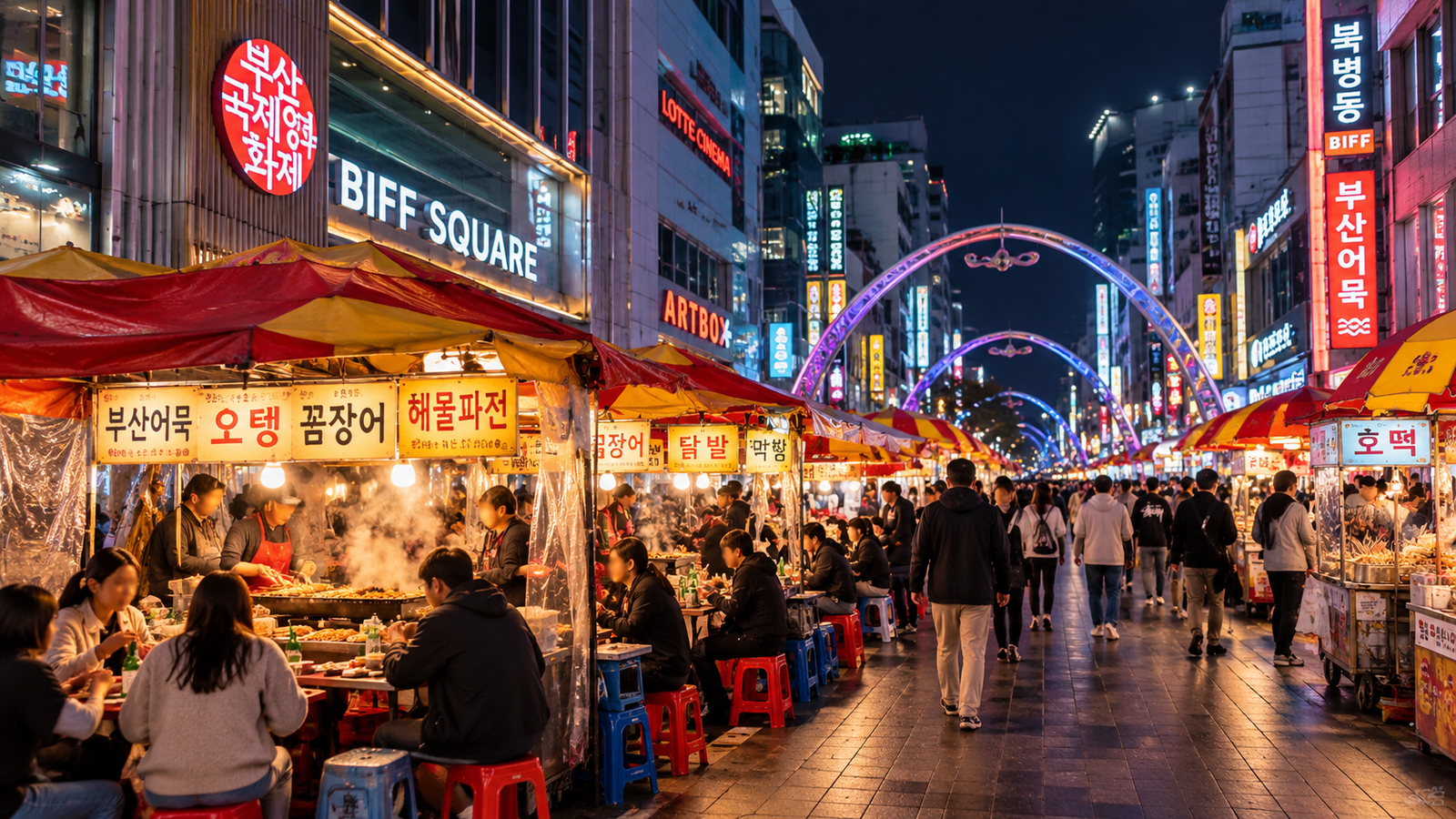
BIFF Square and Nampo-dong are best explored as part of the same walking route as Jagalchi Market and Gukje Market. The area mixes shopping streets, street-food stalls, markets, restaurants, and traces of Busan’s film culture, making it a good place to wander rather than rush between individual attractions.
Start around Jagalchi and gradually make your way toward BIFF Square and Nampo-dong. If you enjoy markets, continue into Gukje Market; if you prefer shopping and food, spend more time around the main Nampo streets. The area becomes livelier later in the day, so it works particularly well before dinner or as an evening stop.
Route Tip: Jagalchi Market, BIFF Square, Gukje Market, and Nampo-dong are close enough to explore together on foot. Treat them as one connected area instead of four separate stops—this leaves more time for Gamcheon or Songdo on the same day.
Songdo Beach & Songdo Marine Cable Car
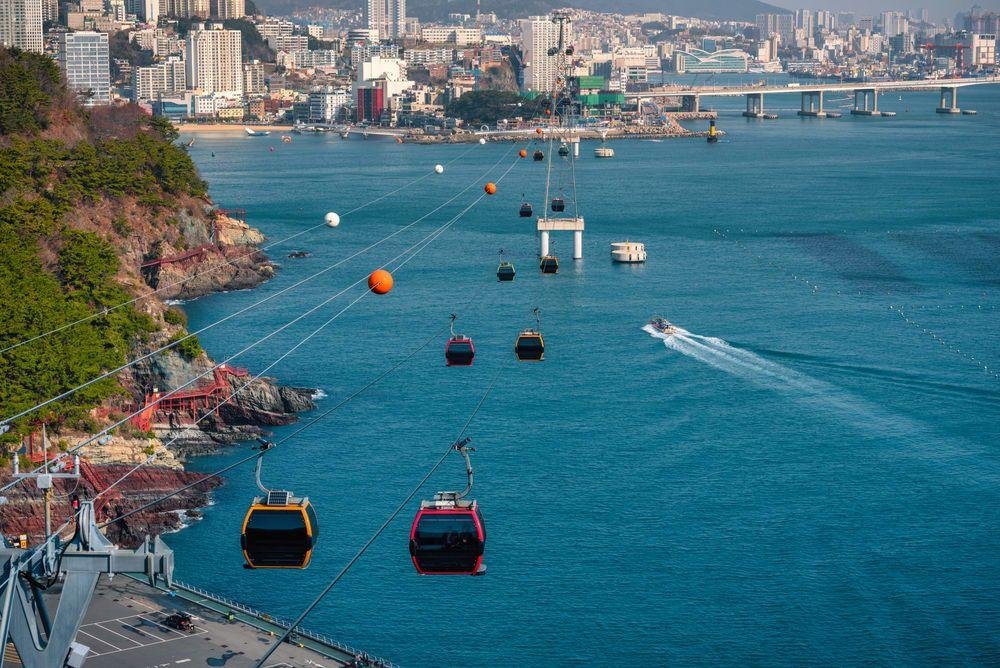
Songdo Beach is a convenient coastal stop to combine with the southern side of Busan, especially after visiting Gamcheon Culture Village, Jagalchi Market, or Nampo-dong. The area’s best-known attraction is the Songdo Marine Cable Car, which crosses above the water and offers wide views of the coastline and surrounding city.
Instead of visiting only for the cable car, leave some time to walk around the waterfront and enjoy the coastal scenery. Songdo works particularly well as the final stop of a day spent around Gamcheon and Nampo because you can move toward the coast in the afternoon rather than traveling back across Busan.
Sunset Tip: If the weather is clear, plan to reach Songdo in the late afternoon and stay through sunset. This lets you finish your sightseeing day by the coast while keeping Gamcheon, Jagalchi, BIFF Square, Nampo-dong, and Songdo within one logical route.
Best Areas to Stay in Busan
Choosing where to stay in Busan matters more than many first-time visitors expect because the city’s major attractions are spread across a long coastline. There is no single neighborhood that is equally convenient for Haeundae, Gwangalli, Seomyeon, Nampo-dong, and the eastern coast.
Haeundae works well if beaches and eastern Busan are your priority, while Gwangalli is a strong choice for ocean views and evenings by the waterfront. Seomyeon offers convenient transportation for travelers planning to explore several different parts of the city, and Nampo-dong is better positioned for markets, Gamcheon, Jagalchi, and Songdo.
Booking Tip: Before choosing a hotel, check the travel time from the nearest subway station to two or three attractions you definitely plan to visit. A hotel that looks centrally located on a map can still involve long journeys if most of your itinerary is on the opposite side of Busan.
Haeundae
Haeundae is a practical base for travelers who want to spend a significant part of their trip around the beach and eastern Busan. You will have easy access to Haeundae Beach, restaurants, cafés, hotels, and several attractions on this side of the city, making it especially convenient if coastal sightseeing is a priority.
The trade-off is distance from attractions around Nampo-dong, Jagalchi, Gamcheon, and Songdo. If those areas make up a large part of your itinerary, staying in Haeundae can mean longer subway or bus journeys on those days.
Best for: First-time visitors who prioritize beaches, eastern Busan, oceanfront hotels, and a resort-like atmosphere.
Stay Tip: Haeundae is a large area, so check the hotel’s actual distance from Haeundae Station and the beach before booking. A property marketed as being in “Haeundae” is not necessarily within a short walk of the beachfront.
Gwangalli
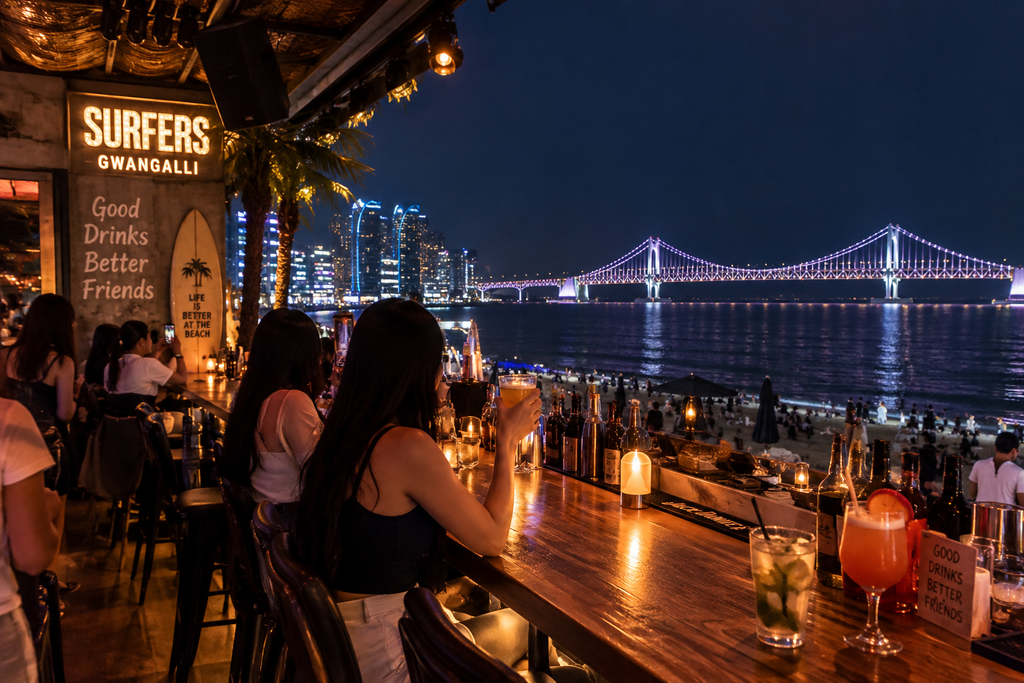
Gwangalli is a great base for travelers who want to enjoy Busan’s beachfront atmosphere without staying in Haeundae. The neighborhood is especially appealing in the evening, when Gwangandaegyo Bridge lights up across the water and the streets behind the beach fill with people visiting restaurants, cafés, and bars.
It also works well if you want reasonable access to both eastern Busan and more central areas. However, travelers planning to spend most of their time around Gamcheon, Jagalchi, Nampo-dong, and Songdo should still expect some travel across the city.
Best for: Couples, nightlife, cafés, ocean views, and travelers who enjoy spending their evenings near the beach.
View Tip: If you are paying extra for a “Gwangandaegyo view” room, check the hotel’s actual room photos and room category before booking. Not every room in a beachfront property necessarily faces the bridge.
Seomyeon
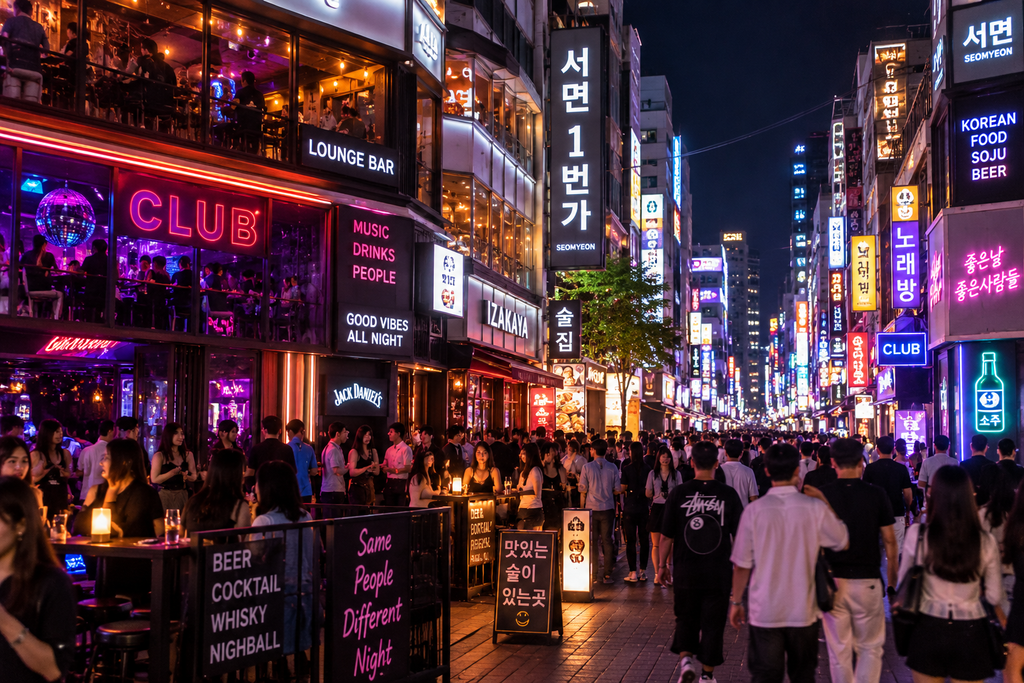
Seomyeon is one of the most practical places to stay if your Busan itinerary covers several different parts of the city. With major subway connections and plenty of restaurants, cafés, shopping streets, and nightlife nearby, it works well as a transportation-focused base rather than a beach destination.
Staying here can make it easier to split your trip between areas such as Haeundae and Gwangalli in one direction and Nampo-dong or Jagalchi in another. The main trade-off is that you will not have the ocean directly outside your hotel, so travelers dreaming of waking up next to the beach may prefer Haeundae or Gwangalli.
Best for: Travelers prioritizing transportation, nightlife, restaurants, and easy access to multiple parts of Busan.
Transit Tip: If you expect to explore both eastern and southern Busan during the same trip, Seomyeon can be more practical than choosing a beachfront hotel simply for the view.
Nampo-dong
Nampo-dong is a convenient base for travelers who want to focus on Busan’s traditional markets, street food, older downtown neighborhoods, and attractions on the southern side of the city. Jagalchi Market, BIFF Square, Gukje Market, and the surrounding shopping streets are easy to explore from here, while Gamcheon Culture Village and Songdo are also relatively convenient to reach.
Compared with Haeundae or Gwangalli, Nampo-dong offers less of a beach-resort atmosphere, but it can save a significant amount of travel time if most of your itinerary is concentrated around central and southern Busan.
Best for: Markets, street food, local downtown atmosphere, Gamcheon, Jagalchi, and Songdo.
Location Tip: Choose Nampo-dong if these southern attractions make up a major part of your itinerary. If beaches and eastern Busan are your main priorities, Haeundae or Gwangalli will usually make more sense as a base.
What to Eat in Busan
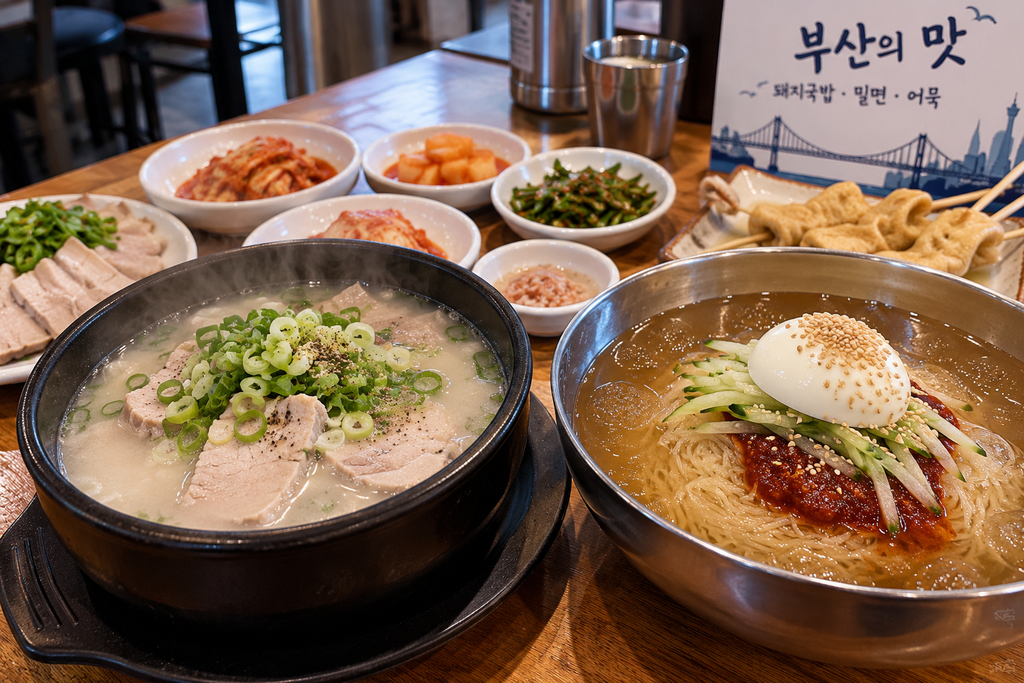
Busan’s food culture is closely connected to the city’s port, markets, and local history. Seafood is an obvious part of the experience, but some of the foods most strongly associated with Busan are simple local dishes such as dwaeji gukbap, milmyeon, and eomuk.
Instead of traveling across the city for every famous restaurant, plan your meals around the neighborhoods you are already visiting. Jagalchi and Nampo-dong are natural areas for seafood and market food, while Seomyeon has plenty of local restaurants and is particularly convenient for trying dishes such as dwaeji gukbap.
Food Planning Tip: Leave at least one or two meals unplanned. Busan has many small restaurants and market stalls that are easy to discover while sightseeing, and choosing somewhere near your current neighborhood can save a long trip across the city just for one meal.
Dwaeji Gukbap (Pork and Rice Soup)
Dwaeji gukbap is one of the dishes most closely associated with Busan. It is made with slices of pork served in a hot broth, usually with rice and side dishes, and you will find specialized gukbap restaurants throughout the city.
One useful thing for first-time visitors to know is that the bowl may arrive relatively lightly seasoned. Depending on the restaurant, you can adjust the flavor with ingredients provided at the table, so taste the broth before adding everything at once. Seomyeon is particularly convenient for trying dwaeji gukbap because there are numerous restaurants in and around the neighborhood.
Eating Tip: Do not worry about finding the single “best” gukbap restaurant in Busan. If a well-reviewed local place fits naturally into your sightseeing route, trying it there is usually a better use of your time than crossing the city only for one famous restaurant.
Milmyeon (Busan-Style Wheat Noodles)
Milmyeon is another dish strongly associated with Busan, made with chewy wheat noodles and commonly served either in a chilled broth (mul-milmyeon) or mixed with a spicy sauce (bibim-milmyeon). It is lighter than many Korean meat-based meals and is especially refreshing during Busan’s hot and humid summer.
If you are unsure which version to order, mul-milmyeon is a good starting point for travelers who prefer a cool, refreshing noodle soup, while bibim-milmyeon has a stronger, spicier flavor. Many restaurants also serve dumplings or other simple side dishes that are easy to share with the noodles.
Menu Tip: You do not need to plan a separate trip across Busan just for milmyeon. It works particularly well as a quick lunch between sightseeing stops, so look for a well-reviewed restaurant near the neighborhood you are already exploring.
Fresh Seafood
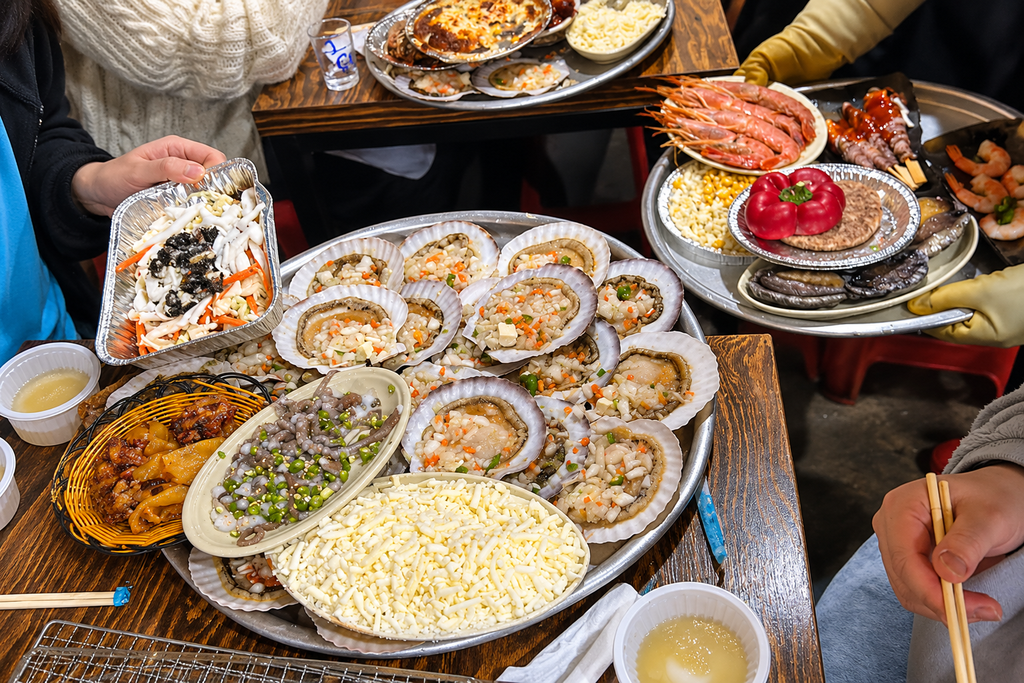
As Korea’s largest port city, Busan is naturally one of the most popular places to eat fresh seafood. Jagalchi Market is the best-known destination for first-time visitors, but seafood restaurants can also be found around coastal neighborhoods such as Haeundae, Gwangalli, and Songdo.
Depending on the restaurant, you may find sliced raw fish (hoe), shellfish, grilled seafood, seafood stews, and seasonal catches. Jagalchi is particularly convenient because you can combine a seafood meal with Nampo-dong, BIFF Square, and Gukje Market instead of making a separate trip just to eat.
Ordering Tip: When ordering seafood that is sold by size, weight, or market price, confirm the price before ordering. If you are unsure about portions, ask how much is appropriate for your group rather than choosing only by what is displayed.
Busan Eomuk (Fish Cake)
Busan eomuk, or fish cake, is one of the city’s easiest local foods to try while sightseeing. You will see it sold at traditional markets, street-food stalls, specialty shops, and transportation hubs, making it a convenient snack rather than something you need to build an entire meal around.
Eomuk comes in many shapes and styles, from simple skewers served in hot broth to versions filled with cheese, vegetables, or other ingredients. Markets around Nampo-dong are good places to try it while exploring the area, and packaged varieties are also commonly sold as take-home food gifts.
Snack Tip: Try eomuk when you naturally come across a busy stall or shop during your sightseeing route. It is inexpensive, quick to eat, and easy to combine with a market visit without changing your itinerary.
Cafés and Nightlife in Busan
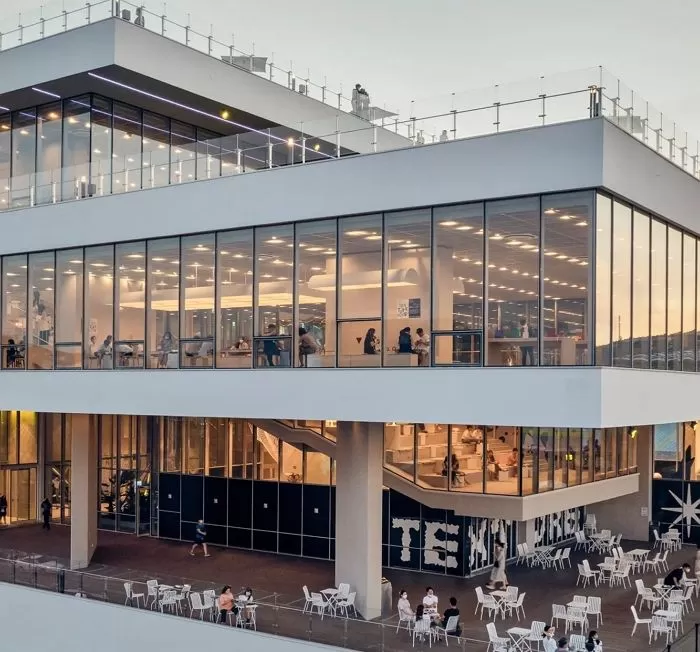
Busan’s café and nightlife scene changes noticeably depending on the neighborhood. Haeundae and Gwangalli are the obvious choices if you want to combine cafés with ocean views, while Jeonpo offers a more urban café experience away from the beach. For nightlife, Seomyeon is one of the most convenient areas to continue the evening after dinner.
For nightlife, Seomyeon is one of the liveliest areas in Busan, with a wide choice of bars, restaurants, and late-night spots concentrated around the neighborhood. Gwangalli offers a different kind of evening, where the beach and illuminated Gwangandaegyo Bridge become part of the experience and you can easily combine dinner, drinks, and a walk along the waterfront.
Nightlife Tip: Choose between Seomyeon and Gwangalli based on the kind of evening you want. Seomyeon is better suited to a busy urban night out, while Gwangalli works well for a slower evening centered around the beach and bridge views.
Evening Tip: Choose your evening area based on where you are already sightseeing. If you finish the day around Gwangalli, stay for the bridge views, cafés, and bars instead of traveling across the city again. If you are staying around Seomyeon, it makes more sense to explore the nightlife there.
3-Day Busan Itinerary
Day 1: Haeundae and Gwangalli
Start your first day around Haeundae, giving yourself enough time to walk along the beach and explore the surrounding area without rushing. Continue toward Dongbaekseom for a coastal walk and a different view of the Haeundae skyline.
After lunch, spend a little more time around Haeundae or stop at a café before making your way toward Gwangalli in the late afternoon. Arriving before sunset lets you see the beach in daylight and stay as Gwangandaegyo Bridge lights up after dark.
Finish the day with dinner around Gwangalli and enjoy the waterfront at a slower pace rather than adding another attraction.
Day 1 Route: Haeundae Beach → Dongbaekseom → Gwangalli Beach → Dinner and evening bridge views
Timing Tip: There is no need to arrive at Gwangalli too early. Saving it for late afternoon and evening gives this day a natural finish and avoids visiting the same area twice.
Day 2 – Gamcheon, Markets & Songdo
Begin the day at Gamcheon Culture Village and give yourself enough time to explore the hillside streets, viewpoints, and colorful alleys. Comfortable shoes are useful here because the neighborhood includes plenty of slopes and stairs.
After Gamcheon, continue toward Jagalchi Market and spend the middle of the day exploring the market and surrounding streets. From there, walk toward BIFF Square and Nampo-dong, stopping for street food, shopping, or a meal along the way.
Finish the afternoon at Songdo Beach and the Songdo Marine Cable Car. If the weather is clear, staying into the late afternoon gives you a relaxed coastal ending after a busier day of markets and city streets.
Day 2 Route: Gamcheon Culture Village → Jagalchi Market → BIFF Square & Nampo-dong → Songdo Beach
Route Tip: Keep these attractions on the same day rather than splitting them across your itinerary. This creates a much more natural route and leaves the other days free for different parts of Busan.
Day 3: Haedong Yonggungsa and Eastern Busan
Start your final day at Haedong Yonggungsa Temple, where you can explore the temple grounds and enjoy the coastal setting before continuing through eastern Busan.
Keep the rest of the day more flexible than the first two days. After the temple, spend time exploring the eastern side of the city at a slower pace, stopping for lunch or a café rather than trying to fit in another long list of attractions.
If you want to return to Haeundae, use the final afternoon for anything you skipped on Day 1, such as the traditional market, another walk along the coast, or simply more time around the beach.
Day 3 Route: Haedong Yonggungsa Temple → Eastern Busan → Optional Haeundae return
Flexible Day Tip: Keep part of Day 3 open. It gives you room to revisit a favorite area, spend longer at the temple, or adjust your plans if the weather affected one of your earlier beach days.
Getting Around Busan
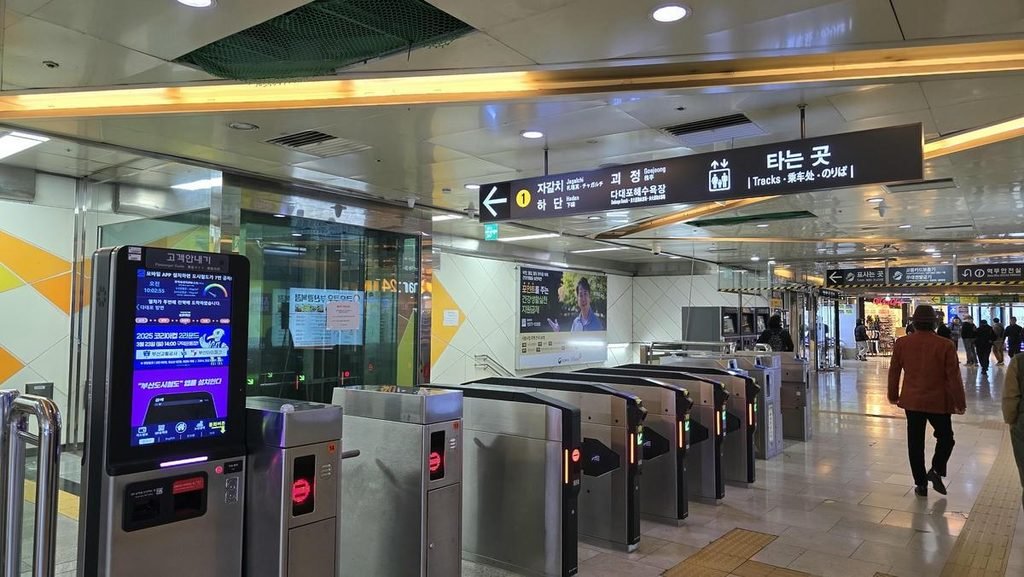
Busan has an extensive public transportation system, and most major tourist areas can be reached using a combination of subway and local buses. A transportation card such as T-money makes it easier to move between the two without buying a separate ticket for every ride.
The bigger challenge for first-time visitors is not using public transportation itself, but planning around the distance between different parts of the city. Grouping nearby attractions together—as in the three-day itinerary above—can help you avoid spending unnecessary time traveling back and forth across Busan.
Getting Around Tip: Check your next destination before leaving each area, especially when moving between the eastern coast and attractions around Nampo-dong, Gamcheon, or Songdo. A route that looks simple on a map can still take a significant part of your day.
Getting to Busan from Seoul
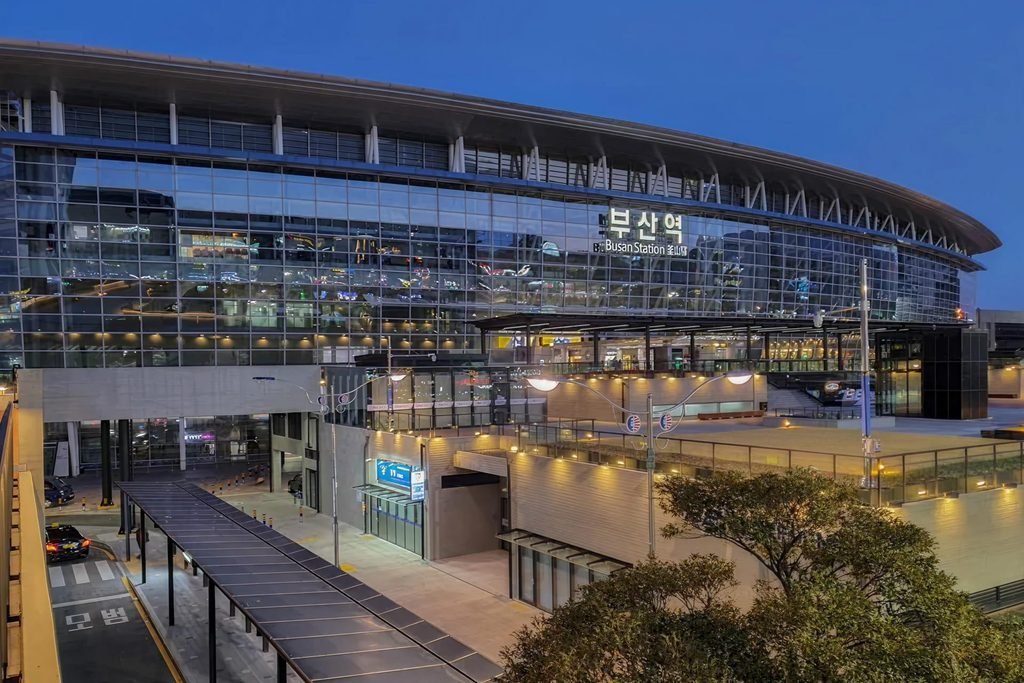
Busan is well connected to Seoul, and travelers can choose between high-speed trains, domestic flights, and express buses. The best option depends on your budget, schedule, and where you are starting and staying, but the KTX is one of the most straightforward choices for many first-time visitors because it connects the two cities directly.
KTX High-Speed Train
The KTX is the fastest and most straightforward train option between Seoul and Busan. Trains depart from Seoul Station and arrive at Busan Station, with the fastest journeys taking around 2.5 hours. Since both stations are located within the cities, traveling by KTX can also reduce the extra transfer time involved with getting to and from airports.
Tickets can be purchased through the official KORAIL website. Booking ahead is a good idea for weekends, public holidays, and other busy travel periods when popular departure times may be in higher demand.
Booking Tip: If your travel date is fixed, check train times before finalizing your Seoul and Busan schedules so you can choose a departure that does not take up the most useful sightseeing hours of the day.
Flying from Seoul to Busan
Domestic flights operate between Gimpo International Airport in Seoul and Gimhae International Airport in Busan. Although the flight itself is relatively short, the total journey also includes traveling to and from the airports, checking in, passing through security, and collecting luggage after arrival.
Flying can still be a useful option when you find a convenient airfare or when your accommodation and travel plans make airport access particularly easy.
Flight Tip: Compare the complete door-to-door journey rather than the flight time alone. Depending on where you are staying in Seoul and Busan, the time spent reaching each airport can make a significant difference to the overall trip.
Express Bus
Express buses are another option for traveling between Seoul and Busan. The journey takes considerably longer than the KTX, but buses can be a useful alternative for travelers who are prioritizing their budget over travel time.
If your time in Korea is limited, compare the longer bus journey with the time you would save by taking the KTX before deciding which option fits your itinerary.
Budget Tip: Compare both the fare and total travel time when choosing between the bus and KTX. Saving money on transportation may not be worth it if the longer journey takes away a large part of a short trip.
Best Time to Visit Busan
Busan can be visited throughout the year, but the best season depends on what you want to do. Beach time, coastal walks, outdoor sightseeing, and market visits can feel very different depending on the weather, so it is worth matching your travel dates with the kind of Busan experience you want.
Spring and autumn are comfortable choices for travelers planning plenty of outdoor sightseeing, while summer is the main season for enjoying Busan’s beaches. Winter offers a quieter atmosphere and can still work well for markets, cafés, food, and city sightseeing.
Season Tip: If beaches are not the main reason for your trip, do not assume you need to visit in summer. Busan has enough markets, neighborhoods, food, temples, and coastal scenery to build a full itinerary in other seasons as well.
Spring (March to May)
Spring is a pleasant time to explore Busan, especially if your itinerary includes beaches, temples, markets, and outdoor attractions. The milder weather makes it easier to spend longer periods walking around areas such as Gamcheon Culture Village or along the coast without the peak summer heat.
Outdoor Tip: Spring works particularly well for an itinerary with plenty of walking, so it is a good season to combine coastal areas with outdoor neighborhoods and markets.
Summer (June to August)
Summer is Busan’s main beach season, making it the most natural choice if Haeundae, Gwangalli, and time by the sea are major priorities. It is also the hottest and most humid period, so a packed sightseeing schedule can feel more tiring than during spring or autumn.
Summer Tip: Plan outdoor sightseeing for earlier or later in the day when possible, and leave room for cafés, markets, or a slower break during the hottest part of the day.
Autumn (September to November)
Autumn is another comfortable season for exploring Busan, with conditions that work well for coastal walks, markets, temples, and sightseeing across different neighborhoods. It is a good choice for travelers who want to experience the city outdoors without making beach activities the main focus of the trip.
Walking Tip: Autumn is well suited to the route-based itinerary in this guide because you can spend more of the day moving between outdoor attractions without relying on beach time.
Winter (December to February)
Winter is colder and less suited to traditional beach activities, but Busan can still be enjoyable for travelers focused on food, markets, cafés, temples, and city sightseeing. The beaches can also be visited for coastal views and walks rather than swimming.
Winter Tip: Build a more flexible itinerary that mixes outdoor stops with indoor breaks at markets, restaurants, and cafés instead of planning several long outdoor attractions back to back.
Essential Busan Travel Tips
Busan is relatively easy to explore, but a little planning can make your trip much smoother. Keep these practical tips in mind when visiting the city.
Plan Your Days by Area
Busan is much more spread out than many first-time visitors expect. Avoid traveling back and forth across the city by grouping nearby attractions together. For example, explore Gamcheon Culture Village, Jagalchi Market, BIFF Square, and Nampo-dong on the same day.
Use a Transportation Card
A rechargeable transportation card such as T-money makes traveling around Busan much easier. You can use it on subways and buses instead of purchasing a separate ticket for every journey.
Download a Korean Map App
Google Maps can be less useful for navigation in South Korea than in many other countries. Consider downloading Naver Map or KakaoMap for public transportation routes, walking directions, and local place information.
Carry a Small Amount of Cash
Credit and debit cards are widely accepted in Busan, but having some Korean won in cash can still be useful at traditional markets, smaller food stalls, and other local businesses.
Allow Extra Travel Time
Distances between attractions can be significant. When planning your itinerary, leave some extra time between destinations, especially if you need to transfer between buses and subway lines.
Learn a Few Basic Korean Phrases
English is available at many major tourist attractions and transportation hubs, but it is not spoken everywhere. Learning a few simple Korean phrases or keeping a translation app on your phone can make ordering food and communicating with locals easier.
Busan Travel FAQ
How many days do you need in Busan?
Three days is a good amount of time for most first-time visitors. It gives you enough time to divide the city into different areas, such as Haeundae and Gwangalli, Gamcheon and Nampo-dong, and the eastern coast, without trying to cross Busan several times in one day.
If you prefer a slower trip, want more beach time, or plan to explore beyond the main attractions, four or five days can make the itinerary more relaxed.
Is Busan worth visiting?
Yes. Busan offers a very different experience from Seoul, combining beaches, coastal scenery, traditional markets, temples, seafood, and lively neighborhoods. It is especially worth visiting if you want to experience both Korea’s major cities and its coastal lifestyle.
What is Busan famous for?
Busan is famous for its beaches, seafood, port, coastal scenery, and major attractions such as Haeundae Beach, Gwangalli Beach, Gamcheon Culture Village, Haedong Yonggungsa Temple, and Jagalchi Market. The city is also known for local foods including dwaeji gukbap, milmyeon, and Busan-style eomuk.
Is it easy to get around Busan without a car?
Yes. Most visitors can explore Busan using the subway and buses. However, the city covers a large area, so travel between attractions can sometimes take longer than expected. Planning each day around nearby neighborhoods will make getting around much easier.
Can you visit Busan as a day trip from Seoul?
A day trip is possible using the KTX, but it is not ideal for most travelers. The train journey takes several hours round trip, and Busan’s attractions are spread across the city. Staying at least two nights will give you much more time to experience Busan without rushing.
Is Busan expensive to visit?
Busan can accommodate a wide range of travel budgets. Public transportation and many local restaurants are relatively affordable, while accommodation prices vary depending on the neighborhood, season, and hotel type. Beachfront hotels in areas such as Haeundae and Gwangalli can be more expensive during busy travel periods.
Final Thoughts
Busan is a city that rewards travelers who slow down and explore it area by area. Instead of trying to cross the city repeatedly, build each day around one part of Busan and leave enough time to enjoy the beaches, markets, food, coastal scenery, and neighborhoods along the way.
For a first visit, three days gives you a practical introduction to the city: spend time around Haeundae and Gwangalli, explore Gamcheon, Jagalchi, Nampo-dong, and Songdo together, and leave another day for Haedong Yonggungsa and eastern Busan.
Busan also works especially well as part of a longer South Korea itinerary. If Seoul is another stop on your trip, continue planning with our Seoul Travel Guide 2026 for attractions, food, neighborhoods, transportation, and itinerary ideas.